A first-instance court ordered Chengdu Benyuan Enterprise Management Co., Ltd to refund RMB 18,810 in service fees and pay RMB 15,000 in compensation. The company has appealed. The Yezixiong dispute highlights the importance of checking franchise filings and retaining evidence of promised operational support.
Automotive service chain Xiaomuzhi’s technician content programme and red, amber and green franchisee grading system feature in a case study of head office support. Inclusion is not an endorsement of business performance.
Yum China says it completed its acquisition of the Pizza Hut brand in mainland China on 7 August 2026. The removal of brand royalties has already generated cost savings, but this does not automatically mean lower fees for individual franchisees.
According to a media report citing conference call minutes, CHJ Jewellery has allowed franchisees to source goods from third-party suppliers since March 2026, charging a brand usage fee of around 8%. The change makes fee calculations and responsibility for products key points for prospective franchisees to check.
Heilongjiang Jiuyi Trading Co., Ltd. obtained a franchise filing on 5 November 2026 for the brand “Jiuyi Trading”. The record provides additional information for prospective franchisees assessing the brand and its legal entity in China.
Yifulai and Song Meili completed franchise filings on 29 October and 6 November 2026 respectively, giving prospective franchisees in China further information with which to verify the companies behind the brands.
Yum China added a net 692 stores in the third quarter and raised its full-year target to more than 2,400 net additions. Franchises accounted for 52% of KFC’s net additions and 48% of Pizza Hut’s during the quarter.
Guangdong 7-Eleven has opened its 2,000th store, with management setting a target of 3,000 within four years. As store growth among China’s top convenience retailers slows, regional expansion and franchise operating efficiency are coming into sharper focus.
At the end of September 2026, Red Star Macalline had licensed 16 home furnishings and building materials projects under franchise arrangements, encompassing 320 stores and specialist retail streets. Its disclosed network changes covered several operating models, making it important to distinguish project counts from outlet counts.
Qinhuangdao Feifan Chushen Catering Management Co., Ltd. obtained franchise registration for “Feifan Shijian Taizi Guo” on 27 October 2026. For prospective franchisees, the filing is a starting point for verifying the business they will contract with, not a guarantee of returns.
China’s Ministry of Commerce website shows that Beijing Xizhiwu Catering Services Co., Ltd. and Xiamen Hongwei Jinshifang Catering Co., Ltd. completed franchise filings on 29 October 2026 for the Baofuji and Chamachuan brands respectively.
Two Tangquan Liangzi franchise outlets have closed in Beijing, with preliminary estimates putting outstanding prepaid balances at around RMB 3 million. Replacement outlets have offered balance transfers or credits against purchases, but experts warn that consumers must distinguish the original operators’ liabilities from the conditions of any new arrangement.
Media reports put Laiyifen’s franchise revenue at RMB 983 million in the first half of 2026, or 54.26% of its core operating revenue. As its store network grew, revenue from directly operated stores and selling expenses fell. Prospective franchisees should distinguish the results of the group’s strategic shift from individual store performance.
Chow Tai Seng’s franchise revenue fell to RMB 1.076 billion in the first nine months, primarily due to changes in supply arrangements, according to the company. As franchisees increasingly restock through designated suppliers, brand licensing fees account for a larger share of franchise revenue.
Shizixiang and VSIMAN completed franchise filings on 26 and 28 October 2026 respectively. The records provide prospective franchisees in China with details to verify the brands and the companies behind them.
Information on China’s Ministry of Commerce website shows that Chengdu Fanxiliya Trading Co., Ltd. completed a franchise filing on 29 October 2026 for the brand Huanhuan Jiadao. Prospective franchisees can use this record to check the link between the brand and the company they intend to work with.
Chow Tai Fook’s mainland China retail network fell to 4,807 stores as at 30 September 2026. Network restructuring and changes to how store types are identified highlight the need to verify each outlet’s operator and the scope of any partnership.
Chengdu Blushing Panda Craft Beer Co., Ltd. completed its commercial franchise filing on 26 October 2026 for the “Blushing Panda” brand. The company has registered capital of RMB 5 million and paid-in capital of RMB 2 million.
Chengdu Yiniao Technology Co., Ltd. completed its commercial franchise filing on 26 October 2026 for the brand Yiniao Meiju. Prospective franchisees should first check how the brand relates to the legal entity that will sign their contract.
Heytea’s GO mini-programme has reopened partner applications. Applicants must set out their funding, expected payback period and plans for managing stores. The reopening does not mean franchise approval is automatic.
Wendy’s has announced plans to open 1,000 restaurants in mainland China over ten years, but implementation details remain unclear. Reports of partnership talks have yet to be confirmed by the brand. Prospective franchise investors should distinguish between expansion targets, franchise rights and actual opening progress.
A court notice lists a hearing on 21 October in a claim brought by an individual surnamed Ding and a Shanghai beauty salon against Chlitina (China) Trading Co., Ltd. The notice identifies the parties and case number but does not establish liability.
At its 2026 franchisee conference, Liulang Paopao announced monthly, half-yearly and annual assessments linking outlet performance to support and rewards. For prospective franchisees, the assessment criteria, eligibility requirements and payment terms matter more than prize draws at the event.
K.TWO Esports and Leishen Jingjie completed franchise filings on 23 October and 21 September 2026 respectively. The filings relate to separate companies and do not establish either brand’s outlet numbers or franchise recruitment territories.
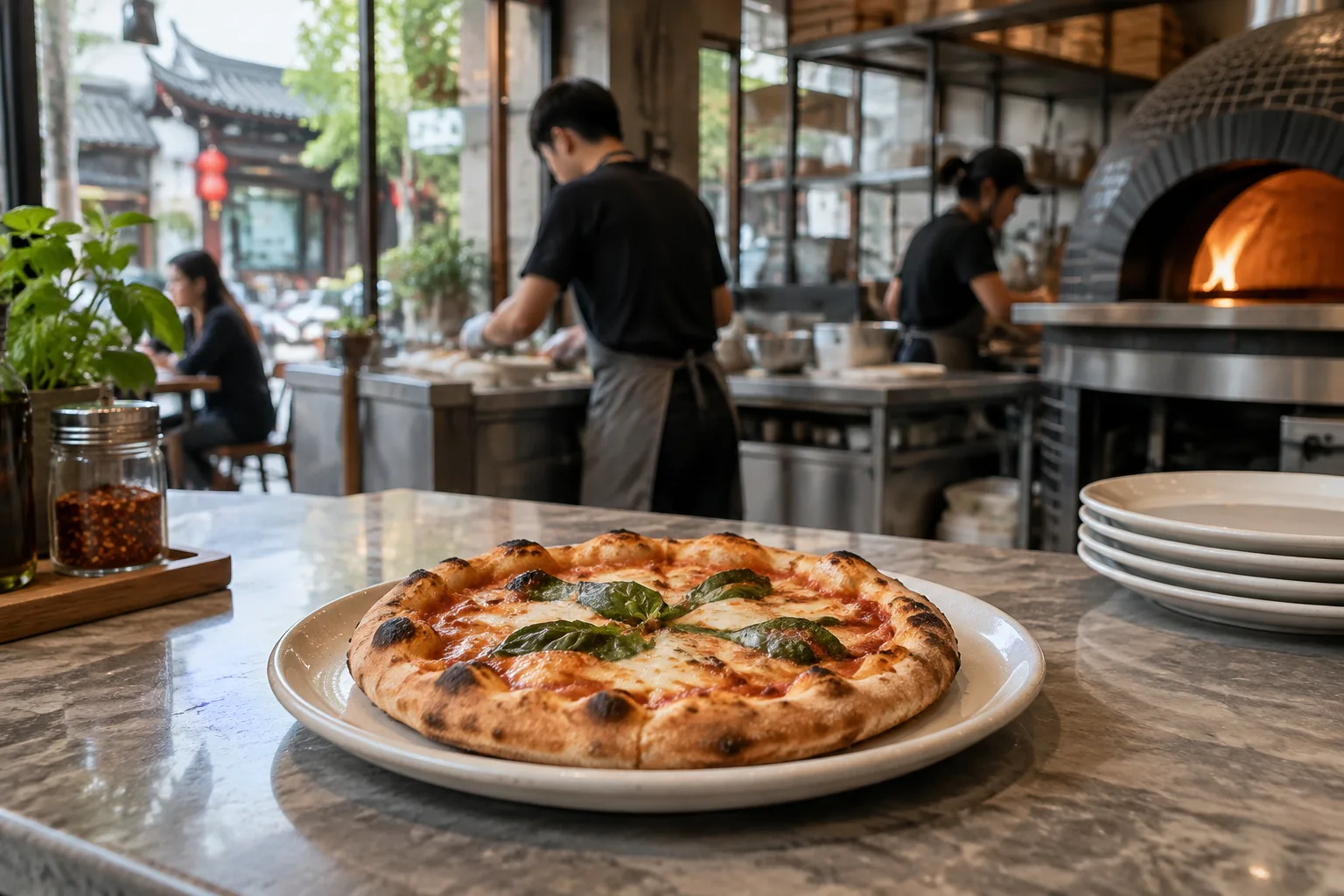
Xiuqiu Pizza has established more than ten company-owned outlets in Fuzhou, specialising in 6-inch oven-baked pizzas for one and operating from separately branded premises. Prospective franchise investors should note that the brand is not currently offering franchises.
At its franchisee conference on 19 October, Liulang Paopao announced nationwide franchise recruitment, waiving franchise fees for new franchisees and offering subsidies totalling up to RMB 100,000 per outlet over two years. Prospective investors should distinguish recruitment incentives from the full cost of opening an outlet.
Yiming Food’s revenue from its franchised-store channel fell 3.08% year on year in the first nine months of 2026, while its East China franchise network recorded a net decline of 99 stores. Alongside the closures, prospective franchisees should examine its outright-purchase supply model and who bears stock write-off losses.
General Mills has announced plans to sell its Häagen-Dazs shop business in mainland China, with the buyer receiving an exclusive brand licence for ice cream shops and gifting. General Mills will retain brand ownership and product operations in other channels, making the proposed deal’s scope important for prospective franchise investors.
A published case report describes how a court ruled a club’s franchise agreement invalid because it was registered as an individual business. Taking account of services already provided, the court ordered it to refund RMB 15,000 in franchise fees.
Subway had more than 1,200 stores in mainland China by June 2026, with its operator planning over 350 openings for the full year. Prospective franchise partners should assess exclusive operating rights, registered capital and actual store openings separately.
According to Linkshop, Chaohe-suan NB now accepts franchise applications in 11 cities across the Yangtze River Delta. While its store network is expanding into other parts of China, franchise recruitment remains focused on the area served by its Delta supply chain.
Guangdong’s consumer rights protection regulations take effect on 1 October 2026, setting clear requirements for food delivery packaging and seals. Food franchise networks should review sealing materials, packing procedures and handovers to third-party delivery providers.
Xiaocaiyuan, Zicanren and Bubuweiying have recently completed franchise filings involving companies in Anhui, Shandong and Tianjin. For prospective franchisees, the recorded brands, company names and filing dates offer a starting point for checking who they would be doing business with.
Ningji has invested more than RMB 4 million in Hubei since the start of 2026 and expects full-year spending to reach RMB 12 million. Funding covers new-store subsidies, brand marketing and existing-store refurbishment, offering a concrete example of regional franchise support.
An appeal hearing has been scheduled in a franchise contract dispute between Wan’anshun Industrial and J&T Express. For those considering franchising in China, the practical lesson is to identify the companies involved and check the contractual documents, rather than draw conclusions about the entire brand network.
According to China Daily, Ye Gelato has expanded rapidly since opening up to franchising, reaching 237 cities by 11 September. For prospective franchisees in China, fresh-product waste, promotional policies and store-level costs deserve as much attention as network size.
Starbucks and Boyu Capital have completed their strategic partnership, under which around 8,000 company-operated stores in mainland China will move to a franchise model run by a joint venture. For those exploring franchise opportunities, the key distinction is between brand licensing and store operations: this is not an invitation for individuals to become franchisees.
DFI Retail Group plans to add 250 Starbucks stores in Asia by the end of 2029, mainly in Vietnam and Thailand. The business covers seven markets, including Hong Kong and Macau, but the expansion does not mean franchises are being offered to individual investors.
Jinlimen has expanded beyond Hunan into markets including Nanjing and Wuhan, taking its national network to more than 40 stores as of September. It is not yet offering franchises. Wastage, quality control and shelf-life management are key to understanding its expansion model.
A representative case published by China’s Supreme People’s Court shows that fabricating franchise earnings to induce an agreement can constitute fraud. The allocation of responsibility following rescission also highlights the importance of accurate recruitment information and careful investment decisions.
Starbucks has officially entered Xinjiang, opening stores at Urumqi’s International Grand Bazaar and Tianshan International Airport. For those assessing China’s franchise market, the expansion offers a case study in brand licensing, regional growth and location strategy.
According to a Shanghai court hearing notice reported by Sina Finance, an appeal in a franchise contract dispute involving Shanghai Shanzuyuan Health Management Co., Ltd., an individual surnamed Xu and an individual surnamed Wang is scheduled for 30 October 2026. The first-instance ruling and the grounds for appeal have not been publicly disclosed in the available information.
DFI Retail will exit its stake in Maxim’s and take over the Starbucks franchise business spanning seven markets, including Hong Kong and Macau. The transaction is expected to complete by the end of the first quarter of 2027, subject to customary closing conditions.
A China Economic Net commentary proposes a unified national franchise disclosure platform combining filing records, company-owned outlet data, closures and penalties. This is a policy recommendation, not a new rule already in force.
According to Sina Finance’s mobile site, a franchise contract dispute between GreenTree Inn Hotel (China) Co., Ltd. and an individual surnamed Jin is scheduled to be heard in Shanghai on 8 December 2026. The information disclosed so far mainly concerns the hearing arrangements; the specific issues in dispute and any findings on liability remain unclear.
A People’s Daily report reveals how some franchise recruitment companies profit from misleading claims, hefty franchise fees and heavily marked-up supplies. For prospective franchisees in China, checking the business’s track record, purchasing obligations and refund terms before signing is essential.
JD Discount Supermarket plans to officially open its first stores in Yancheng and Yanjiao on 25 September, while Wumart+ has announced a 24 September opening for its Anheqiao North store in Beijing. Those exploring franchising in China can study the stores’ product positioning, but should not treat these announcements as invitations to become franchisees.
According to Jiemian News, Yum China has acquired ownership of the Pizza Hut brand in mainland China for US$1.2 billion in cash. The change affects franchise fees and authority over products and restaurant expansion, but does not in itself imply changes to terms for individual franchisees.
Laiyifen plans to provide up to RMB 80 million in financial assistance to eligible franchisees and joint-operation partners, solely for store operations. The proposal has board approval but still requires shareholder approval. It is not a non-repayable subsidy.
According to People’s Daily, China’s Supreme People’s Court published seven illustrative commercial franchising cases in August 2026. For those considering China’s franchise market, understanding the legal relationship and checking the business resources and contractual terms are important starting points when assessing an opportunity.
Franchise preparation guidance recently displayed on the QFA China website stresses that an operations manual must be more than a collection of company-owned outlet experience. Process breakdowns, outlet testing and version control are needed to turn that experience into day-to-day standards franchisees can follow and check.
The China Restaurant Franchise Development Report 2026, released in Guangzhou, puts the share of Chinese restaurants operating as chains at 25% in 2025, with mid-sized brands expanding relatively quickly. For prospective franchisees, outlet profitability, operational support and the quality of partnerships are becoming increasingly important considerations.
Hunan has unveiled a mechanism for regularly disclosing franchise businesses’ credit information during the 11th China International Food and Catering Expo. Disclosures will appear on a dedicated Rednet platform, alongside incentives for trustworthy businesses, warnings about breaches of trust and provisions for restoring credit standing.
Micun Bibimbap launched partner recruitment on 17 September, with the brand funding and operating stores while partners handle expansion and consultancy services. Performance deposits, profit carry-forward rules and management rights are key considerations for prospective partners.