Starbucks enters Xinjiang with two Urumqi openings as mainland China store count reaches 8,342
Starbucks has officially entered Xinjiang, opening stores at Urumqi’s International Grand Bazaar and Tianshan International Airport. For those assessing China’s franchise market, the expansion offers a case study in brand licensing, regional growth and location strategy.
Published
Starbucks has extended its Chinese footprint into Xinjiang. According to a report published by the 21st Century Business Herald on 30 September 2026, its International Grand Bazaar intangible cultural heritage flagship, “Star Bazaar”, and its Tianshan International Airport store both opened on 29 September. The two stores, both in Urumqi, mark the brand’s official entry into the Xinjiang market.
Two debut stores, each with a distinct location
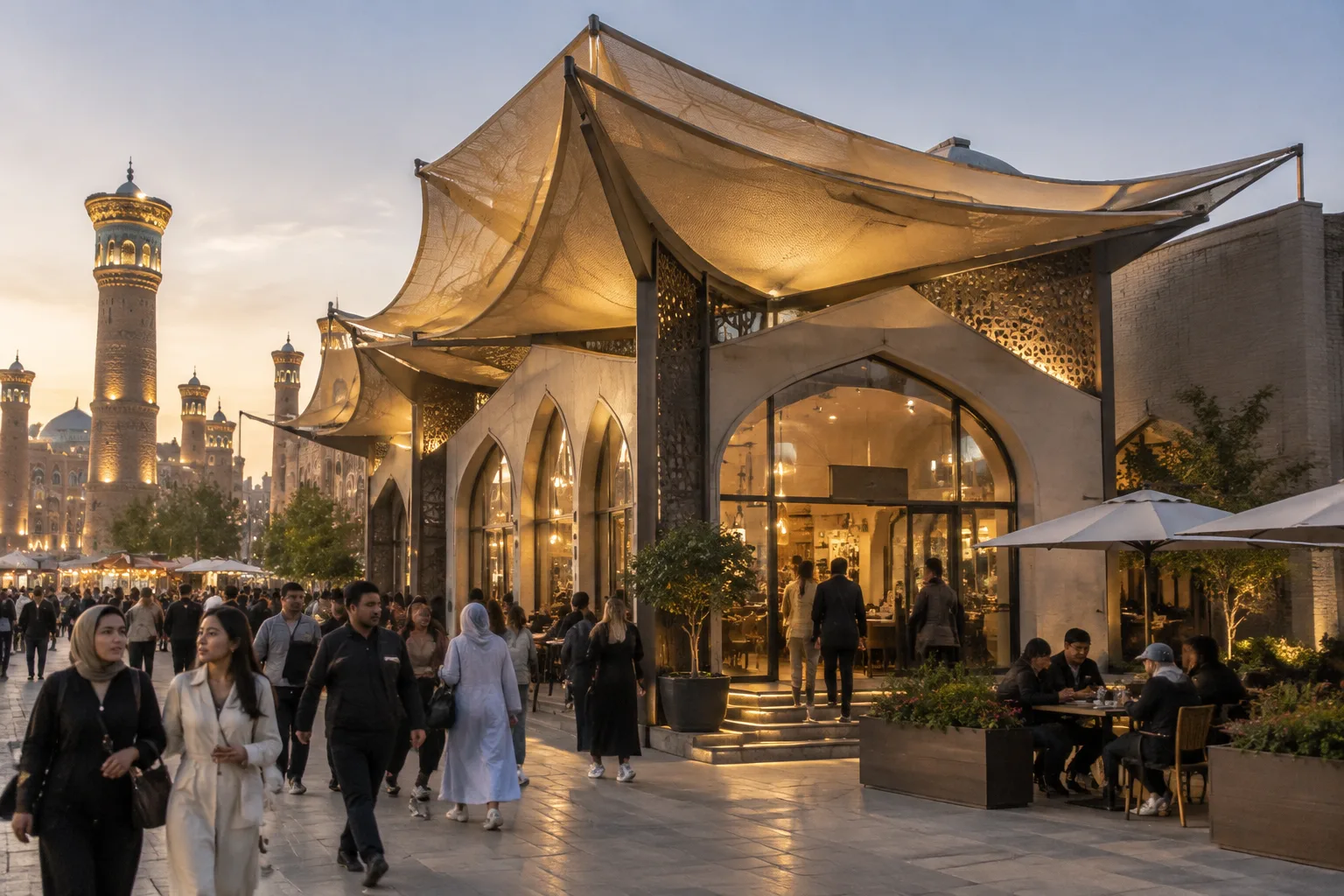
The two openings place Starbucks at the International Grand Bazaar and the airport. Star Bazaar occupies a prominent frontage at Urumqi’s International Grand Bazaar. It is Starbucks’ first flagship in China themed around intangible cultural heritage, and the first store for which the brand has led the architectural design.
According to the report, the standalone building draws on the layered, undulating rooflines of traditional bazaars. Rather than simply adding to the store count, the project highlights the brand’s use of local architectural features. The Tianshan International Airport store, which opened on the same day, provides a second foothold in Xinjiang.
Regional expansion following Boyu’s majority investment
The Xinjiang openings follow the completion of Starbucks’ strategic partnership with Boyu Capital. On 2 April, Starbucks announced that the transaction had been completed: funds managed by Boyu Capital hold a 60% stake in Starbucks’ China retail business, while Starbucks retains 40%.
Starbucks remains the owner and licensor of the brand and intellectual property, licensing them to the newly established joint venture. Under the arrangements, around 8,000 company-operated Starbucks stores in mainland China are to move to a franchised model, with the joint venture responsible for their operation and management.
For readers assessing franchise opportunities in China, it is important to distinguish this licensing structure from single-store franchises offered to individual investors. The available reporting describes the joint venture taking over operations and management; it does not indicate that the Xinjiang stores are recruiting external franchisees.
Store numbers rise, but no timetable for the long-term target
Figures disclosed by Starbucks show that its China store count stood at 8,342 at the end of September 2026, a net increase of 331 over the financial year. The two Xinjiang openings form part of its continuing network expansion.
The partners share a long-term ambition to expand the Chinese network gradually to 20,000 stores, but no specific target date has been announced. On 8 April, Starbucks China chief executive Liu Wenjuan told the company’s China Partner Forum that it would “maintain orderly, steady growth”. The long-term ambition should therefore not be read as a store-opening commitment with a firm deadline.
What the Xinjiang openings reveal about location strategy
The report also noted that Starbucks Reserve’s “Xingyifang” concept debuted at Beijing SKP on 16 September. Starbucks now has a presence at SKP luxury retail destinations in four cities: Chengdu, Xi’an, Beijing and Wuhan. From an Urumqi landmark and an airport to retail developments in other cities, the expansion spans a range of locations.
These opening announcements alone are not enough to assess store profitability. They do, however, offer concrete examples for franchise market observers examining how major brands enter new regions.
Practical takeaway: when assessing news of a brand’s expansion, verify separately who holds the licence, who actually operates the stores and what the opening plans entail. A change in franchising structure does not necessarily mean individual store franchises are available, and a landmark opening alone is no basis for estimating investment returns.