Guangdong 7-Eleven opens its 2,000th store, targeting 3,000 within four years
Guangdong 7-Eleven has opened its 2,000th store, with management setting a target of 3,000 within four years. As store growth among China’s top convenience retailers slows, regional expansion and franchise operating efficiency are coming into sharper focus.
Published
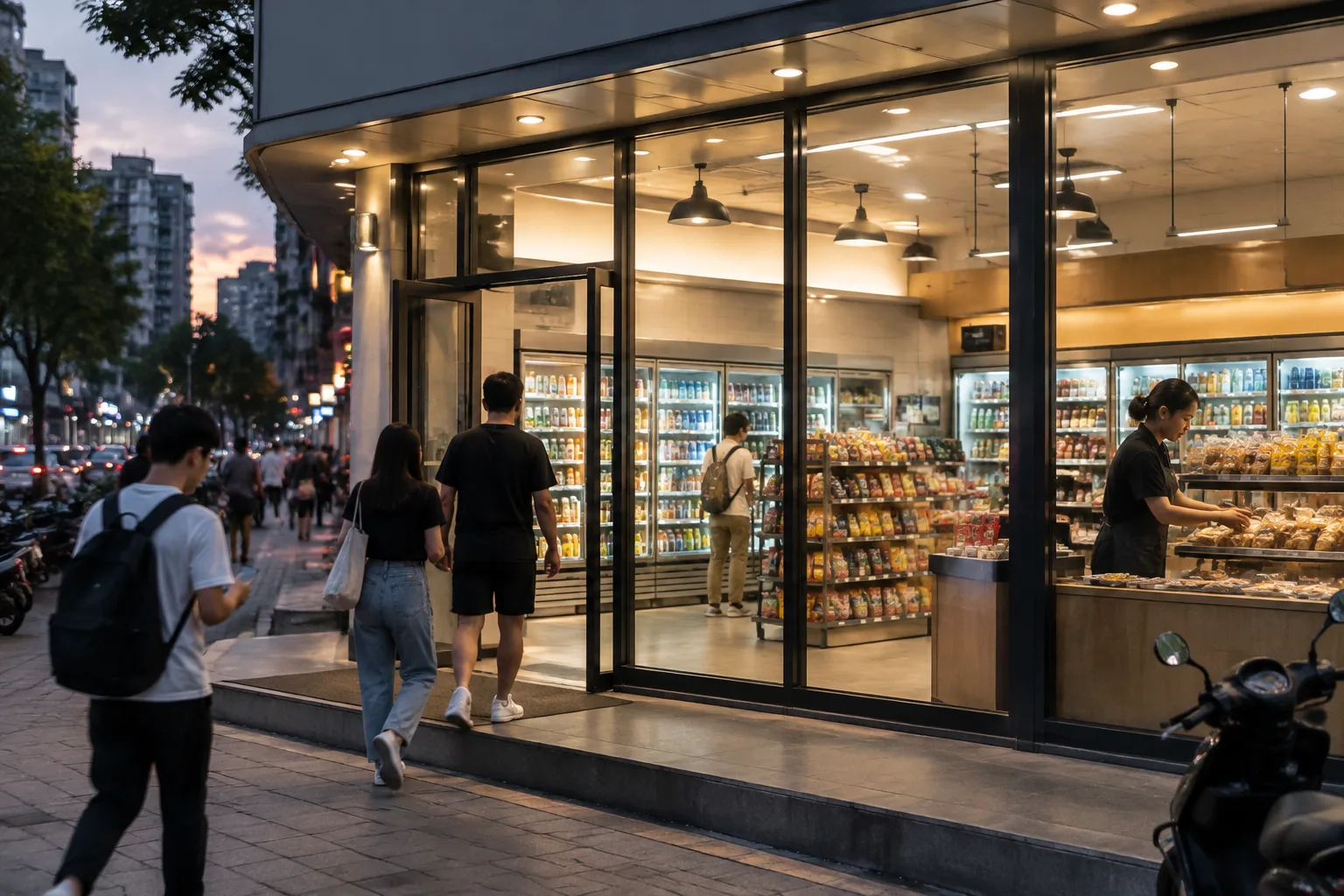
Guangdong 7-Eleven has opened its 2,000th store and announced its next expansion target. According to a report published on 30 October, Wen Yubin, Chief Executive of 7-Eleven at DFI Retail Group, told the opening event on 29 October that Guangdong 7-Eleven plans to reach 3,000 stores within four years. The plan merits attention from those considering franchising in China, but the store-count target should be assessed separately from regional competition, actual opening progress and individual store performance.
From 2,000 to 3,000: a target specific to Guangdong
The announcement concerns Guangdong 7-Eleven’s expansion plans, rather than a single store-opening target covering every region in China. Moving from the 2,000-store milestone to the 3,000-store target would mean a further expansion of its Guangdong network over the next four years.
The regional distinction is particularly important. The China Chain Store & Franchise Association’s 2026 China Convenience Store Top 100 shows that 7-Eleven had 5,565 stores across China at the end of 2025. The report explicitly states that this figure combines stores run by different regional operators; they are not all operated by Guangdong 7-Eleven.
The national total therefore cannot be treated as the Guangdong operator’s store count. Nor should figures from different dates simply be subtracted from one another to estimate changes in other regions. Prospective franchisees should first establish which regional market and operating company a proposed franchise falls under, rather than looking only at the brand’s national footprint.
The top 100 networks are still growing, but expansion has slowed
As Guangdong 7-Eleven sets its new target, the combined store network of China’s top 100 convenience retailers continues to grow, although the pace has changed.
The ranking shows that these retailers had a combined 208,000 stores at the end of 2025, a net increase of around 11,000 year on year. Growth of 5.6% represented a slowdown from the previous year. These figures describe the store networks of the top 100 businesses; they cannot be taken as a direct measure of trading conditions across all convenience stores in China, still less of changes in franchisee profits.
Significant differences in scale remain between leading brands. In the ranking, Meiyijia had 40,147 stores, Lawson 7,068, 7-Eleven across China 5,565 and FamilyMart 3,226. These figures help put the brands’ relative network sizes into perspective, but cannot by themselves establish whether a particular city still offers suitable sites or whether a new store could cover its costs.
For prospective franchisees, expansion targets indicate a brand’s direction of travel. Assessing investment viability still requires a close look at local footfall, rent, staffing costs and product sales.
Competition in southern China involves both scale and changing franchise models
Guangdong is far from an untapped market awaiting new stores. Meiyijia, which originated in Guangdong, had more than 40,000 stores nationwide at the end of 2025, while Tianfu, another Guangdong-founded chain, had more than 7,700. The report notes that both local brands have established relatively mature franchise networks in southern China. Their total store counts should not be mistaken for stores located entirely within Guangdong.
Other brands are also expanding. Lawson plans to reach 10,000 stores in China by 2028 and is trialling a lower-investment franchise model in Guangdong called “Lawson Station”, aimed at small, family-run shop operators. The model seeks to attract franchisees by reducing the upfront investment required.
Guangdong 7-Eleven’s next phase of expansion therefore involves more than competition over store numbers. Brands are also competing to attract operators, offer suitable store formats and provide operational support. However, lower upfront investment does not automatically mean lower overall operating costs, and brand scale is no substitute for checking the specific terms of an agreement.
Franchise decisions should focus on the individual store and contract
The plan to reach 3,000 stores within four years sets a clear expansion direction for Guangdong 7-Eleven. It does not establish that all new outlets will be franchised, nor should it be interpreted as a promise of franchisee earnings or a particular payback period.
In a convenience store franchise, the head office’s ability to develop new products is only one part of the equation. Whether those products sell consistently across different cities and trading areas, and whether stores generate sufficient earnings from those sales, also affects the long-term viability of the relationship. The more attention a brand’s expansion attracts, the more important it is for operators to separate network scale from their own store’s projected profit and loss.
During negotiations, prospective franchisees can ask for details of supply arrangements, product range updates, training support and responsibility for promotional costs. They should also check the locations of existing nearby stores and plans for future openings. Any earnings projections should be based on stores in comparable trading areas, with similar floor space and the same operating model, rather than simply applying brand-wide figures.
Practical tip: Monitor Guangdong 7-Eleven’s progress with new openings, while checking the regional operating company, specific franchise terms and itemised store costs. An expansion target is a useful indicator to watch, but should not be the sole basis for deciding to commit funds.