Araruama leads franchise growth among major cities in Rio de Janeiro state
Araruama’s franchise outlet count rose from 114 to 128. ABF Rio figures show growth in 14 of the 20 municipalities surveyed in Rio de Janeiro state.
Published
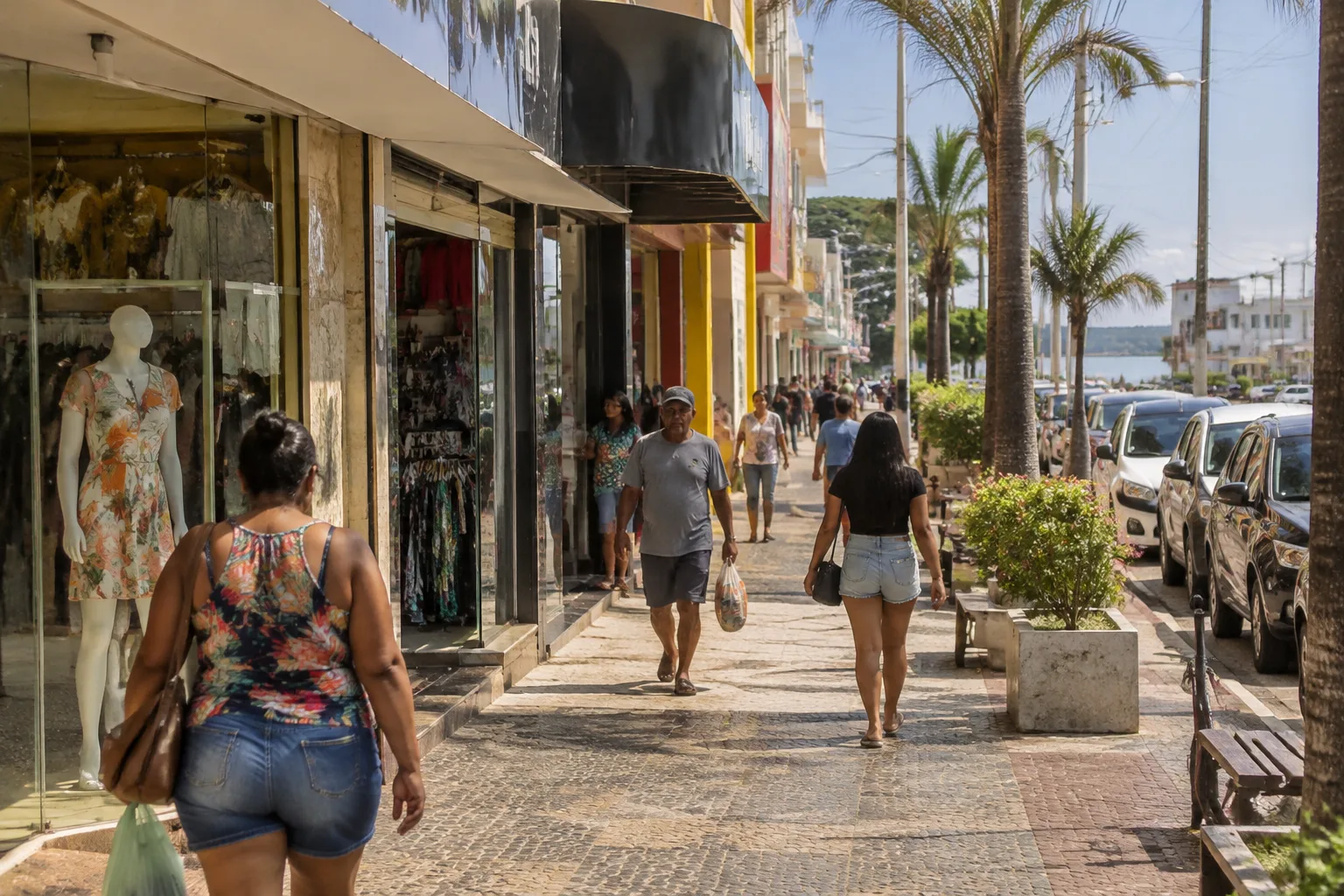
Araruama recorded the fastest percentage growth in franchise outlets among Rio de Janeiro state’s largest municipal franchise markets in the first half of 2026. The city’s outlet count rose from 114 to 128, an increase of 12.3%, according to figures from the Rio de Janeiro branch of the Brazilian Franchising Association (ABF Rio), published by Monitor Mercantil on 19 October. The result highlights franchise growth beyond the state capital.
Araruama stands out for percentage growth
The difference between the two periods represents a net increase of 14 outlets in Araruama. Its growth rate of 12.3% exceeded the 1.5% increase in the state’s total outlet count, which reached 18,887 in the first half of 2026.
This leading position needs to be interpreted carefully: Araruama recorded the highest percentage increase among the municipalities with the largest numbers of franchise outlets. This does not mean it has the most outlets in the state or that it added the most in absolute terms.
This distinction matters when tracking franchise expansion. A smaller market can record a high percentage increase while adding fewer outlets than a larger city. In Araruama’s case, the figures show a growing franchise presence, but do not identify which brands or sectors drove the increase.
The published figures also do not break down how many openings and closures contributed to the result. The 14 additional outlets should therefore be understood as the difference between the recorded totals, rather than a standalone count of new openings.
Growth extends across several municipalities
Growth was not limited to Araruama. Of the 20 municipalities in Rio de Janeiro state analysed by ABF Rio, 14 recorded an increase in franchise outlets in the first half of 2026. That equates to seven in ten municipalities in the sample.
After Araruama, the highest reported percentage increases were in Nova Friburgo, at 6.9%; Resende, at 6.3%; Teresópolis, at 5.8%; and Angra dos Reis, at 5.4%.
The distribution of these results shows that growth reached cities in different parts of the state. For the franchise sector, this broadens the picture beyond statewide performance and the concentration of outlets in the city of Rio de Janeiro.
However, growth in 14 municipalities does not mean that the other six experienced a decline. The published figure establishes how many grew, but the individual performance of the remaining cities is not presented here. Nor can the expansion be attributed to a specific cause, such as local demand, premises costs or the strategies of particular franchise networks.
The state capital remains a much larger market
The city of Rio de Janeiro remained the state’s largest municipal franchise market. Its total outlet count rose from 10,275 to 10,444, an increase of 1.6% over the period.
In absolute terms, this was a net increase of 169 outlets. The contrast with Araruama helps distinguish two dimensions of expansion: percentage growth and scale. While Araruama stood out for its growth rate, the state capital added more outlets to its existing base.
Rio de Janeiro’s 10,444 outlets also account for more than half of the 18,887 recorded across the state. Growth in other municipalities therefore coexists with a substantial concentration in the capital. The results do not indicate that one market is replacing another, but rather that markets of different sizes are growing.
How to use the figures when assessing a franchise
Across the state, franchise turnover reached approximately R$13.7 billion (Brazilian reais) in the first half of 2026, up 9.3% on the same period in 2025. Revenue therefore grew faster than the number of outlets.
This aggregate result does not reflect the profitability of an individual outlet or guarantee a brand’s performance in a particular city. Similarly, a high municipal growth rate is not enough on its own to determine where to invest.
In practice: use municipal growth as a starting point for researching a local market. Before choosing a franchise, weigh local figures against the investment required, competition, the suitability and terms of the premises, and the performance of comparable outlets in the network.