Haruyama opens franchise recruitment for ‘Hotto Hitoiki Station’, turning 132 sq m of shop space into a self-care area
Haruyama Shoji has begun recruiting franchisees for Hotto Hitoiki Station. Aimed at businesses with at least 331 sq m of sales floor space, the shop-in-shop model uses around 132 sq m to bring underused space into productive use.
Published
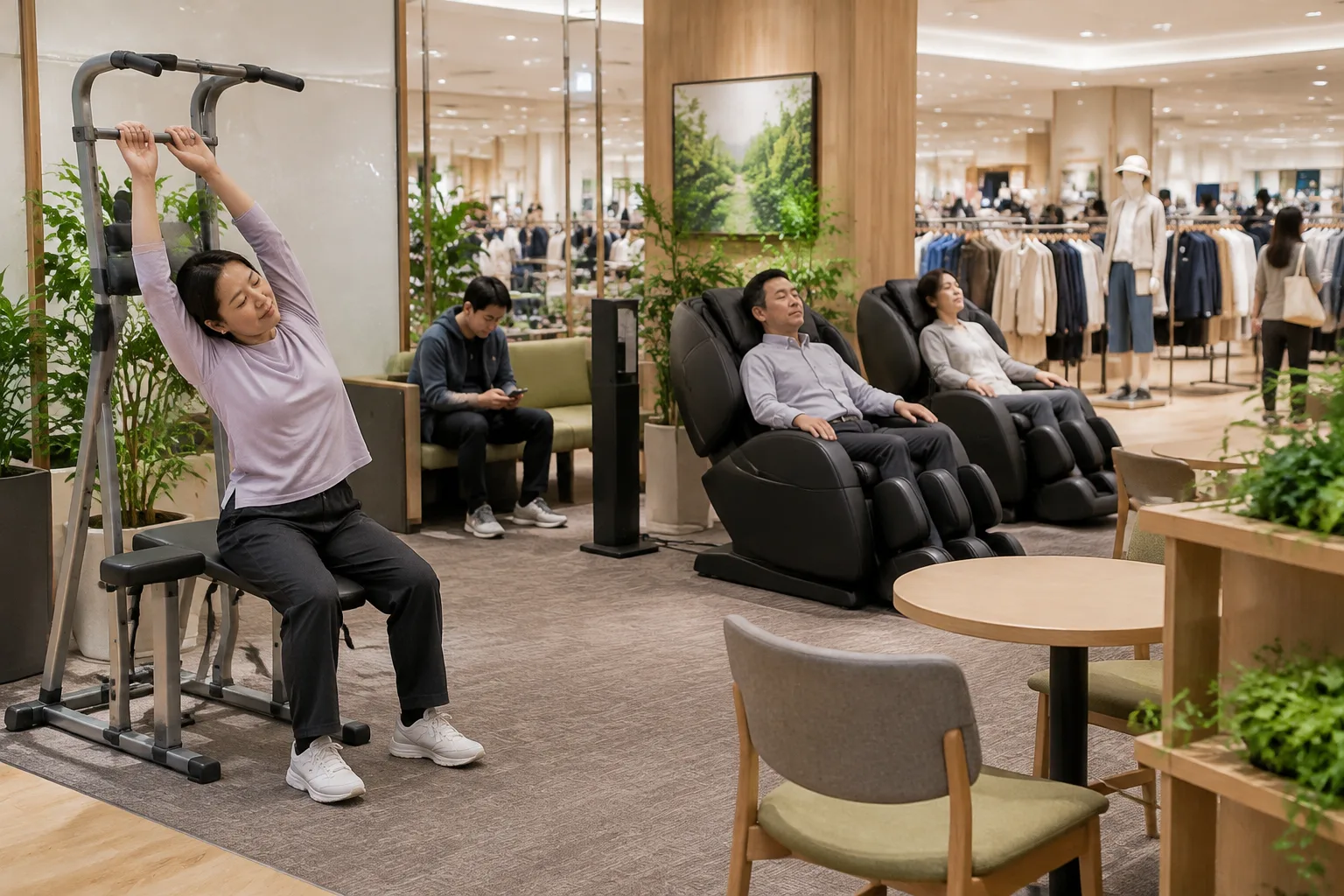
On 2 November 2026, Haruyama Shoji began recruiting franchisees for its self-care concept, ‘Hotto Hitoiki Station’ — roughly, ‘a place to take a breather’. The shop-in-shop model uses around 40 tsubo (132 sq m) within an existing outlet to create a space equipped with wellness facilities. Drawing on its experience of operating 64 company-owned locations, the retailer aims to open 130 franchise locations within three years.
A 132 sq m shop-in-shop model for stores of at least 331 sq m
Recruitment is aimed at retail and service businesses with suburban stores offering at least 100 tsubo of sales floor space. The recommended installation area is around 40 tsubo, using a shop-in-shop format to establish a separate service area within an existing store. Applications can be submitted through a dedicated form on Haruyama’s official website.
According to a report published by Ryutsu News on 2 November, 100 tsubo is approximately 330.58 square metres, while the recommended 40-tsubo installation area is approximately 132.23 square metres. The minimum overall sales floor area and the recommended space allocated to the service are separate requirements.
The company’s stated aims are to generate revenue from underused space and create new business opportunities. It is extending a model developed within its own businesswear stores to other retail and service operators.
Rather than asking franchisees to open standalone premises, the offer is to run self-care services alongside an existing business in the same store. For prospective franchisees, it represents a model built around making use of existing retail space and premises.
Self-service equipment designed to reduce staffing needs
Hotto Hitoiki Station offers equipment including a ‘Body Refresh Capsule’ developed in collaboration with Phiten, foot massagers, water-wave beds, self-service teeth whitening and stretching machines.
Ryutsu News reports that customers use the equipment themselves, allowing the service to operate with fewer staff and without specialist practitioners. The model centres on self-service access to equipment rather than treatments delivered by specialists.
However, reduced staffing requirements should not be confused with the ability to operate the entire location without staff. Prospective franchisees will need to establish how day-to-day customer guidance and equipment management would fit into their existing staffing arrangements.
A café area for working or taking a break can also be included. The company expects the service’s position alongside the main sales floor to encourage customers to move between the two areas. The proposal is therefore not simply to fill an empty section with equipment, but to offer shopping and relaxation in one place. Increased movement between the areas is presented as an anticipated benefit, not a proven outcome.
Launched in 2018, with experience from 64 company-owned locations
According to Haruyama Shoji’s announcement, the Great East Japan Earthquake of 2011 prompted the company to focus on health and wellness as a way to address customers’ needs. It launched Hotto Hitoiki Station in 2018 as part of that initiative.
As of October 2026, the network comprised 64 company-owned locations. Ryutsu News reports that these locations attract users ranging from teenagers to people in their eighties. The business is intended to go beyond supplying businesswear by creating places where people can incorporate self-care and rest into everyday life.
The franchise launch builds on eight years of operational know-how and a track record of attracting customers. The company says the concept turns unused space within existing businesses into wellness areas, giving local people a convenient place to unwind.
The key development is the move to extend a company-operated service to franchise partners. The current network of 64 company-owned locations should be distinguished from the future franchise expansion target.
Target of 130 franchise locations within three years
The company aims to open 130 franchise locations within three years of the start of recruitment. This is a future expansion target, not the number of locations already open or franchise agreements already signed.
Alongside expansion, Haruyama plans to strengthen links with its company-owned locations and build a nationwide health-support network with franchise partners. Under its stated mission to become an ‘infrastructure company’, it aims to create accessible local places where people can make self-care and rest part of their routines.
The recruitment announcement sets out the required store size, shop-in-shop format, equipment mix and low-staffing operating model. Prospective franchisees will need to assess how these features match the operating conditions of their own stores. Securing around 132 sq m is only one consideration: customer flow between the service and the existing sales floor, as well as arrangements for assisting users, also need to be reviewed.
The practical first step is to confirm that the store meets both the overall sales floor requirement and the recommended installation area, then ask the franchisor about franchise costs, equipment management and the division of day-to-day responsibilities. Businesses considering the concept as a use for spare space should assess whether it can be integrated into their existing operations and staffing arrangements without undue strain.