Campo Grande tops franchise revenue growth ranking
The capital of Mato Grosso do Sul recorded 21% growth in the first half of 2026, with Cuiabá second in the growth ranking across 30 major Brazilian franchise markets.
Published
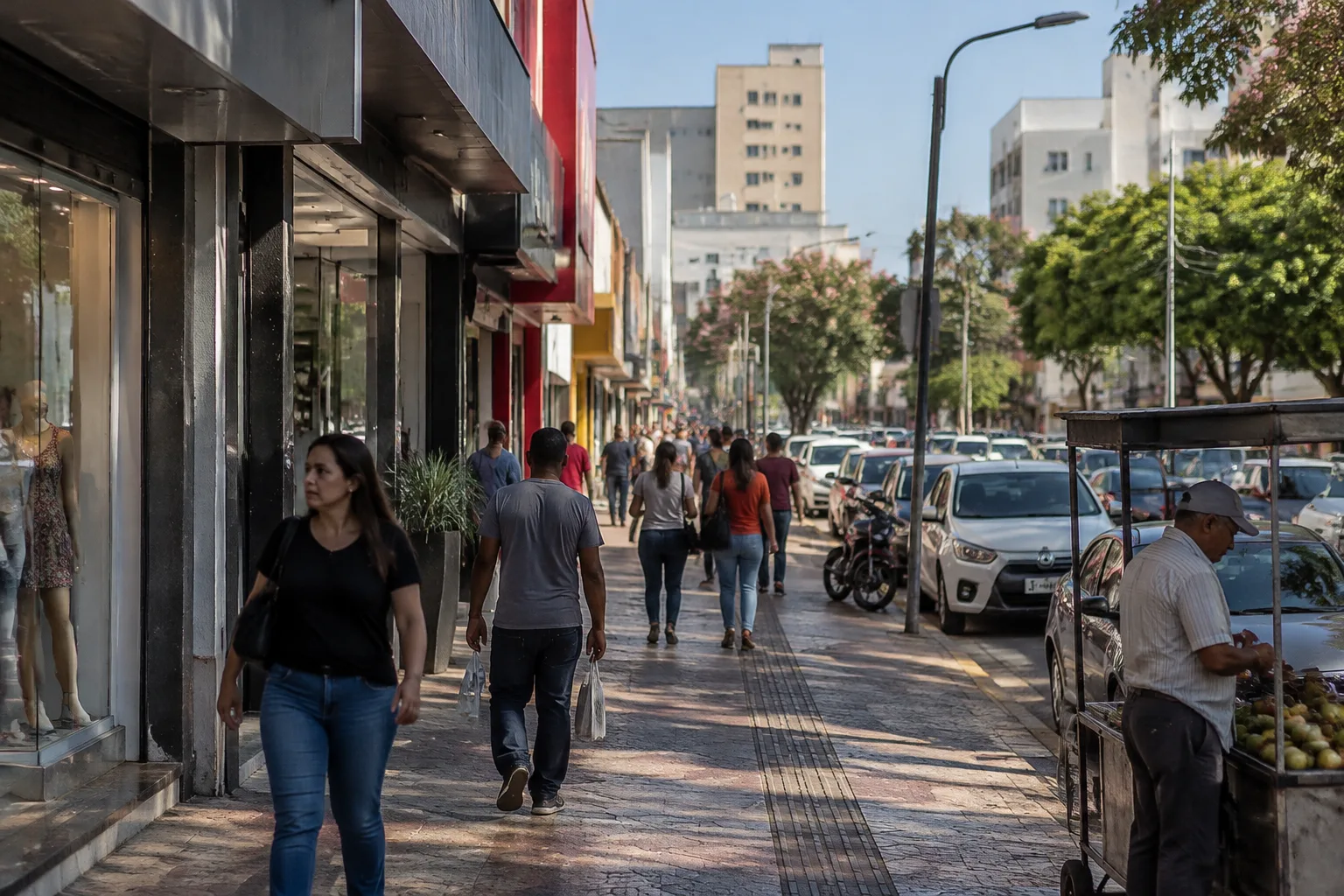
Campo Grande recorded a 21% increase in franchise revenue in the first half of 2026, topping the growth ranking among the 30 cities with the highest franchise revenues in Brazil. Cuiabá came second with growth of 14%, highlighting the strong performance of state capitals in Brazil’s Centre-West region in the Brazilian Franchising Association (ABF) survey.
Centre-West takes three of the top five places
Released during ABFCon, the ranking of Brazil’s 30 leading franchise cities by revenue compares results for the first half of 2026 with the same period in 2025. Alongside Campo Grande and Cuiabá, Goiânia ranked among the five fastest-growing markets, taking fifth place with an increase of 12%.
The other two places went to cities in São Paulo state: São José do Rio Preto came third with growth of 13%, and Campinas fourth with 12%. Three of the top five cities were therefore in the Centre-West.
The scope of the ranking matters: ABF first selects the 30 cities with the highest franchise revenues, then ranks them by revenue growth. Campo Grande’s lead therefore reflects its growth rate within this group, rather than the highest total franchise revenue in the country.
According to the association, the aim is to track franchise sector trends in the most significant markets. The survey is not a ranking of every Brazilian municipality by its rate of expansion.
State capitals move up from the previous edition
Comparison with the 2025 ranking reveals significant shifts in position. Campo Grande rose from 12th place in the previous edition to first in 2026, more than doubling its growth rate, according to the published survey.
Cuiabá climbed from seventh to second, while Goiânia moved from 16th to fifth. Together, these changes illustrate the growing prominence of Centre-West state capitals across the two editions.
Porto Alegre, which led the 2025 list with growth of 32.97%, ranked 12th in 2026 with an increase of 9%. In this case, the fall in ranking occurred despite rising revenue: the capital of Rio Grande do Sul continued to grow, but at a slower pace than before.
Jundiaí and Santos, which ranked second and third in the 2025 edition with increases of 29.26% and 19.51% respectively, do not appear among the 30 cities in the latest edition. Their absence alone does not establish that local revenue fell, as the list is drawn from a group selected by total revenue.
Agribusiness and new brands help explain the results
ABF considers the strength of agribusiness a contributing factor in the performance of Campo Grande and Cuiabá. To put this in context, figures from Brazil’s National Supply Company (Conab) indicate an increase of approximately 7.4% in Mato Grosso do Sul’s 2025/26 harvest, compared with a Brazilian average of 2.5%.
The survey also identifies different trends across franchise sectors. Campo Grande saw the arrival of brands in Home and Construction and Hospitality and Tourism. Health, Beauty and Wellbeing was among the growing sectors, with pharmacies and dentistry standing out.
In Cuiabá, growth included Home and Construction and Food Service. The city also attracted brands in Hospitality and Tourism and Health, Beauty and Wellbeing, according to the association’s analysis.
Results varied across municipalities. In São José do Rio Preto, the survey identified the arrival of food retail and distribution brands, alongside growth in pharmacies, dentistry, and Cleaning and Maintenance. Campinas saw the arrival of Fashion and Health, Beauty and Wellbeing brands.
Mato Grosso do Sul also leads the state-level ranking
ABF also tracked changes in revenue by state. Mato Grosso do Sul recorded the highest growth at 17%, followed by Acre at 16%, Pará at 13% and Amapá at 12%.
This provides a broader view beyond state capitals, but should be considered separately: state-level performance covers a different geographical area from the municipal ranking. Campo Grande’s growth was 21%, while Mato Grosso do Sul’s was 17%.
For anyone considering opening a franchise, the practical takeaway is to use the ranking as a starting point, not a guarantee of returns. Before choosing a city, assess revenue growth alongside competition, neighbourhood demand and projected operating costs.
Sources
- Despesas, juros e mão de obra freiam expansão das franquias
- Franquias aumentam faturamento e projetam crescer, mas tributação preocupa
- Franquias e licenciamentos para empreender ainda em 2026
- Franquias pedem atualização do Simples e desoneração ...
- Fábrica de Bolo Vó Alzira acelera expansão no Estado de São Paulo
- Em ano de destaque para o Centro-Oeste, Campo Grande e Cuiabá lideram crescimento em receita de franquias