FC Barcelona considers expansion through master franchising
The club is weighing up a global partner or regional agreements to expand its store network, while retaining plans for new club-owned shops in Spain.
Published
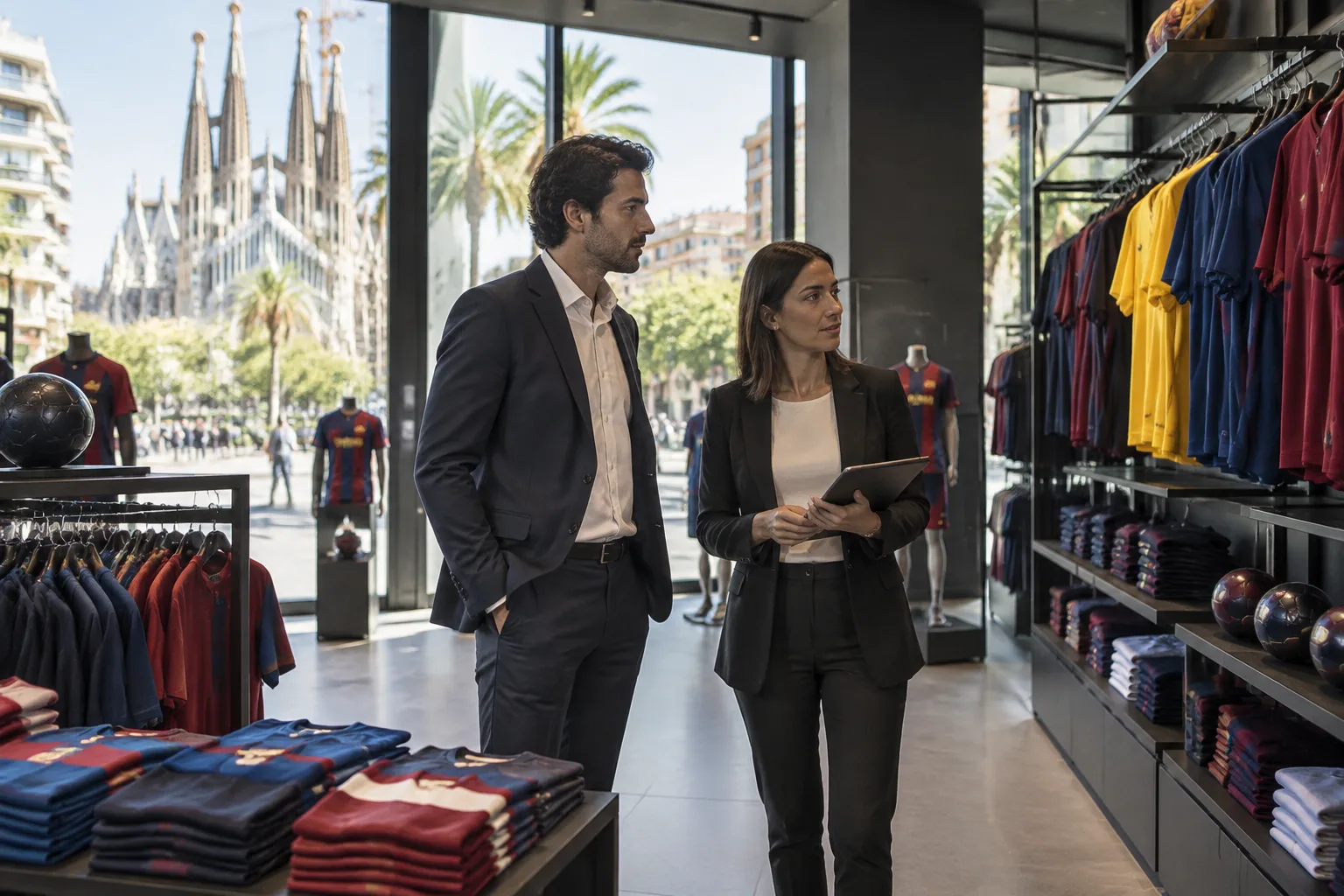
FC Barcelona is considering master franchising to expand its international store network. According to reporting by elEconomista, covered by L’Express Franchise on 23 October, the club is exploring two options: a single global partner or multiple agreements covering individual countries and regions. Alongside its search for a way to grow abroad, the club is planning further openings of its own stores in Spain.
Two options for international expansion
The proposal places franchising at the heart of the club’s next phase of commercial growth. The first option involves a master franchise agreement with a global partner to roll out stores across different markets. The second would divide development between country or regional operators with knowledge of their respective markets.
For now, the reporting describes options under consideration, not a signed agreement. It neither names a selected partner nor sets out a timetable for international openings. This distinction matters to the franchise sector: there is an intention to expand and a search for partners, but no appointment has been announced.
Both approaches address the same need: finding operators capable of supporting commercial growth outside Spain. The difference lies in how those relationships would be structured and how many partners would take responsibility for developing the territories.
A network already combining club-owned and franchised stores
The existing network is not wholly club-owned. According to the published information, the club has 25 stores, of which 15 are club-owned and 10 are franchised. Franchising is therefore already part of its retail operations.
Barça Licensing & Merchandising, known as BLM, is the commercial subsidiary leading this process. Its revenue has risen from around €60 million in 2018 to €208 million in the latest season cited. These figures relate to the subsidiary as a whole and should not be confused with revenue generated solely by its franchised stores.
The company also recorded a net profit of €20 million in the 2024–2025 financial year, according to Commercial Registry data cited by elEconomista. This performance provides context for the search for partners: the proposed expansion builds on an established commercial business combining physical stores and e-commerce.
The United States and Europe among the markets considered
The United States is among the markets on the club’s radar. The reporting identifies it as the club’s largest e-commerce market, helping to explain its interest in developing a physical presence there. Several European capitals are also mentioned, although no cities or dates are specified.
The retail network includes a store in Georgia. The club is also working on another outlet at Istanbul Airport, which would be operated by a third party. These projects should be distinguished from any potential master franchise agreement: the reporting does not confirm that they would fall under that future contract.
International expansion does not replace the club’s domestic plans. It intends to open four or five club-owned stores over the next few years, in Barcelona and locations popular with tourists, including coastal destinations or Madrid. No final breakdown of these openings has been provided.
The commercial target and what it means for operators
BLM’s target remains to reach €300 million in revenue by the 2031–2032 season at the latest. This is a future goal, not a revenue forecast attributable solely to new franchises. The reporting also does not specify how much would come from club-owned stores, partner-operated outlets or online sales.
For franchise operators assessing opportunities in Spain and beyond, the significance lies in the two parallel routes to growth: direct investment in the domestic market and a search for partners to develop overseas territories. The case illustrates how a brand with an established commercial business is considering different ways to structure its expansion, without yet publicly committing to a final model.
Practical takeaway: interested operators should distinguish between a search for partners and a formal franchise offering. Before assessing an investment, they should confirm the available territories, store-opening obligations and financial terms of any potential agreement.