South Korea’s chicken franchise outlets reach 31,397 as franchisors diversify revenue
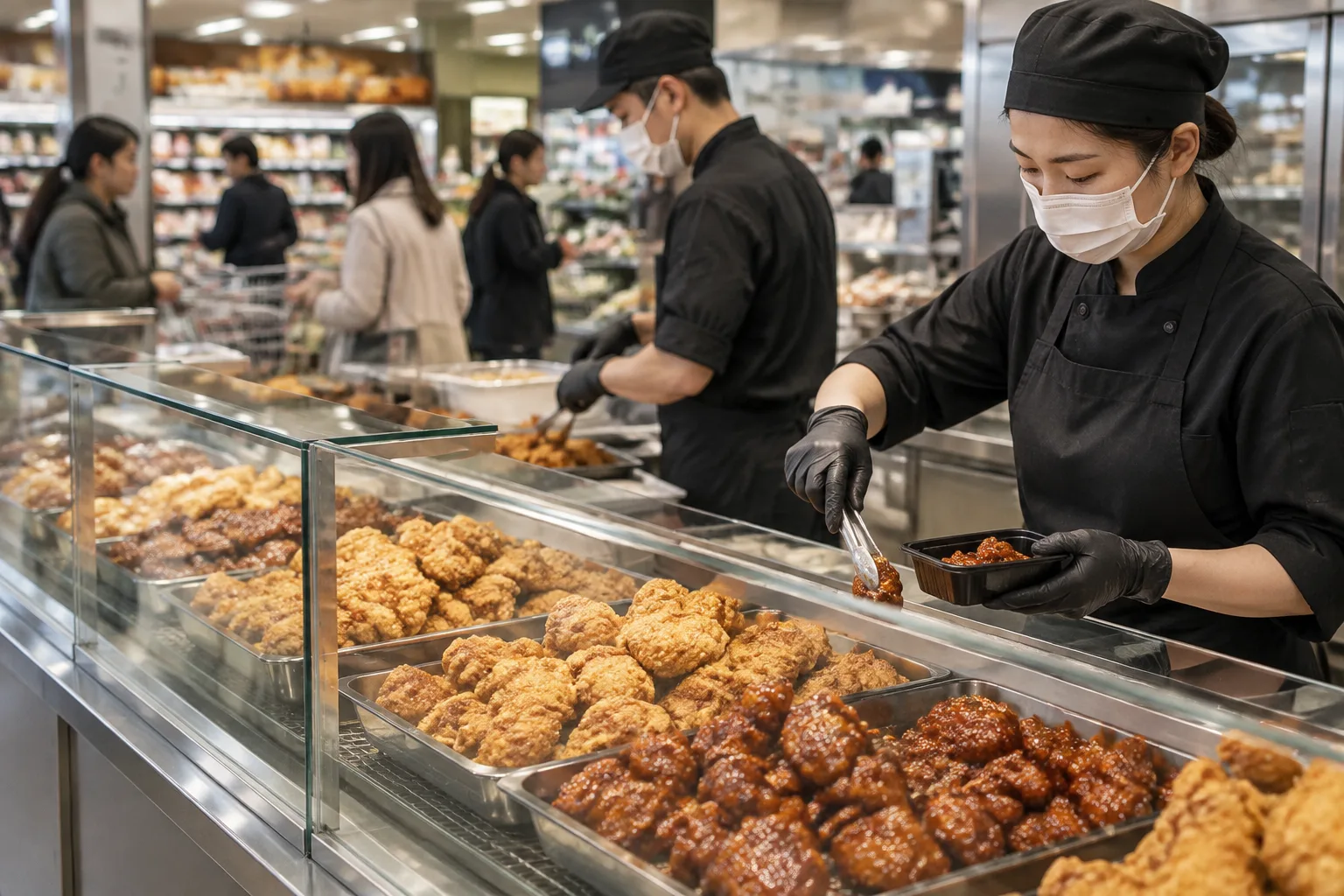
South Korea’s chicken franchise outlet count rose by 5.3% in 2024, but sales per outlet increased by just 1.9%. Major franchisors are broadening their revenue sources through restaurants, tonkatsu, catering and boxed meals.
Published
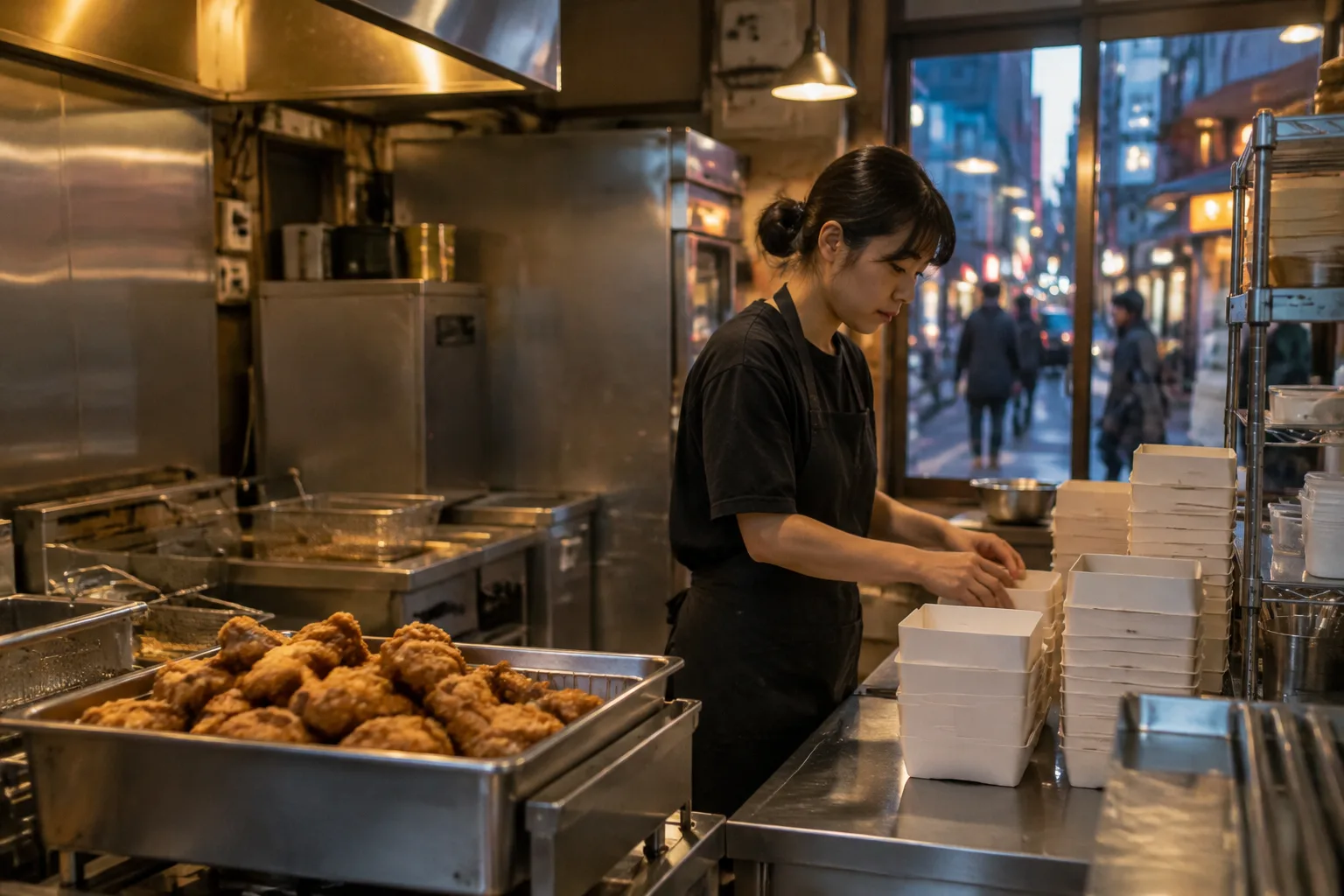
South Korea’s chicken franchise sector is seeing a gap between the pace of outlet expansion and sales growth at individual shops. In 2024, the number of franchised chicken outlets rose by 5.3% year on year, while sales per outlet increased by just 1.9%. As major franchisors diversify into other restaurant brands, catering and boxed meals, it is increasingly important to distinguish growth at group level from the operating performance of existing outlets.
More outlets, fewer workers per shop
According to statistics from South Korea’s national data agency, cited by the Busan Ilbo on 27 October, there were 31,397 chicken franchise outlets in 2024, up 5.3% on the previous year. Over the same period, sales per outlet rose by 1.9% to KRW 279.6 million. Both outlet numbers and average sales increased, but at different rates. The expansion in new outlets did not mirror sales growth at individual shops, including existing locations.
Employment figures moved in the opposite direction. The chicken franchise workforce fell by 2.4% year on year to 65,373. The number of workers per outlet also declined, by 0.1 to 2.1. With both total employment and staffing per outlet falling as the network expanded, outlet numbers alone cannot explain operating conditions across the sector.
These statistics do not, however, establish why staffing declined. Further evidence would be needed to determine whether automation, changes in working hours or owners taking on more shifts played a role. A smaller workforce should not automatically be treated as evidence of higher productivity or reduced service. What the figures do confirm is that outlet growth and falling employment occurred over the same period.
Sales must also be distinguished from profit. A 1.9% increase in sales per outlet does not mean that franchisees’ earnings rose by the same proportion. The figures are not operating profits after deducting ingredients, rent, labour and other costs. Prospective franchisees should therefore use average sales as a starting point when assessing a business opportunity, while examining the actual cost structure separately.
Outback accounts for around 40% of Dining Brands Group’s revenue
Dining Brands Group, which operates bhc, is one example of a business that has reduced its reliance on chicken. The group moved to diversify its revenue by acquiring Outback Steakhouse in 2021. According to the Busan Ilbo, Outback now accounts for around 40% of group revenue, giving a non-chicken brand a substantial role in the group’s results.
Last year, bhc accounted for 53.4% of total group revenue, compared with more than 80% in 2020. The comparison shows that the group has become less dependent on a single chicken brand. Rather than simply adding another brand to its portfolio, the acquisition has materially changed its revenue mix.
It is important here to distinguish revenue share from revenue value. A decline in bhc’s share does not, by itself, mean that bhc’s own revenue fell. An existing brand’s share can change as revenue from other brands is added or grows. The key point is the shift in the group’s overall revenue structure, not whether any individual brand is underperforming.
Diversification at franchisor level is also not the same as improved profitability for franchisees. Outback’s growing revenue contribution is a group-level development. Separate outlet performance data would be needed to connect this with higher sales or lower costs at bhc franchises. Existing and prospective franchisees should distinguish news of group expansion from the operating indicators of the brand they run or are considering.
BBQ expands into tonkatsu, catering and boxed meals
Genesis BBQ Group is broadening its business beyond chicken through tonkatsu — Japanese-style breaded pork cutlets — and udon restaurants, as well as catering and boxed meals. In July, it opened a company-owned Ucuya restaurant in the commercial district around Gangnam Station in Seoul. This brought Ucuya’s company-owned estate to two outlets, including its existing restaurant in Siheung, Gyeonggi Province. Ucuya had 54 franchised outlets in 2024.
The company-owned and franchised outlet figures refer to different dates. It would therefore be inappropriate to add this year’s Gangnam Station opening to the 2024 franchise count and present the result as the current total estate. The confirmed development is the addition of a company-owned restaurant near Gangnam Station; an updated franchise total and future opening targets were not disclosed.
Party Center, the group’s subsidiary specialising in healthy catering and boxed meals, is another part of its revenue diversification strategy. In the first half of this year, it had secured three outlets of its own and 31 corporate clients. Revenue over the period rose to 2.5 times the level recorded a year earlier. This represents an expansion beyond restaurant diners to businesses purchasing catering and boxed meals.
However, a revenue growth multiple alone says little about a business’s absolute size or profitability. The report did not provide Party Center’s revenue value or operating profit. Its 31 corporate clients should not be confused with 31 franchise outlets either. Distinguishing between these operating units and performance measures is essential to understanding BBQ’s expansion without overstating it.
Assess franchisor diversification and outlet performance separately
These examples show that growth for chicken franchisors is no longer confined to opening more chicken outlets in South Korea. Dining Brands Group has changed its revenue mix through an acquired restaurant brand, while BBQ operates tonkatsu and udon restaurants alongside catering and boxed-meal businesses. These are different business models, however, so their performance cannot readily be compared on a like-for-like basis.
National statistics and company results also cover different scopes. Average sales at chicken franchise outlets in 2024 indicate the direction of the wider sector, while a brand’s share of group revenue describes the structure of a particular company. Neither measure should be used as a substitute for the other. In particular, caution is needed when using a national average to estimate sales in a specific area or at an individual outlet.
In practical terms, information about the brand covered by a franchise agreement should take priority over news of wider business expansion. Prospective franchisees should compare the latest franchise disclosure document with projected costs, while existing operators should review changes in their own outlet’s sales, staffing and expenses together. How diversified a franchisor is and how much profit an outlet retains are separate questions.