BBQ opens company-run outlets in two Hanaro Mart stores, moving beyond frozen food to freshly cooked chicken
BBQ has opened company-run outlets selling freshly cooked chicken at NongHyup Hanaro Mart’s Gyeonggi Seongnam and Goyang stores. The move highlights both the expansion of sales channels outside its franchise network and the need to manage potential overlap with existing franchisees.
Published
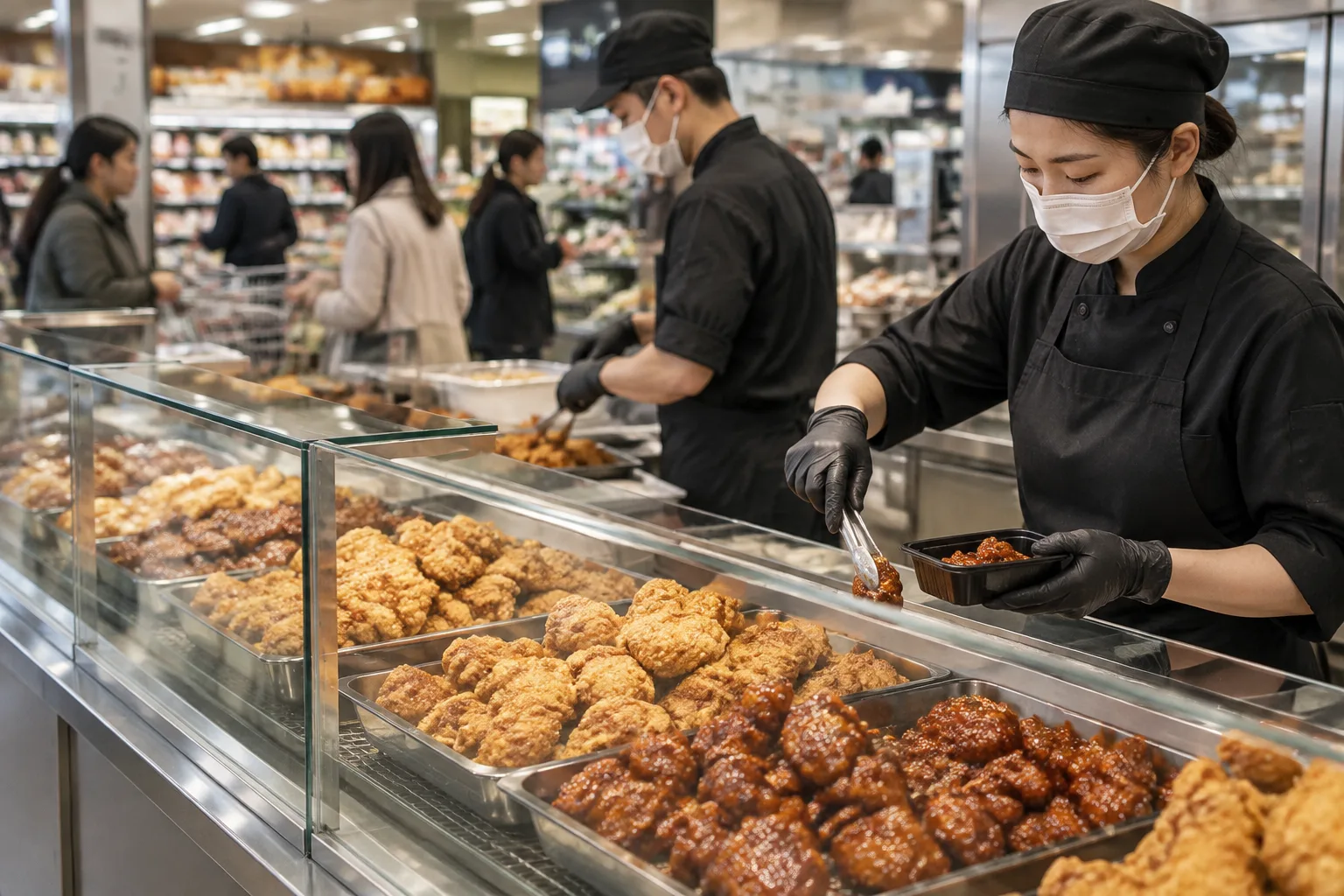
BBQ has moved beyond supplying frozen chicken products to large supermarkets by opening company-run outlets that cook and sell chicken on site. Launched at two NongHyup Hanaro Mart stores, the initiative illustrates how South Korea’s chicken franchise sector is seeking growth beyond opening more franchised outlets. It also raises an important question: how should new sales channels operated by the franchisor coexist with existing franchisees?
Chicken cooked on site at Hanaro Mart deli counters
According to a ChosunBiz report published on 26 October, BBQ opened company-run outlets at NongHyup Hanaro Mart’s Gyeonggi Seongnam and Goyang stores in the middle of that month. The outlets prepare and sell chicken within ‘OK Cook’, Hanaro Mart’s own freshly prepared food section. Rather than adding conventional franchised outlets, BBQ has expanded into retail space inside supermarkets.
The menu comprises 14 items: 10 chicken options, including boneless fried chicken, sweet-and-spicy chicken bites and Jamaican-sauce chicken bites, alongside three side dishes and traditional Korean-style whole fried chicken. The change is therefore not simply about where products are sold, but also how they are prepared and served to customers.
BBQ already supplies frozen chicken convenience meals to large supermarkets, including Lotte Mart. Unlike that model, in which finished frozen products are sold through a retailer’s distribution network, the Hanaro Mart outlets are operated directly by BBQ inside the stores. This makes the initiative more than a straightforward expansion of its frozen food listings.
Both models involve selling branded products outside the franchise network. However, one distributes finished frozen products, while the other involves company-run outlets cooking food on site. For those assessing this development in the franchise sector, that distinction matters: the supermarket setting may be similar, but the operating model has changed.
Only two openings have been confirmed: Gyeonggi Seongnam and Goyang. These alone provide no basis for assuming that a nationwide rollout has been agreed, or that supermarket-based company-run outlets will replace existing franchisees. For now, the focus should be on the sales model introduced at these two locations.
Sales per franchise outlet grew more slowly than outlet numbers
The expansion into external sales channels comes against a backdrop of conditions in South Korea’s chicken market that make it harder to sustain further growth through new openings alone. According to statistics from the Ministry of Data and Statistics cited in the report, the country had 31,397 franchised chicken outlets in 2024, up 5.3% on the previous year.
Over the same period, sales per franchised outlet rose by 1.9% to KRW 279.6 million. Both outlet numbers and sales per outlet increased, but at different rates. In other words, the expansion in store numbers was not matched by an equivalent rise in sales at individual outlets.
These figures cover chicken franchise outlets nationwide; they are not BBQ-specific results. Sales per outlet are also distinct from profit. Sales growth alone cannot establish how much franchisees’ earnings improved or how well a particular brand performed operationally.
In this environment, franchisors can use their established brand recognition and product development capabilities through other sales channels. Selling products through large supermarkets, convenience stores, television shopping channels and online retailers provides revenue streams separate from expanding the franchise network. BBQ’s entry into Hanaro Mart fits this broader trend.
However, creating a new revenue stream for the franchisor and improving existing franchisees’ performance are different matters. From a sector-wide perspective, growth in external sales needs to be assessed separately from franchise outlet operating results. Expanding a brand’s sales network should not automatically be interpreted as growth for its franchisees.
From convenience stores and TV shopping to company-run supermarket outlets
This is not BBQ’s first use of external retail channels. In 2018, it partnered with 7-Eleven to launch a convenience-store chicken business. The following year, it began selling frozen chicken convenience meals through CJ O Shopping, now known as CJ OnStyle.
It subsequently expanded supply to online retailers and large supermarkets. In August this year, it added two oven-roasted chicken thigh products previously sold online — Herb Salt and Jamaican flavours — to Lotte Mart’s range. This extended its consumer reach by making existing products available through another retail channel.
According to the report, revenue from BBQ’s convenience-meal distribution business rose by 29.3% year on year in the first half of this year. In the first quarter, related revenue had approximately doubled, while the number of product varieties increased by 56.3%. These figures point to growth in both the product range and sales within its external distribution business.
The first-half and first-quarter growth figures cover different reporting periods and should not be combined into a single growth rate. Nor should the convenience-meal distribution results be treated as evidence of the performance of the newly opened Hanaro Mart outlets.
What distinguishes these openings is the addition of on-site cooking to BBQ’s existing experience in external distribution. Increasing the number of retailers stocking frozen products is different from directly operating outlets inside supermarkets. Future assessments should therefore separate the established convenience-meal business’s results from the operating performance of the new outlets.
Assess new sales channels alongside their impact on franchisees
A central issue in a franchisor’s expansion into external sales is its relationship with existing franchisees. When the same brand sells chicken through a separate channel, it may compete for sales with established outlets. ChosunBiz reported that chicken brands are seeking to reduce such conflicts of interest by differentiating their product ranges and sales formats.
BBQ’s Hanaro Mart outlets offer a menu centred on gangjeong — Korean-style crispy chicken bites, typically coated in sauce. However, the publication of a menu does not in itself establish that potential competition with existing franchisees has been resolved. The practical effect of product differentiation needs to be assessed alongside operating results.
For existing franchisees, the first step is to establish how the menus and sales formats of nearby external outlets differ from their own. Prospective franchisees should likewise avoid confusing growth in a brand’s overall distribution business with the expected sales of the particular outlet they are considering. Expansion of the franchisor’s business does not guarantee the performance of individual stores.
The key development here is not simply the presence of BBQ products in supermarkets, but the emergence of a new sales model operated directly by the franchisor. The practical takeaway for those considering this franchise market is clear: distinguish growth in external sales channels from franchise outlet performance, and examine specific differences in product ranges and sales territories when reviewing contracts and operating arrangements.