Mammoth Coffee returns to IFS after 10 years as prospective franchisees focus on profit, not sales
Mammoth Coffee has returned to the IFS franchise exhibition after a 10-year absence. Amid interest in small-format shops and lower-cost start-ups, prospective franchisees were keen to establish how much profit they could actually retain.
Published
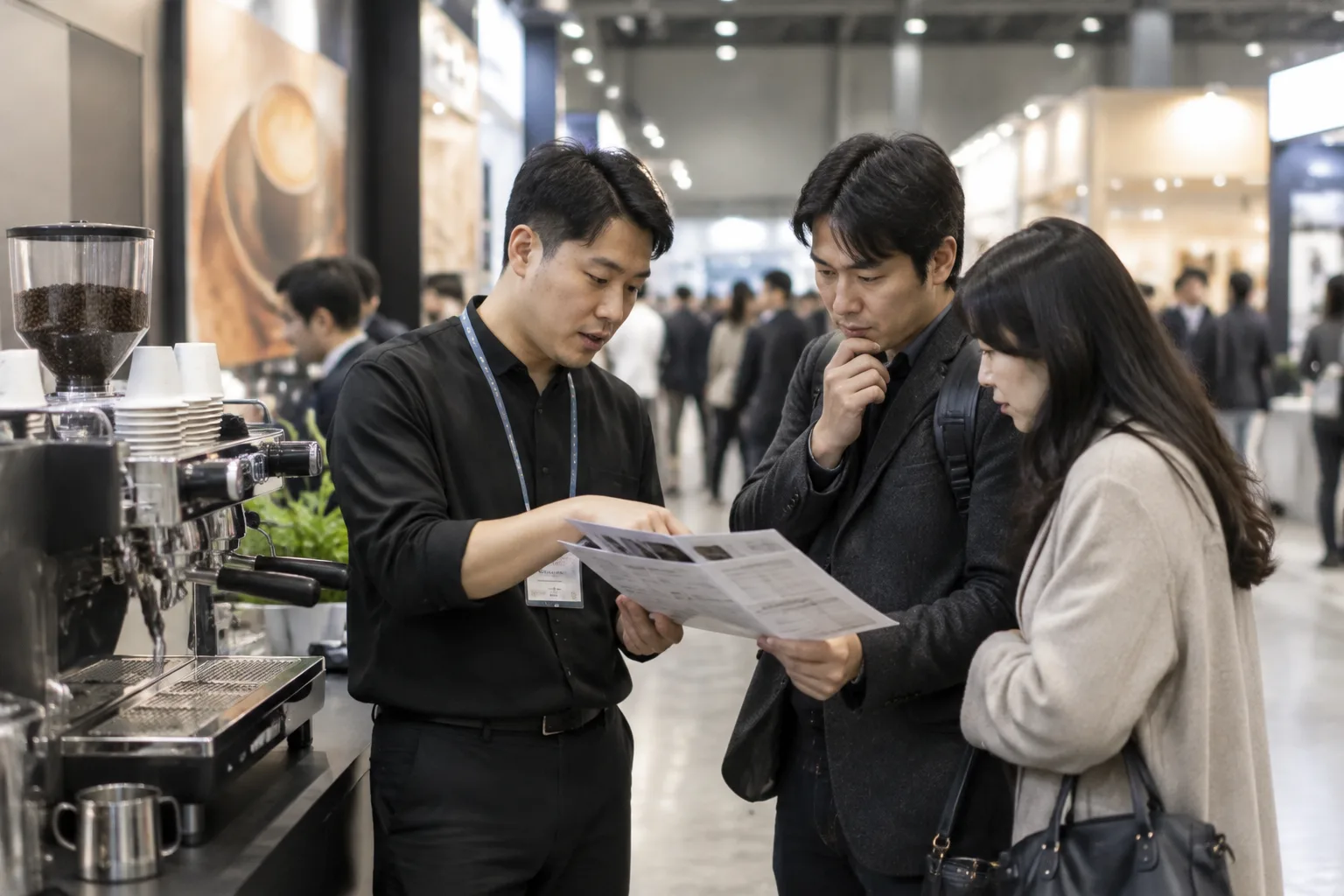
Mammoth Coffee has taken part in a franchise start-up exhibition for the first time in 10 years. Coffee and malatang brands held franchise consultations at the 61st IFS exhibition, which opened on 22 October 2026 in Hall C of COEX in Samseong-dong, Seoul. Questions from prospective business owners went beyond brand recognition and expansion plans. Their main concern was how much revenue a shop could generate — and how much would actually remain after costs.
Mammoth Coffee returns as profitability takes centre stage
According to MyDaily’s report from the exhibition on 22 October, this was Mammoth Coffee’s first appearance at the event in 10 years. As coffee and malatang brands sought new franchisees, visitors also showed interest in lower-cost start-ups and small-format shops. In the same report, a representative of a budget coffee brand said prospective business owners most frequently asked about sales and the amount left after costs.
That comment reflected the representative’s experience of consultations at the event. It was not the result of a survey of all visitors, nor was it profitability data applicable to every brand. It nevertheless shows that visitors were asking specific questions about operating results before choosing a brand. Mammoth Coffee’s long-awaited return was one part of an event where those discussions were taking place.
Other participating brands included Baekeok Coffee, One Better Coffee and Tang Huo Kung Fu Malatang, a spicy hotpot chain. Prospective franchisees could hear from several brands in one place, but participation in an exhibition should not be treated as proof of profitability or investment suitability. Visitors need to distinguish between the shop model presented at a stand and the conditions at the actual premises they are considering.
In particular, the question ‘How much is left?’ should lead to further questions about the basis of the sales figures. Visitors should ask which shops and trading periods the figures cover, and which costs have been taken into account. This does not imply that any participating brand has a problematic cost structure. It is a practical way to compare different presentations on a consistent basis.
Growth in brands and outlets is not the same as profit at an individual shop
According to franchise sector figures from South Korea’s Fair Trade Commission cited in the report, there were 9,960 franchisors, 13,725 brands and 379,739 franchised outlets at the end of 2025. Compared with the previous year, the number of franchisors rose by 13.2%, brands by 10.9% and outlets by 4.0%. These figures show growth in both the number of businesses involved in South Korea’s franchise sector and its outlet count.
The three measures grew at different rates. Franchisors and brands recorded double-digit increases, while outlet growth was slower. These statistics can help establish the scale of the franchise sector. However, an increase in outlet numbers alone does not mean that sales or operating profit at individual shops also rose.
Information presented at the exhibition about expansion plans or brand size therefore needs to be assessed separately from shop-level financial performance. Active franchise recruitment and the likelihood of an owner achieving their expected return in a particular trading area are different matters. Asking for evidence for each, rather than combining the two, makes comparisons more useful.
This distinction also matters when considering a lower-cost start-up. Questions about the initial investment serve a different purpose from questions about operating costs after opening. Prospective owners should ask not only whether they can open within their budget, but also what expenditure they will need to cover to keep trading. This turns general questions about profitability into practical checks.
Compare equipment, distribution and operational support too
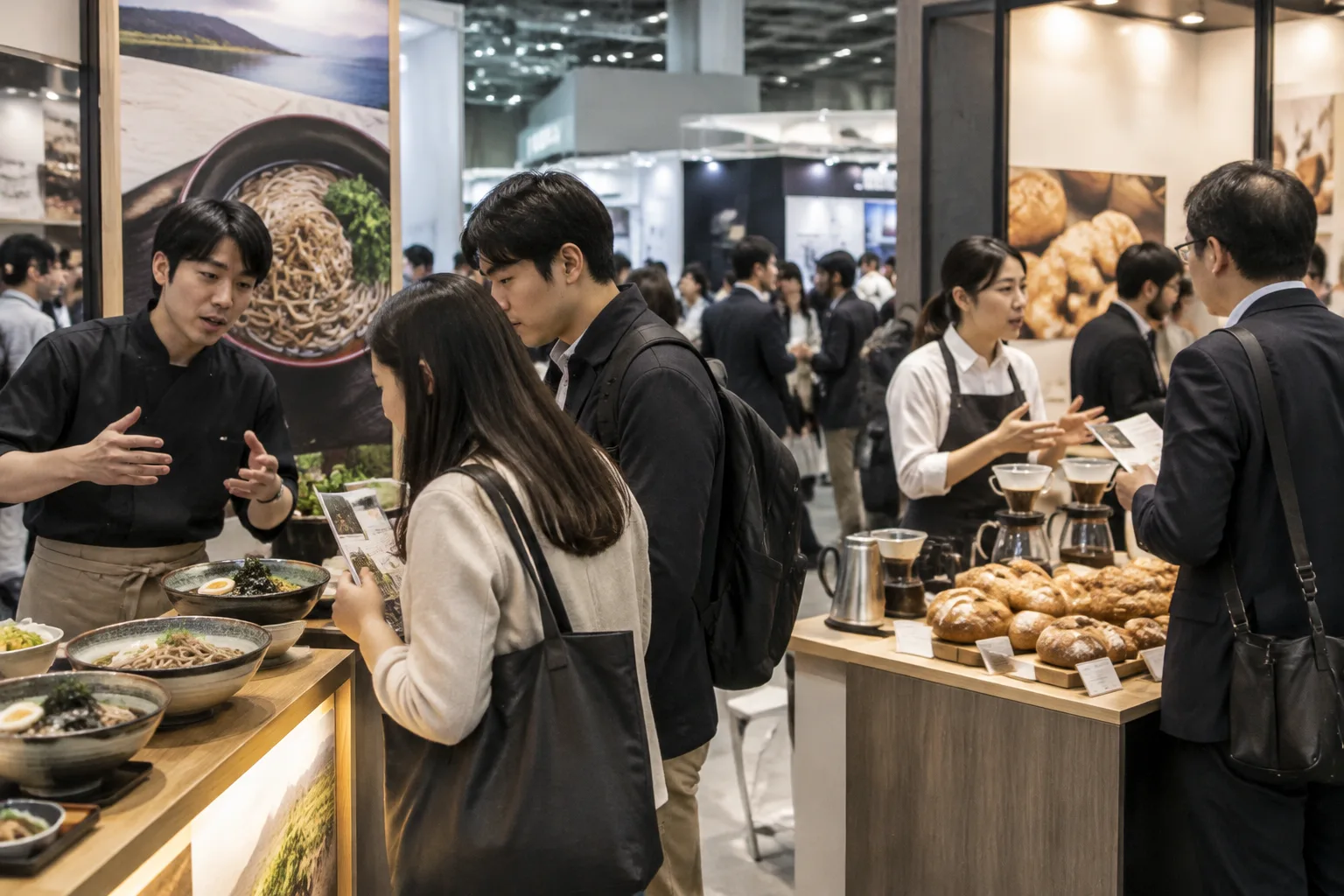
Around 200 companies from South Korea and overseas took part in the exhibition, occupying 530 stands. Displays presenting franchise opportunities appeared alongside those covering shop equipment, distribution and IT-based operational solutions. The format allowed existing shop owners, as well as prospective franchisees, to seek advice.
Foodservice exhibitors also included Jadam Chicken, Tudari, Cheongnyeon Dabang, Jokbal Night Market and Bon Dosirak. The event was not limited to coffee and malatang: it offered information on business opportunities across foodservice, wholesale and retail, and services. Even visitors drawn by Mammoth Coffee’s participation could explore other operating models and shop support services.
For visitors focused on profitability, discussions with brands and operational solution providers should inform one another rather than remain separate appointments. One approach is to note the equipment and management tasks required by the operating model described at a brand’s stand, then use those notes to frame questions elsewhere in the exhibition. Whether a displayed solution can be used in a particular brand’s outlets must still be checked separately with the franchisor.
Consultation notes should also follow a consistent format. Recording initial costs, staffing requirements, the basis of sales figures and the items included in cost estimates in the same order makes differences between brands easier to identify. This is not a standard assessment form published by the event, but a way for visitors to organise their own evaluation of a business opportunity.
Turn exhibition discussions into checks before signing
The event also offers expert-led guided tours, an expert consultation zone and a business-matching programme. The tours are led by Lee Hong-gu, head of the Korea Start-up Trend Research Institute, with a different theme each day. The expert consultation zone provides free start-up and legal advice with participating organisations including the Korea Fair Trade Mediation Agency and the Korea Workers’ Compensation & Welfare Service.
Visitors can use brand stands to learn about individual franchise models, then raise separate business or legal questions with expert advisers. Hearing a presentation should be distinguished from reviewing the terms of a contract. Rather than reaching an immediate decision at the exhibition, a more cautious approach is to leave with a list of documents and questions requiring further checks.
The exhibition runs until 24 October, with opening hours of 10am to 5pm. Admission costs KRW 15,000. Preparing a shortlist of brands and operational questions before visiting can help visitors plan their consultations within the time available.
In practical terms, the key is not to stop at ‘What are the projected sales?’ Prospective franchisees should establish the assumptions behind those projections and the scope of the costs, then cross-check what they hear at the exhibition against the documents reviewed before signing. Although Mammoth Coffee’s return has attracted attention, the final decision should rest less on the size of a participating brand than on the specific conditions of the shop the prospective owner would run.