Kyochon turns to buckwheat, Bonif to premium bread: new franchise models at IFS
Kyochon F&B and Bonif presented buckwheat dishes and a premium bread-and-brewed-coffee concept at IFS. Familiar parent companies aside, prospective franchisees should examine each new brand’s operating requirements.
Published
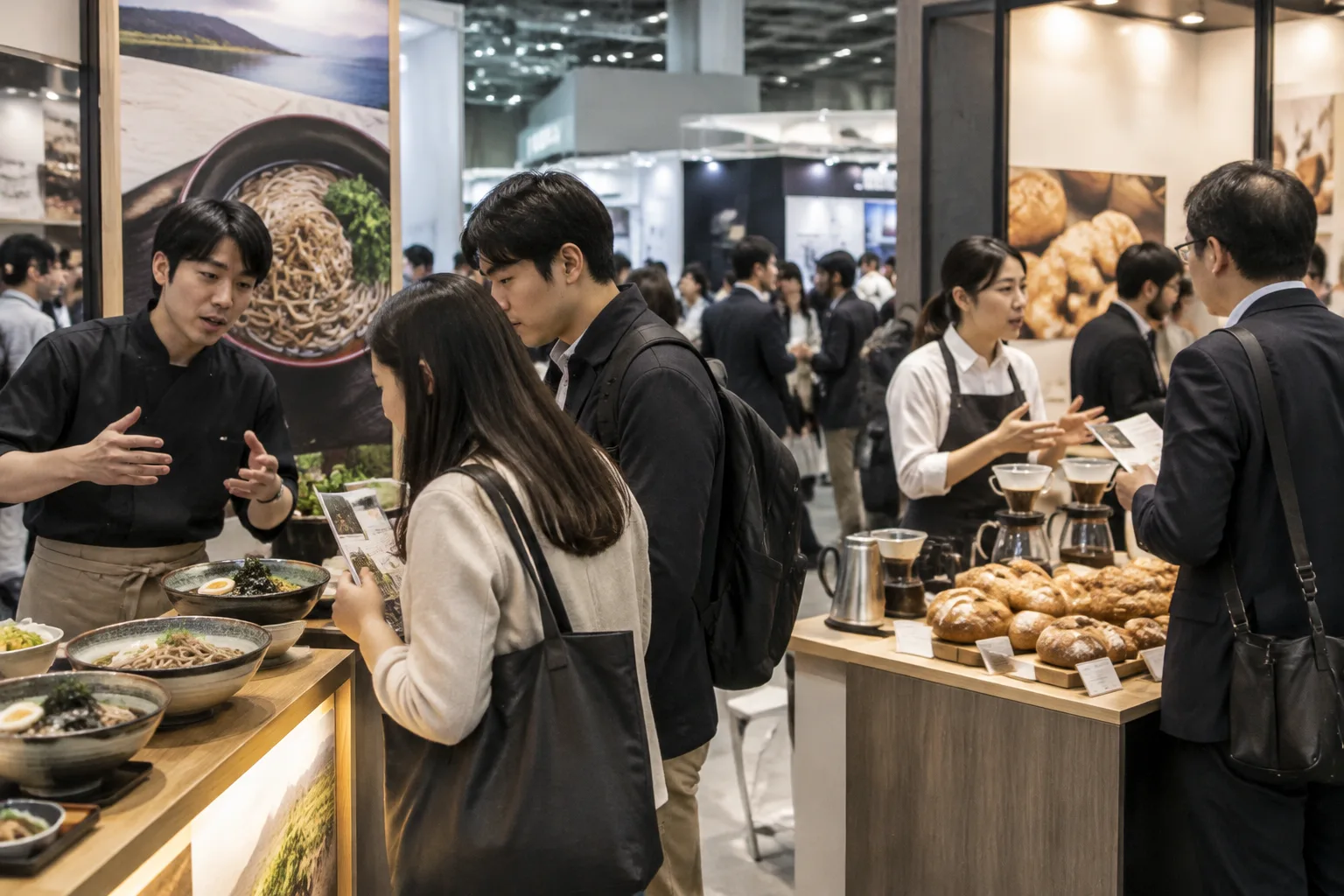
Restaurant franchise companies known for fried chicken and Korean rice porridge have unveiled business models built around different menus. At the autumn IFS Franchise Exhibition, which opened at COEX in Seoul on 22 October 2026, Kyochon F&B introduced a buckwheat-based concept, while Bonif presented a model combining premium soft white bread with brewed coffee. The event gave prospective franchisees a chance to explore new menus and shop formats from established franchise operators.
From chicken to buckwheat, and from porridge to bread and coffee
According to a Newsway report on 22 October, Bonif and Kyochon F&B showcased new business ventures at the exhibition. Bonif’s offering paired premium soft white bread, known in Korea as saeng-sikppang, with brewed coffee. Kyochon F&B promoted a brand specialising in buckwheat dishes. Both stood out for putting food categories outside their established signature menus at the centre of their franchise consultations.
Digital Daily’s coverage from the same day also identified Memil Danpyeon as one of the major franchise brands with a large stand. Bon Dosirak, Jadam Chicken, Tudari and Krispy Kreme also took part with large stands. Visitors could explore both familiar brands and new ventures from established companies under one roof.
What the exhibition demonstrates is an expansion in the franchise options offered by established operators. Presenting a new concept, however, is not the same as proving its profitability at outlet level. Neither participation in an exhibition nor the size of a stand is enough to assess an individual outlet’s sales, investment payback period or scope for further expansion.
Prospective franchisees should separate their familiarity with the parent company from their assessment of the new brand. During consultations, they should ask how experience running a chicken franchise translates into operating a buckwheat restaurant, or how systems developed for porridge and boxed-meal businesses will support a bread-and-coffee concept. Specific support commitments, rather than the company name, should guide scrutiny of the franchise agreement.
When assessing a new menu, ask what a working day involves
The bread-and-brewed-coffee model is distinctive for bringing the two products together. Anyone considering it should first establish how the bread and coffee are made and supplied, which tasks fall to the outlet, and what equipment is required. Understanding the menu pairing is a separate step from understanding the work needed to run the business.
For example, prospective franchisees can ask in what form products arrive, what work is required after an order is placed, and how much staffing is needed for opening preparations and closing duties. These are checks intended to clarify the proposed franchise arrangements, not claims that the model already follows a particular operating format.
Likewise, the name of a buckwheat dish alone reveals little about the cooking workload or skills required. It is important to distinguish between items supplied by the franchisor and those prepared on site, and to examine the scope of training and kitchen equipment requirements. In particular, asking which tasks are actually reduced by the convenience promised by the franchisor makes comparisons between brands more meaningful.
When comparing the two models, it is best not to reduce every consideration to a single projected profit figure. Upfront equipment costs, recurring ingredient costs and day-to-day operating tasks should each be assessed separately. Even brands from the same parent company need separate pre-contract checklists if their menus and outlet formats differ.
New options amid interest in smaller premises
Alongside the new menu concepts, smaller outlets and lower-cost ways of starting a business attracted attention at the exhibition. Digital Daily reported promotional messages across the stands emphasising compact premises, value for money and businesses run by a single operator. It also reported that prospective franchisees were focusing on upfront investment, operating efficiency and franchisor support systems.
Coffee brands were also represented. Mammoth Coffee returned with an exhibition stand for the first time in ten years, while Baekeok Coffee and Stanbrew welcomed visitors too. Those exploring Bonif’s bread-and-brewed-coffee model could therefore compare its franchise terms with those of other coffee brands at the same event.
However, the wider interest in smaller outlets should not automatically be applied to the new Kyochon F&B or Bonif models. There is no basis for assuming that both are designed for one-person operation, or that they can be opened for less than existing brands. Exhibition-wide marketing trends must be distinguished from the actual terms offered by each brand.
Anyone considering a small outlet should ask not just about floor area but also about the workload during peak ordering periods. They should establish which tasks the proposed staffing level covers, whether the owner is expected to work on site throughout opening hours, and when extra staff might be needed. This turns descriptions such as ‘small’ or ‘simple to run’ into concrete operating questions.
After the brand introduction, compare contracts and support
The exhibition runs from 22 to 24 October in Hall C at COEX in Samseong-dong, Seoul, with around 200 companies taking part across 530 stands. Alongside brand-specific franchise consultations, it offers a chance to explore shop equipment, distribution services and operating solutions. Visitors can therefore consider both a new menu concept and the practical resources needed to run it.
According to Digital Daily, only brands with franchise disclosure documents registered with South Korea’s Fair Trade Commission may participate in the brand showcase section. That entry requirement is worth checking, but registration should not be treated as a guarantee of investment returns. Prospective franchisees still need to compare the brand’s documents directly with the terms presented during consultations.
For a new model launched by an established company, it is particularly important to confirm the contracting party, who provides training, who handles supplies and logistics, and the scope of ongoing support. Useful questions also include how long the promised support lasts and which items incur additional charges. Recording answers against a consistent set of criteria makes comparisons with other brands easier.
The offerings from Kyochon F&B and Bonif show that familiar company names can sit behind very different franchise models. As a practical next step, put each brand’s supply arrangements, staffing needs, upfront costs and ongoing franchisor support into a one-page comparison table. This provides a starting point for turning interest in a new menu into a proper review of the franchise agreement.