GYU-SUKE launches franchise recruitment for regional beef restaurants in Japan’s tourist destinations
Aged Hida beef yakiniku restaurant GYU-SUKE is recruiting corporate franchisees, prioritising tourist destinations across Japan. Using its company-owned Takayama restaurant as a model, it plans to serve aged local branded beef at each location.
Published
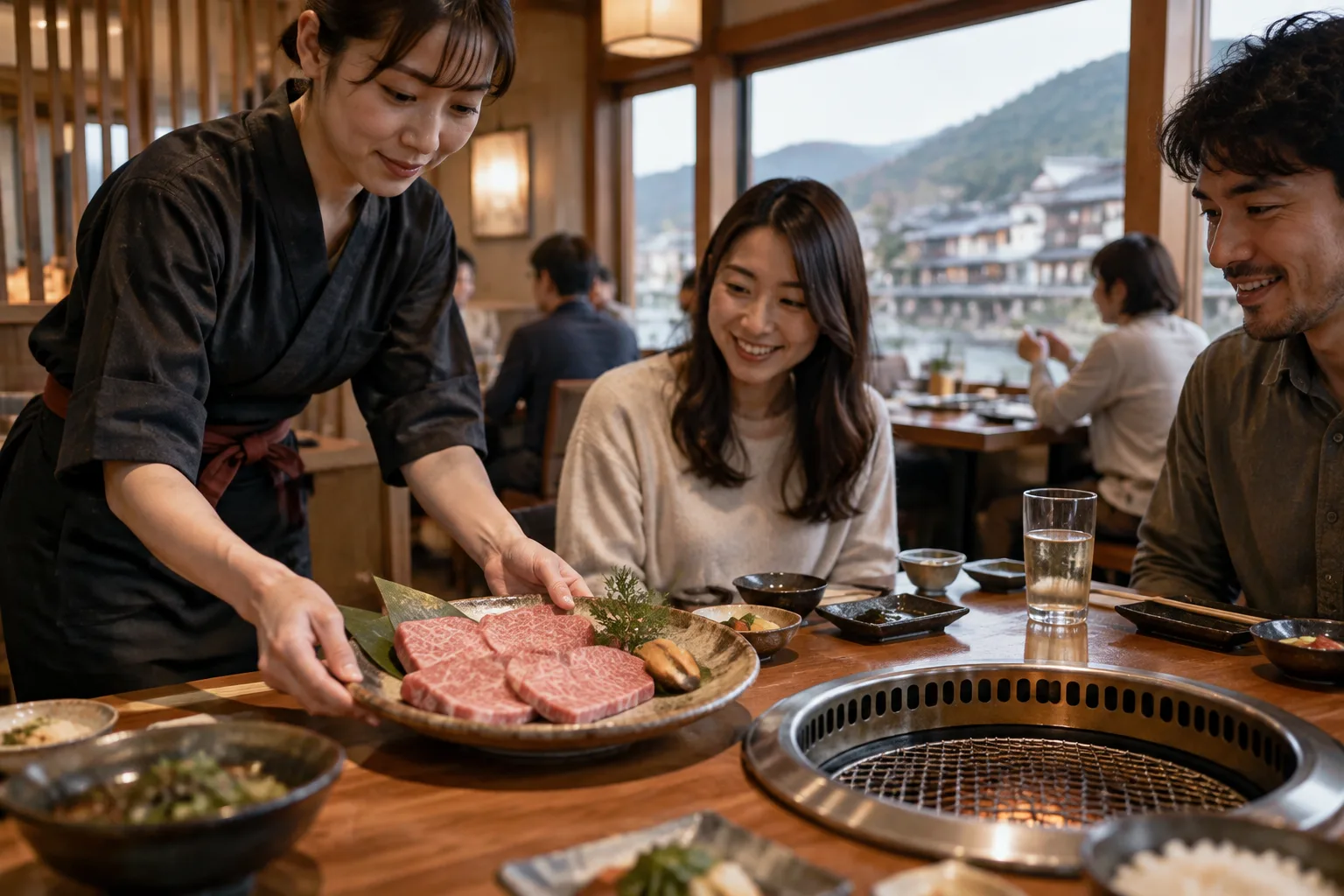
Contact Centre Co., Ltd. began recruiting corporate franchisees for GYU-SUKE on 11 October 2026, with plans to open restaurants serving aged local beef as yakiniku (Japanese-style grilled meat) in tourist destinations across Japan. The concept is based on its company-owned restaurant in Takayama, Gifu Prefecture, but would use branded beef from each restaurant’s local area. In an announcement on 19 October, the company said it would hold franchise information sessions on an ongoing basis for companies considering new ventures or diversification.
Local branded beef rather than Hida beef at every location
Contact Centre, which is recruiting franchisees, belongs to the Imperial Group, headquartered in Minato Ward, Nagoya, Aichi Prefecture. Rather than serving the company-owned restaurant’s Hida beef nationwide, the franchise concept aims to age beef from each tourist destination and offer it as a distinctive local dining experience.
The basic restaurant naming format is “Aged + local beef name + Yakiniku GYU-SUKE”. This combines a shared brand identity with the name of the beef associated with each location. Recruitment will prioritise tourist destinations across Japan, followed by urban areas.
However, local beef names cannot necessarily be used freely. The company explicitly states that it will comply with the rules and approved-restaurant schemes of the relevant regional producer organisations. Each restaurant’s specific name will be agreed individually during commercial discussions. Checking local conditions for using these names will therefore form part of the planning process.
For those considering Japan’s franchise market, a notable feature of this offer is its combination of a shared brand with regional ingredients. Prospective corporate franchisees will need to discuss not only their preferred location with the franchisor, but also how their chosen branded beef can be reflected in the restaurant’s name.
Takayama model restaurant serves both groups and individual diners
The company-owned model restaurant, Aged Hida Beef Yakiniku GYU-SUKE, is a one-minute walk from JR Takayama Station. Located in the tourist destination of Hida Takayama, it caters for both groups booked through travel companies and individual diners.
According to the company, the restaurant has an established trading record with major travel companies and overseas agents. It highlights the restaurant’s combination of sales paid at the till and group-dining revenue paid directly by travel companies. The proposed franchise model therefore centres not only on local beef, but also on the channels through which tourists reach the restaurant.
The company also announced that the model restaurant achieved record monthly sales of more than ¥35 million in October 2025. This is a sales figure for one specific month at the company-owned Takayama restaurant. It does not represent average franchise sales or a profit forecast for another tourist destination.
When assessing a potential opening, it is important to distinguish this monthly sales record from the financial projections for your own planned restaurant. How to develop relationships with travel companies and organise operations to accommodate groups are practical questions to raise at a franchise information session. Understanding the model restaurant means looking beyond sales volume to the customer groups and commercial relationships that generate it.
Multilingual service and staffing are also features of the model
The model restaurant’s official website supports 14 languages. The company says it also manages the recruitment and training of multinational staff in-house. Together with its trading record with overseas agents, these features illustrate its approach to welcoming international visitors.
Companies considering a restaurant in a tourist destination should examine more than the food and interior design: they also need to consider information provided before a visit and service inside the restaurant. The 14-language website is a feature of the model restaurant, but the systems available to franchisees and the division of responsibilities between franchisor and franchisee will need to be checked separately.
Similarly, the fact that the franchisor recruits and trains multinational staff for its own operations does not mean that franchise restaurants will be provided with an equivalent staffing structure. Specific questions about who handles recruitment, who receives training and what ongoing training support is available after opening will help prospective franchisees identify the internal resources they need.
The model restaurant’s highlighted features are regional branded beef, group-booking business, multilingual communications, and staff recruitment and training. Rather than treating these solely as separate strengths, prospective operators should assess how they could work together at their chosen location.
Two franchise options for corporate applicants
Recruitment is aimed at companies considering new ventures or diversification, including those with no experience in food service. Two options are available: “Course A (Premium Restaurant)” and “Course B (Simplified Operations)”.
These two options allow prospective corporate franchisees to discuss a format that fits their intended restaurant concept and operating structure. However, the names alone do not establish the investment required, staffing levels or operational workload. At information sessions, applicants should clarify differences in equipment, menu range, training and opening support so that they can compare the options on a consistent basis.
This announcement marks the start of nationwide corporate franchise recruitment. The track record of the company-owned Takayama restaurant should be considered separately from the planned franchise expansion. With tourist destinations the top priority, prospective franchisees are now at the stage of discussing with the franchisor whether their proposed sites fit the concept.
Practical takeaway: Before a franchise consultation, prepare details of your proposed location, the local beef you intend to use and your preferred franchise option. Check the conditions for using the beef’s name, support for attracting group bookings, and the division of staff-training responsibilities. Assess your own projected income and expenditure separately from the model restaurant’s monthly sales record.