KFC targets 180 restaurants in Colombia by the end of 2026
The chain plans ten openings in 2026. Its Colombian operation works with five domestic poultry suppliers and spans more than 35 municipalities.
Published
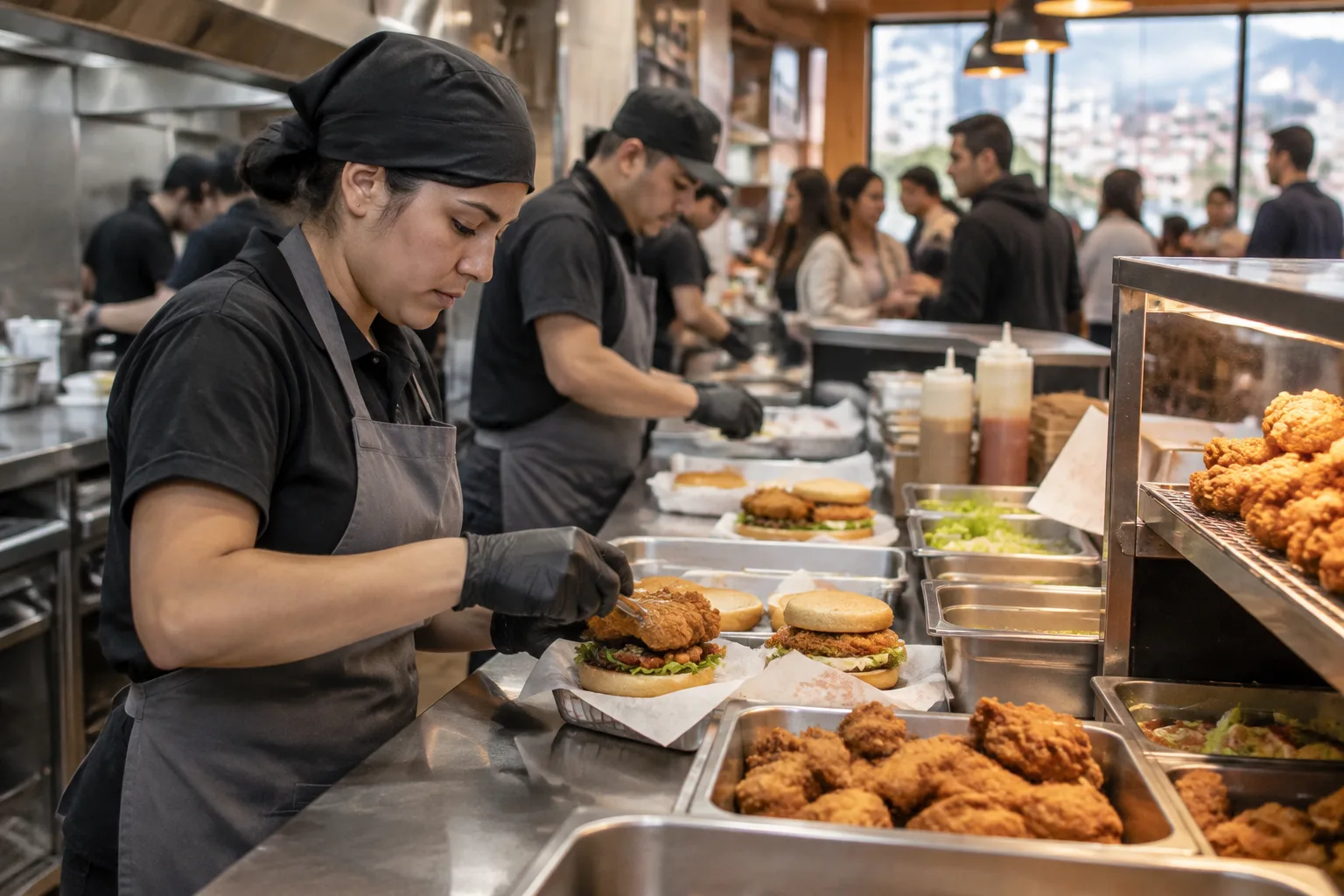
KFC aims to end 2026 with 180 restaurants in Colombia, having started the year with around 170. The plan, outlined in July by Jaime Gómez, CEO of KFC Colombia, and reported by Portafolio on 2 November, combines network expansion with a supply operation handling around one million chickens a month.
Ten planned openings to expand the network
Gómez’s forecast envisages ten additional restaurants during 2026. This is a year-end target, not a tally of openings already completed. That distinction matters when interpreting the announcement: the 180 outlets represent the executive’s stated goal.
The brand already operates in more than 35 Colombian municipalities, according to Portafolio. This footprint puts its expansion on a national scale, rather than focusing on a single opening, and indicates the size of the network it intends to build on.
For those assessing Colombia’s franchise market, the announcement provides insight into the plans of an international chain with an extensive presence in the country. However, the restaurant forecast should not be mistaken for an invitation to new franchisees: the statements cited concern the expected size of the network and its commercial objectives.
Five domestic poultry suppliers underpin the supply chain
One operational figure highlighted by Gómez is the volume of product the company handles. “We currently handle around one million chickens a month and are working with five domestic poultry suppliers,” he said in the interview reported by Portafolio.
The figure describes the monthly scale of KFC’s chicken supply in Colombia. It does not represent customers served, transactions or sales, so it cannot, on its own, be used to calculate the chain’s revenue or the performance of individual restaurants.
Working with five domestic poultry suppliers also illustrates the operation’s ties to local suppliers. Alongside its presence in more than 35 municipalities, this helps explain why the announced growth involves more than simply adding outlets: it relies on a supply network serving a geographically dispersed business.
Logistics are also among the challenges highlighted by the executive. Gómez described Colombia as a country with slim margins and costly logistics, two conditions that shape the company’s expansion plans.
Leadership in total sales remains a goal
KFC’s ambition is to become Colombia’s leading fried chicken chain. According to Gómez’s estimate in July, achieving that goal still requires more outlets and would take another four to five years.
“We have the highest sales per restaurant, but we need to keep increasing the number of outlets to become leaders in total sales as well,” he explained. The claim about sales per outlet reflects the executive’s assessment; the published report does not present an independent ranking.
His comments distinguish between two objectives: individual outlet performance and sales across the network as a whole. In that context, the ten openings planned for 2026 form part of a longer-term growth trajectory, rather than a claim that market leadership has already been achieved.
Competition and costs shape expansion
Gómez described Colombia as one of the region’s most competitive countries and identified the informal sector as the chain’s main rival. He estimated that it could account for as much as 80% of the fast-food market. That percentage should be read as the executive’s assessment, not an official measurement.
The combination of competition, tight margins and logistics costs provides context for the target of 180 restaurants. The size of the network is one part of the story; the conditions required to supply it and sustain its operations are the other.
Practical takeaway: anyone assessing franchise business opportunities should distinguish expansion targets from confirmed results and examine supply arrangements, logistics and costs before treating the number of planned openings as sufficient evidence of an opportunity.