Antioquia coffee chain plans two franchised outlets in Bogotá
The company has 16 outlets in Colombia and plans two more franchised locations in Bogotá before the end of 2026, according to Forbes Colombia.
Published
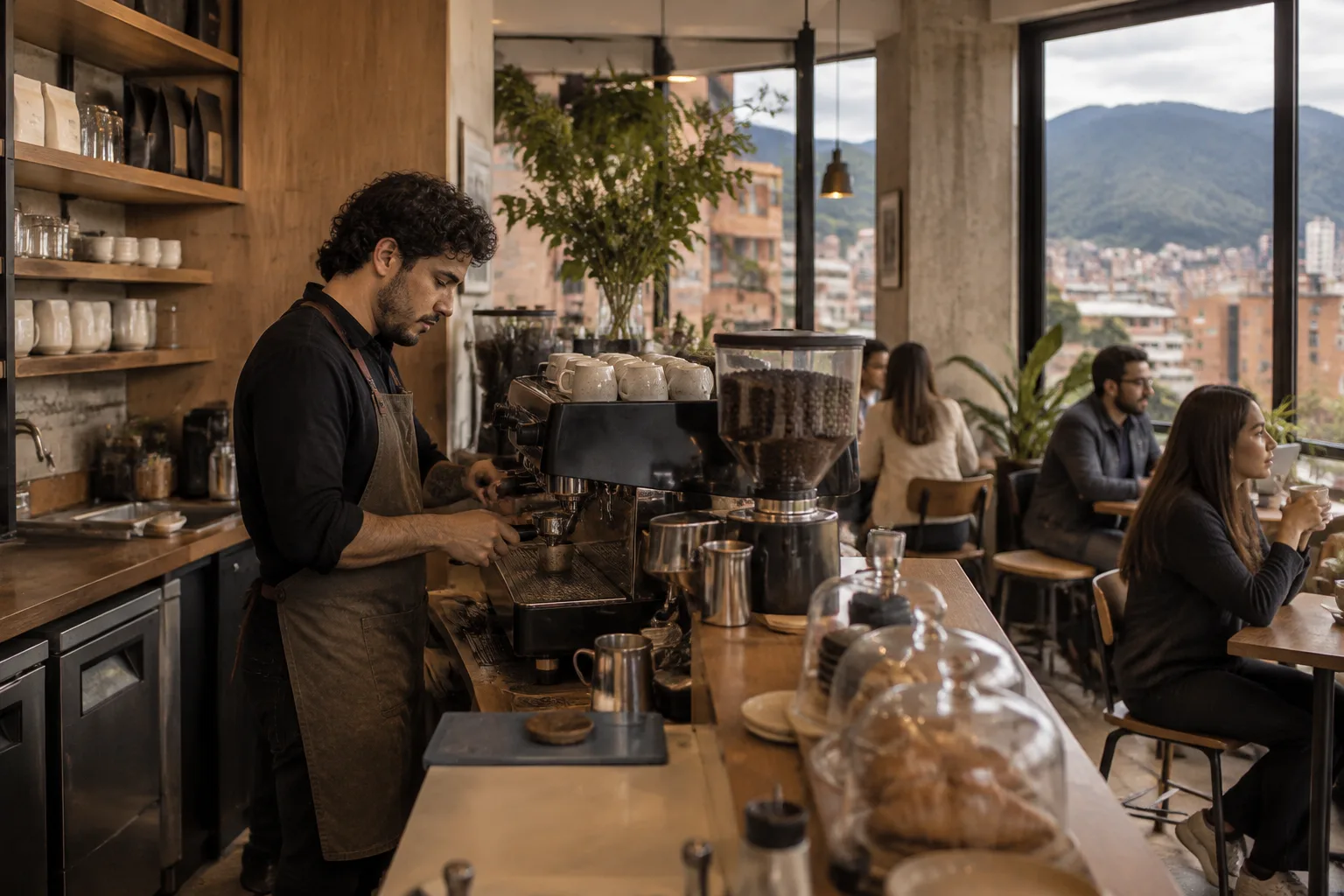
A B Corp-certified boutique coffee chain from Colombia’s Antioquia region plans to open two additional outlets in Bogotá through franchising before the end of 2026. According to a Forbes Colombia report published on 14 October, the company has 16 active outlets nationwide and is considering further openings in Bogotá and Medellín for 2027.
Bogotá is the focus of the next openings
The capital plays a central role in the company’s growth plan. Its first Bogotá shop opened in December 2025 and, according to the publication, the city already accounts for three of its 16 active outlets in Colombia. The two openings planned for the remainder of 2026 would be franchised outlets.
The company’s overall target is to open five outlets a year. At the time of the report, it had completed three openings during 2026, so the two announced for Bogotá would fulfil that target if delivered on schedule.
The distinction between operating outlets and announced projects is important: the 16 locations represent the active network described by Forbes, while the two new franchises remain planned openings. Nor should readers assume that all existing outlets are franchised, as the publication only states that several already use this model.
Franchising underpins the 2027 plan
Franchising is not new to the company’s expansion strategy. According to Forbes, the business has spent a couple of years developing this model, and its executive says it has already proved successful at several outlets. That experience forms the basis of the next announced phase of growth.
For 2027, the ambition is to open between five and six outlets, focusing on Bogotá and Medellín. Expansion would take place through franchising and, according to the expectations of the executive quoted in the report, that pace would support annual growth of around 30%.
These are business targets, not completed openings or guaranteed results. The announcement identifies both the priority cities and the role franchisees will play, but does not confirm specific locations for the new outlets planned for 2027.
For Colombia’s franchise community, the move illustrates how a regional brand is using the model to build its presence in the two cities at the heart of its plans. The next verifiable milestone will be the launch of the two outlets scheduled to open in the capital by the end of 2026.
Rising sales and cost pressures
The opening programme follows a 40% increase in sales during 2025. According to Chamber of Commerce records cited by Forbes, the company recorded sales revenue of COP 2.785 billion for that year.
For 2026, the company expects to maintain growth of at least 30%. That forecast comes amid rising labour and operating costs for foodservice businesses, a pressure also highlighted by the publication.
These figures reflect the company’s performance and expectations. They do not describe the turnover of an individual franchise or provide a basis for calculating the profitability of a future outlet. For anyone considering becoming a franchisee, distinguishing brand-level growth from the results of individual locations is particularly important.
B Corp certification and speciality coffee
Alongside its network expansion, the company holds B Corp certification. Forbes describes it as one of the few businesses in its sector in Colombia with this recognition. The certification sits alongside a strategy combining commercial expansion, a stronger export channel and an ambition to make speciality coffee an everyday habit.
The announcement therefore brings together two elements of its proposition: an identity built around boutique coffee and a growth strategy supported by franchising. The forthcoming openings will offer an opportunity to assess how that combination develops in Bogotá.
Practical takeaway: before assessing a franchise opportunity, request outlet-level information on investment requirements, costs and results, and always distinguish expansion targets from openings that have actually taken place.