Franchises in residential complexes expand into laundry and pet care
Beyond convenience stores, franchise networks are bringing laundry and pet care services to Brazilian residential complexes, with operations at different stages of expansion.
Published
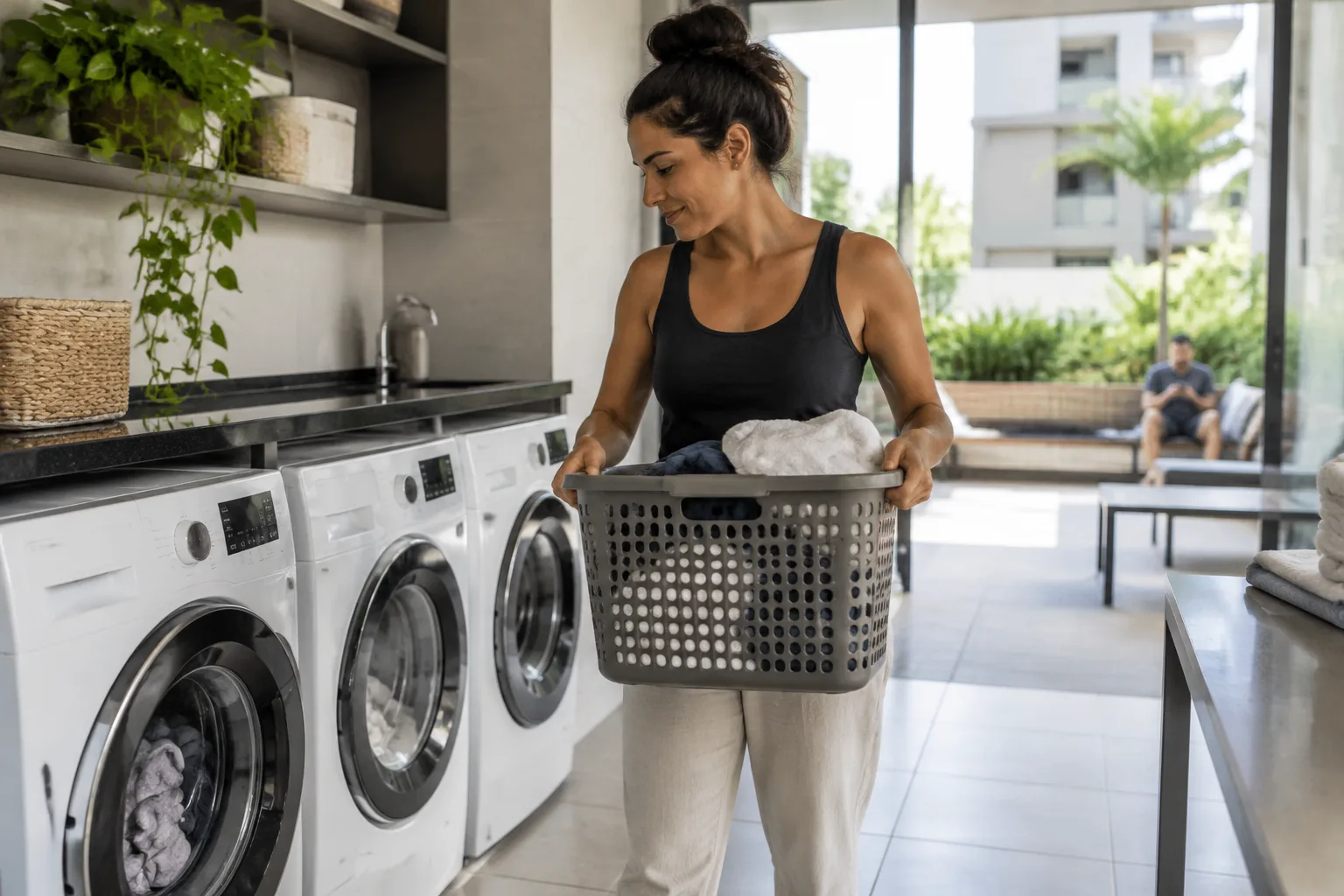
Franchises in Brazilian residential complexes are expanding beyond unattended convenience stores. Laundry and pet care services are joining the mix, with formats ranging from self-service equipment to professional services. This diversification opens up new opportunities for the franchise sector, but the available figures show businesses at different stages of rollout and expansion.
Convenience stores provide the foundation
Unattended convenience stores paved the way for other businesses within residential developments. The model brings everyday shopping closer to residents, without requiring them to visit an outside shop.
Among the networks operating in this setting, market4u ended 2025 with 2,554 outlets, up 16.9% on the previous year. According to a Folha de S.Paulo report cited by Economic News Brasil on 17 October, 85% of its outlets were in residential complexes. In June 2026, the company reported a presence in 185 Brazilian cities.
The brand’s stores operate without permanent on-site staff. Payments are digital and stock levels are monitored remotely. This setup allows residents to shop within their own developments, unlike traditional retail with staff continuously on hand.
The offering is not limited to market4u. Mercadinho do Seu Juca, Honest Market Brasil and Fast4you Home Market also offer unattended convenience stores for residential complexes. These networks help establish the foundation on which other franchise formats are seeking a foothold in residential settings.
Laundries bring self-service facilities to residents
The diversification includes laundries that provide equipment for residents to use. In this format, the service becomes part of the residential development rather than relying solely on an external shop.
One company operating in this segment is Rio de Janeiro-based LAVEONE. The network reports having more than 50 outlets and identifies the states of São Paulo, Rio de Janeiro and Espírito Santo, along with Brazil’s North East region, as priorities for expansion.
Acqua Lavanderia Express also operates in this market. According to Portal do Franchising, the company has 287 outlets operating in Brazil. However, that figure covers the entire network and includes premises outside residential complexes.
This distinction matters when assessing the scale of its presence. A brand’s total outlet count does not necessarily equal the number of operations within residential developments. Acqua’s 287 outlets should therefore not be presented as locations within residential complexes.
Pet services combine two service models
Pet care adds another category to the franchise offering in residential complexes. Options range from owners washing their own pets to services delivered by professionals: two different ways of bringing pet care closer to residents.
Maria Pet offers stations where owners use the equipment to wash their animals. The model is based on self-service, with residents carrying out the task themselves.
Clube04, a network founded in São José do Rio Preto, in the interior of São Paulo state, has developed Clube04 Unique. The format targets residential developments and provides for professional bathing and grooming, distinguishing it from stations operated by pet owners themselves.
Clube04 Unique is still at an early stage. According to the Economic News Brasil report of 17 October, its first franchise had been sold in São Paulo but was still being set up. The company aims to reach 24 operations within 12 months, starting in Brazil’s South East region.
That projection is an expansion target, not a count of outlets already open. Likewise, the sale of the first franchise does not mean it was serving residents at that point.
Assessing scale means separating operations from plans
The growth of these formats shows how the franchise sector is broadening the services available in residential complexes. Even so, there is no single comparable measure of scale across the models presented: convenience stores already number in the thousands, while laundry and pet care services have different outlet counts and are at different stages of development.
Where networks’ published national totals do not distinguish residential operations from other locations, they cannot establish how much of that expansion is taking place within residential complexes. It is also important to distinguish between operating outlets, locations being set up and targets announced by companies.
In practice: before assessing a franchise for a residential complex, confirm how many outlets in that specific format are actually open, who delivers the service and which figures refer only to expansion plans.