Digital Roles in Taiwan’s Franchise Sector: Dong Dong Food & Beverage Introduces Welcome Kiosks and AI Robots
Dong Dong Food & Beverage Group has introduced welcome kiosks and AI robots to ease franchisees’ service workload. A Business Today report highlights a division of responsibilities: headquarters builds the digital infrastructure, while franchise outlets focus on local service.
Published
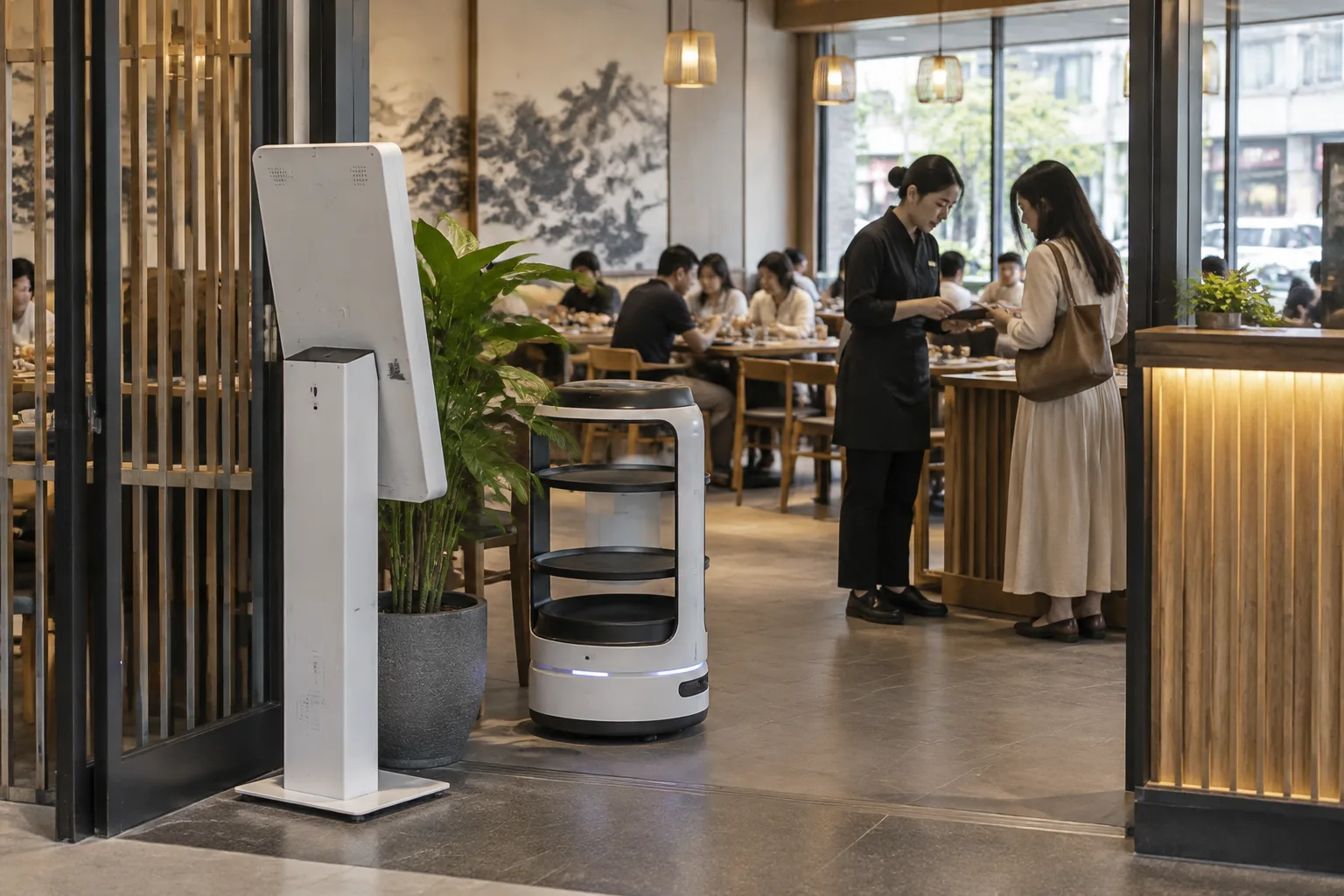
How can digital tools improve collaboration between franchisors and franchisees in Taiwan? A report published by Taiwan’s Business Today on 16 September 2026 outlines an approach in which headquarters builds nationwide digital infrastructure, while franchisees handle the final stage of customer service. It cites Dong Dong Food & Beverage Group, which has introduced welcome kiosks and AI robots to reduce franchisees’ service workload. The key issue is not simply the addition of equipment, but how responsibilities are divided between technology and in-store service.
Headquarters builds the foundations, outlets deliver the service
The report lists several responsibilities for headquarters, including setting up an official website, official social media accounts and a customer relationship management (CRM) system. These tools form the brand’s shared digital infrastructure, while franchisees deliver customer-facing service at the local level.
This arrangement separates brand-wide digital development from day-to-day service in individual outlets. For prospective franchisees, assessing head office support should involve more than asking whether a system exists. It is also important to understand what it does and which tasks remain the outlet’s responsibility. The availability of a tool and an outlet’s ability to use it in everyday operations are two separate points to verify.
Dong Dong uses technology to ease the service workload
Dong Dong Food & Beverage Group is a specific example cited in the report. Its introduction of welcome kiosks and AI robots is intended to reduce franchisees’ service workload.
However, the available information does not specify how many outlets have the equipment, the investment involved or how costs are shared. Nor does it provide figures on working hours saved or increased turnover. The news therefore offers a starting point for understanding the brand’s service tools, but does not establish how much franchise outlets have cut costs or whether they can operate with fewer staff.
Prospective franchisees can use this as a basis for further questions: is the equipment included in the franchise package? Who is responsible for routine maintenance, breakdowns and operator training? These are matters to clarify, not arrangements confirmed by the report.
Local content remains an outlet-level responsibility
The report also identifies social media as an important tool for franchisees to connect with local consumers, stressing that content should have a distinctly local feel. This complements headquarters’ role in establishing official channels: a brand needs shared digital foundations, while individual outlets need to communicate in ways that resonate with customers in their area.
For those considering a franchise, an important point is that digitalisation does not mean all content will be produced centrally. Under the division of responsibilities outlined in the report, franchise outlets still handle local engagement. Before putting this into practice, both sides should clarify the boundaries between brand-level and outlet-level content, along with responsibility for publishing, updating and responding to customers.
Practical priorities: verify support before assessing the investment
The report offers a model for collaboration between headquarters and franchisees, alongside an example of Dong Dong’s adoption of technology. It is not a full return-on-investment assessment. Welcome kiosks, AI robots, CRM systems and social media serve different purposes; they should not be treated as equivalent forms of franchise support simply because they are all digital tools.
During franchise discussions, it is useful to organise questions around three points: what headquarters provides, what the outlet is responsible for and who pays the associated costs. Obtaining a clear list of services and responsibilities before assessing whether the tools suit an outlet’s needs is more useful than judging support by equipment names alone.