Taiwan’s franchise sector looks overseas as October forum examines ageing populations and labour costs
The World Franchise Summit Forum in Nangang on 2–3 October will compare Japan’s ageing population and Canada’s high labour costs with operating conditions in Taiwan, offering the franchise sector a broader perspective on AI and digital transformation.
Published
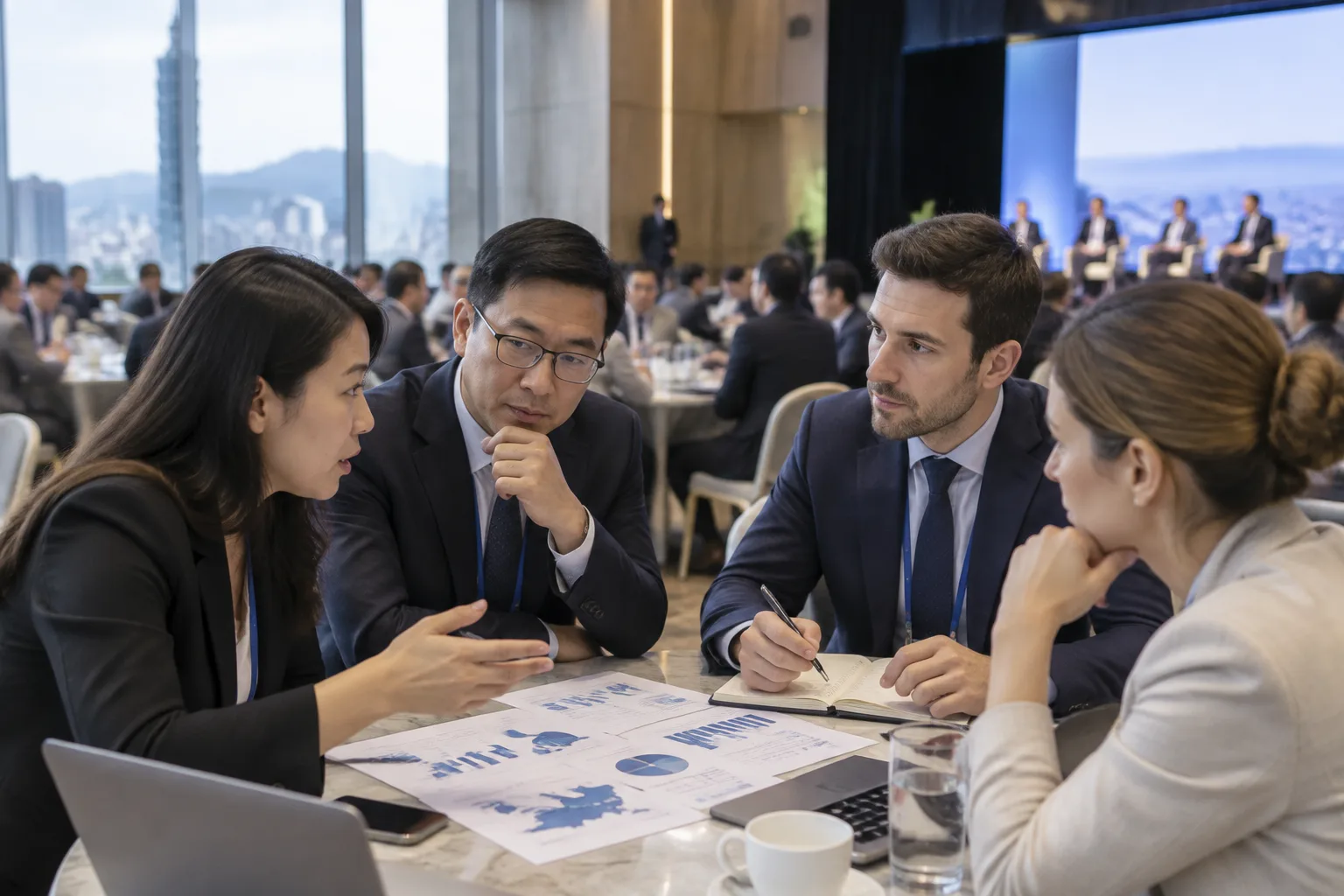
For Taiwan’s franchise sector, assessing AI and digital transformation means looking beyond what the tools can do to compare operating conditions across markets. According to a report published on 29 September, the World Franchise Summit Forum will take place on 2–3 October 2026 at Taipei Nangang Exhibition Center, Hall 2. It will bring together experience from Japan, Canada, Central and South America, and South-East Asia alongside Taiwanese practice to discuss challenges involving staffing, costs, branding and international expansion.
Understanding operational challenges across markets
The forum is hosted by the Ministry of Economic Affairs’ Administration of Commerce, delivered by the China Productivity Center and supported by the Association of Chain and Franchise Promotion, Taiwan. Representatives from Japan, Canada, Guatemala, Indonesia and Taiwan have been invited. Topics include AI, labour shortages, ESG and international brand expansion, rather than focusing on a single technology.
The organisers say this year’s distinguishing feature is the side-by-side presentation of international experience and Taiwanese practice. Japan’s ageing population, Canada’s high labour costs, Central and South American markets, and digital transformation in South-East Asia will each provide a starting point for comparison with Taiwan’s operating challenges.
This format gives the franchise community an opportunity to compare the circumstances behind business problems, rather than offering a proven set of solutions that can simply be transplanted. Existing reporting outlines the themes but provides no figures on investment, working hours saved or payback periods for the overseas case studies. The forum’s content should therefore not be treated in advance as a guarantee of results.
Lessons from Japan and Canada: first identify the staffing problem
Japan’s ageing population and Canada’s high labour costs both relate to workforce management, but they are distinct starting points for discussion. For Taiwanese brands and franchisees planning to attend, the useful question is not just which tools overseas businesses have adopted, but how those operators define the problems they need to address.
In practical terms, participants can first map their own outlets’ workflows, then listen to the presentations with specific questions in mind. Is the difficulty recruitment, scheduling, training or particular repetitive tasks? If a speaker introduces an AI application, participants can ask which part of the process it changed and which tasks still require staff. These are suggestions for assessing case studies, not individual agenda items already announced by the organisers.
The basis for calculating costs is equally important. When comparing overseas experience, it is worth checking whether the figures presented include equipment, maintenance, training and implementation time, rather than judging suitability for an outlet on the strength of one feature or a single cost item.
Comparing international expansion and digital transformation
The forum will also cover Central and South American markets and digital transformation in South-East Asia, with representatives from Guatemala and Indonesia invited to attend. This broadens the discussion beyond staffing issues in mature markets to the operational considerations brands face in different markets.
However, the presence of international representatives does not mean cross-border franchise partnerships have been agreed. Existing reporting discloses no brand entry plans, franchise recruitment terms or signed partnership deals. Any such developments should be checked against subsequent announcements.
Franchise brands considering overseas expansion can assess market selection and operational capability separately: understanding local demand on the one hand, and establishing whether digital systems, management processes and head-office support can meet the requirements on the other. The forum’s comparative value lies in helping participants ask more precise questions, rather than encouraging investment simply because a particular market is attracting attention.
A concurrent exhibition offers scope for further enquiries
The forum will run alongside the 2026 Taiwan International Chain and Franchise Exhibition, with simultaneous interpretation between Chinese and English and between Chinese and Japanese, as well as live questions via Slido. The organisers hope the international case studies will go beyond knowledge-sharing to help Taiwan’s chain and franchise community and small and medium-sized enterprises identify possible directions for transformation.
Participants can use the forum to understand the background to the case studies, then ask about practical terms for relevant solutions at the exhibition. However, forum discussions and exhibitors’ sales claims should be checked separately; neither should be treated as proof of the other’s effectiveness.
Practical tip: Before attending, identify the one outlet-level problem most in need of improvement, its current cost and an affordable investment range. When listening to overseas case studies, first check the conditions under which they apply and how results were calculated, then decide whether they merit further assessment.