StarCharger’s Taiwan franchise scheme attracts investment in eight stations, with NT$7.35 million package under an eight-year management contract
StarCharger says franchisees have invested in eight charging stations under its Taiwan franchise scheme, which requires around NT$7.35 million per package. The eight-year contract, revenue-sharing terms and AI-assisted site selection are key considerations for prospective investors.
Published
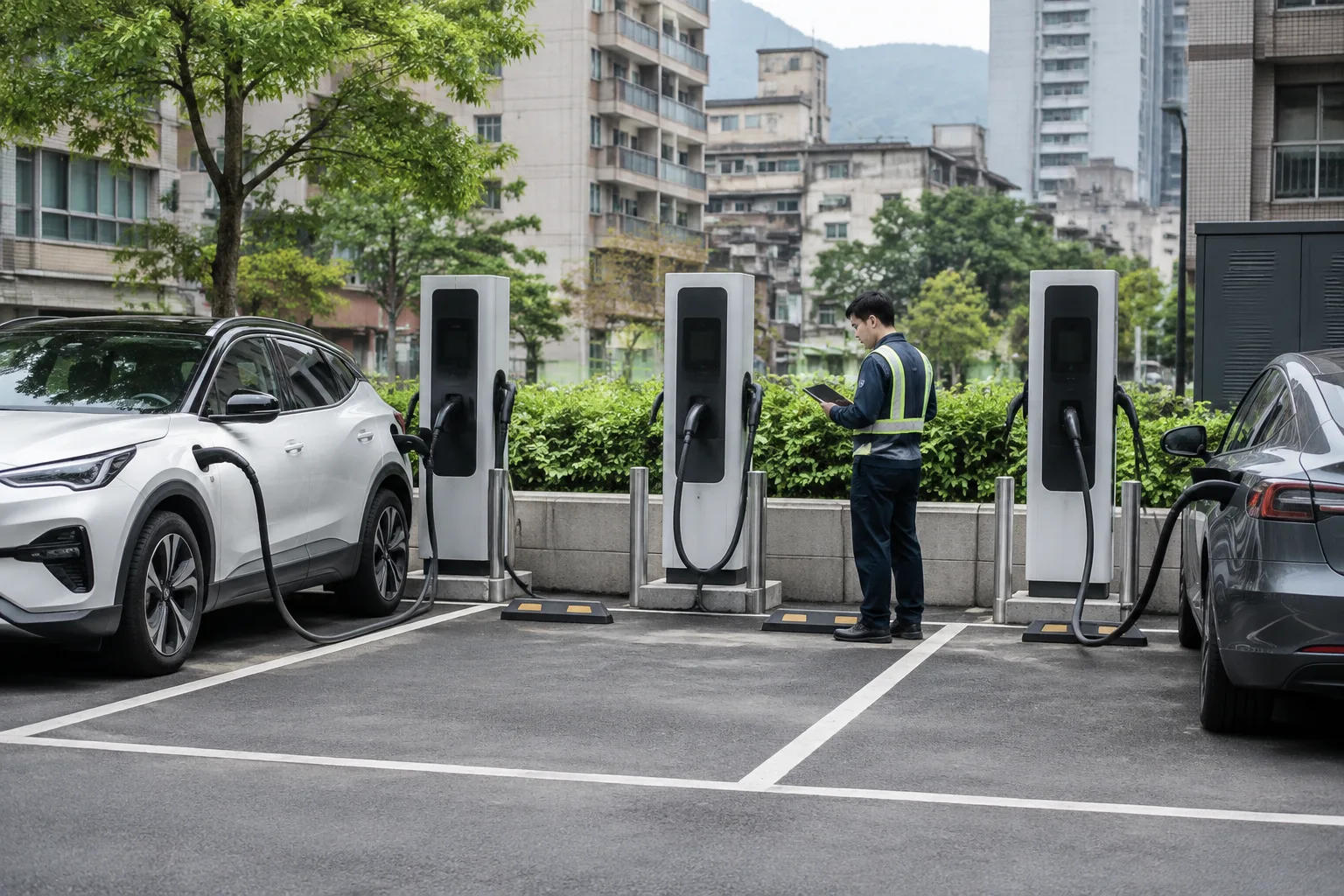
Franchise opportunities in Taiwan are expanding into electric vehicle charging stations. According to a MoneyDJ report dated 14 October 2026, StarCharger, part of HD Renewable Energy, said its charging station franchise scheme, launched in May, had attracted franchisee investment in eight stations. The company plans to expand its charging network through both franchising and fleet partnerships.
Investment of around NT$7.35 million under an eight-year contract
Under the company’s plans, the franchise package requires an investment of approximately NT$7.35 million (New Taiwan dollars). It includes 180 kW charging equipment, three charging units and six parking spaces, with an eight-year contract and round-the-clock managed operations. The package also includes a revenue-sharing arrangement set at 10% of monthly charging revenue.
The scheme brings equipment provision, a long-term contract and managed operations into a single partnership framework. Prospective franchisees need to assess not only the upfront investment but also how revenue will be distributed during operation. Before signing, they should confirm who receives the 10% share, how it is calculated and which party bears each cost. The revenue-sharing percentage should not be interpreted as a return on investment.
Network reaches 321 stations across Taiwan, with a 100 MW capacity target
StarCharger says its network now comprises 321 stations across Taiwan, with around 30 MW of installed charging capacity. Its expansion target is 100 MW. The 321-station figure refers to the company’s entire network and is distinct from the eight stations funded by franchisees; it should not be treated as the number of franchised stations.
The company continues to seek strategic partners, aiming to extend its coverage through franchising while reducing the capital required to fund every station itself. It also sees vehicles used for business and commercial fleets as important sources of demand, and plans to combine fleet partnerships with smart operational management to increase station utilisation.
AI-assisted site selection and platform integrations support operations
For site development, the company has introduced ThorAI, an AI-assisted site-selection platform. It uses data on traffic flows, station electricity meters, vehicles and local activity patterns to analyse demand hotspots, traffic routes, nearby competition and projected revenue. According to a company presentation, the platform has assessed more than 200 sites and achieved prediction accuracy above 90%. These are company-reported performance figures, not a guarantee of revenue at any individual franchise station.
StarCharger has also made a strategic investment in AmpGO, an EV charging roaming platform, and connected its systems with those of several car manufacturers and other charging service providers. The company continues to integrate access through Google Maps, LINE and Taiwan’s PX Pay Plus payment service to help drivers find stations and use its services. It says its collaboration with Google will move towards integrating charging services and the checkout process.
Franchise assessments must focus on individual station finances
From site selection and customer acquisition to managed operations, StarCharger is offering a comprehensive charging station operating partnership. However, network expansion targets and platform forecasts are no substitute for assessing the revenue and costs of an individual station.
In practice, prospective franchisees should first request a full fee schedule, revenue-sharing terms and a list of management responsibilities. They should then model eight-year cash flow using demand and cost estimates for the proposed site, and confirm equipment maintenance obligations and contractual exit arrangements before making a decision.