Franchise Fit-Outs in Taiwan: Checking Nominated Contractors, Extra Costs and Acceptance Terms
A fit-out specified by the franchisor does not necessarily make it responsible for the work. Before committing to a franchise, check the scope of the quotation, procedures for additional work, payment milestones and acceptance arrangements to avoid a budget shortfall before you even open.
Published
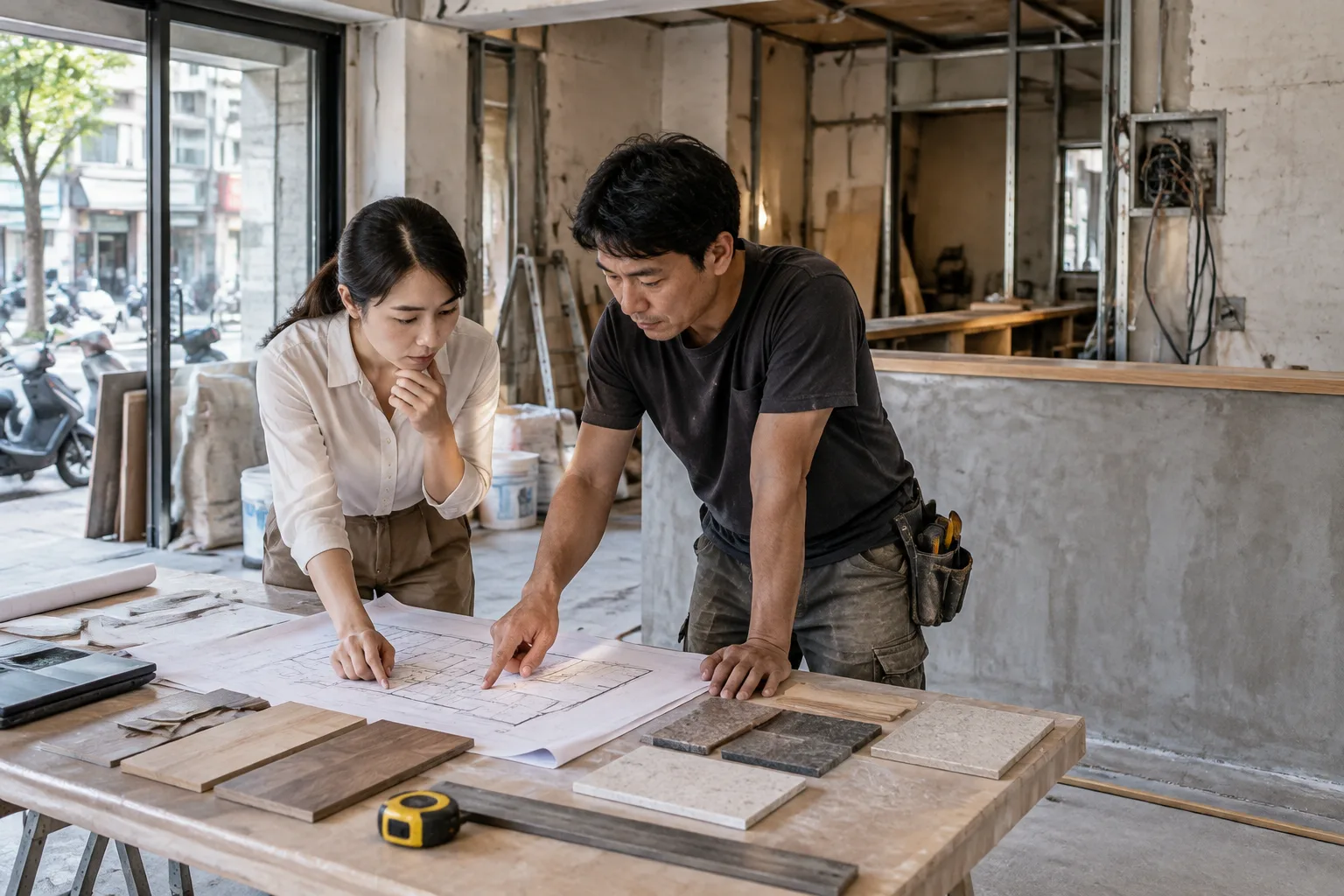
When joining a franchise network in Taiwan, the shop fit-out is often a substantial pre-opening expense that is difficult to recover. ‘Built to brand standards’ may sound straightforward, but the work can involve three parties: the franchisor, a designer and a nominated contractor. When choosing a brand, look beyond the appearance of its showcase outlet. Establish who provides the quotation, who receives payment, who is responsible for delivery and whom you can hold accountable if the work is defective.
1. Distinguish disclosure obligations from responsibility for the work
Taiwan does not have a single, dedicated franchise law governing all franchise transactions. The Fair Trade Commission has issued its Disposal Directions (Guidelines) on the Business Practices of Franchisors, which operate alongside the Fair Trade Act to regulate franchise recruitment and contracting practices. Performance of fit-out contracts and liability for defects also involve the Civil Code and the terms of individual contracts.
Under these guidelines, fit-out fees payable to the franchisor or its nominated parties before operations begin are material information that must be disclosed, with the amount or estimated amount stated. Restrictions such as the use of nominated contractors or specified fit-out standards should also be included in the explanation of restrictions within the franchise relationship.
As a general rule, the relevant information should be provided ten days before a franchise or preliminary franchise relationship is entered into, within a reasonable period determined according to the circumstances of the case, or within a period agreed by both parties. Failure to provide it without proper justification may breach Article 25 of the Fair Trade Act if it is sufficient to affect trading order. However, disclosing an estimated fit-out cost is not a promise to deliver all the work for that amount.
First, ask the franchisor to answer these questions in writing:
- Who will sign the fit-out contract with the franchisee? Is the franchisor the contractor, an agent arranging the work, or merely the provider of design standards?
- Who receives payment for the work? Do the names on the quotation, receipts and contract match?
- If the franchisor approves the contractor or drawings, does it also accept any responsibility for delivery?
Do not assume that ‘nominated by the franchisor’ means ‘guaranteed by the franchisor’. If the franchisor agrees to coordinate repairs, specify the timeframe for doing so and what happens if the issue remains unresolved.
2. Break a lump-sum quotation down into a comparable schedule of works
When comparing brands, request a schedule of works for premises with conditions similar to your intended site, rather than relying solely on a price per ping (a Taiwanese unit of area equal to approximately 3.3 square metres) or the total cost of a showcase outlet. Refurbishing an existing shop, fitting out an empty unit and reusing existing installations can all affect the actual cost. Estimates prepared before a site survey particularly need to state their assumptions.
Ask for each item in the quotation to show quantities, specifications, unit prices, and what is included and excluded. Key items include demolition and waste removal, plumbing and electrical work, air conditioning, fire safety systems, signage, kitchen extraction, waterproofing, design, applications and site supervision fees. Suitably qualified professionals should confirm which items apply, based on the premises’ intended use and existing condition; standard brand drawings alone are not enough.
Prepare a separate ‘responsibility interface schedule’. For example, an equipment supplier may install the coffee machine, but who must provide the electrical supply, water supply and drainage connections? If the franchisor supplies the point-of-sale equipment, who installs the network cabling? Where no one is assigned responsibility for these interfaces, they can easily become last-minute extras.
If the brand requires specified materials, check the product references, whether substitutions are allowed, who approves alternatives when stock is unavailable, and how any price difference is calculated. Attach the final agreed drawings, materials schedule and quotation to the contract, retaining version numbers and dates so that different parties do not later work from different documents.
3. Set clear procedures for additional work and payments
‘We will add whatever the site needs’ should not become an open-ended commitment to pay. Before signing, agree that any additional work must first be documented, including the reason, quantities, price and effect on the programme, then confirmed in writing by someone authorised to approve it. Routine work should generally be approved before it starts; emergency action needed to address an immediate safety risk should have a separate notification and evidence-recording procedure.
A request from the franchisor to revise the drawings does not mean the franchisee has agreed to pay for the change. The contract should distinguish between different reasons for additional work: omissions from the original quotation, changes requested by the franchisee, concealed site conditions, or updated brand image requirements. Specify how each cause will be established and how the costs will be allocated. It is also sensible to agree in advance how disputed charges will be handled.
Payment milestones should correspond to verifiable outcomes, such as approval of drawings, completion of specified work and acceptance, rather than simply falling on fixed dates. Payment proportions should be negotiated to suit the project, not copied from another outlet’s arrangements.
Also check how construction delays interact with the franchise agreement. If the nominated contractor is late, will the franchisor still charge operating fees from the original date or hold the franchisee responsible for failing to open on time? Put arrangements for adjusting the opening deadline, giving notice and allocating related costs in writing, so the franchisee does not face both construction delays and the risk of breaching the franchise agreement.
4. Separate brand appearance approval from construction quality checks
The franchisor’s view that the premises meet its brand standards does not mean that the plumbing, electrical installations, fire safety systems or other works have passed professional inspection. List brand approval, construction quality checks and any legally required applications or inspections separately, and identify who is responsible for each.
The acceptance checklist should cover equipment commissioning, drainage tests, records of defects, deadlines for remedial work and reinspection arrangements. For important concealed work, require photographs to be taken and retained during construction. Items requiring professional judgement should be checked by suitably qualified professionals, rather than relying solely on the franchisee’s visual inspection.
On completion, obtain the agreed as-built documentation, equipment maintenance documents, warranty contact details and operating instructions. If a trial opening is needed before final acceptance, state whether it constitutes acceptance and how rights relating to outstanding defects will be preserved. This helps prevent the fact that the outlet has already opened for business from becoming a point of dispute.
Practical takeaway: Before committing to a franchise, obtain at least a schedule of responsibilities for the work, an itemised quotation, a procedure for additional work and an acceptance checklist. If the franchisor is unwilling to put these arrangements clearly in writing, pause your decision—even if the fit-out estimate looks attractive—and seek help from professionals familiar with construction and franchise contracts in Taiwan.