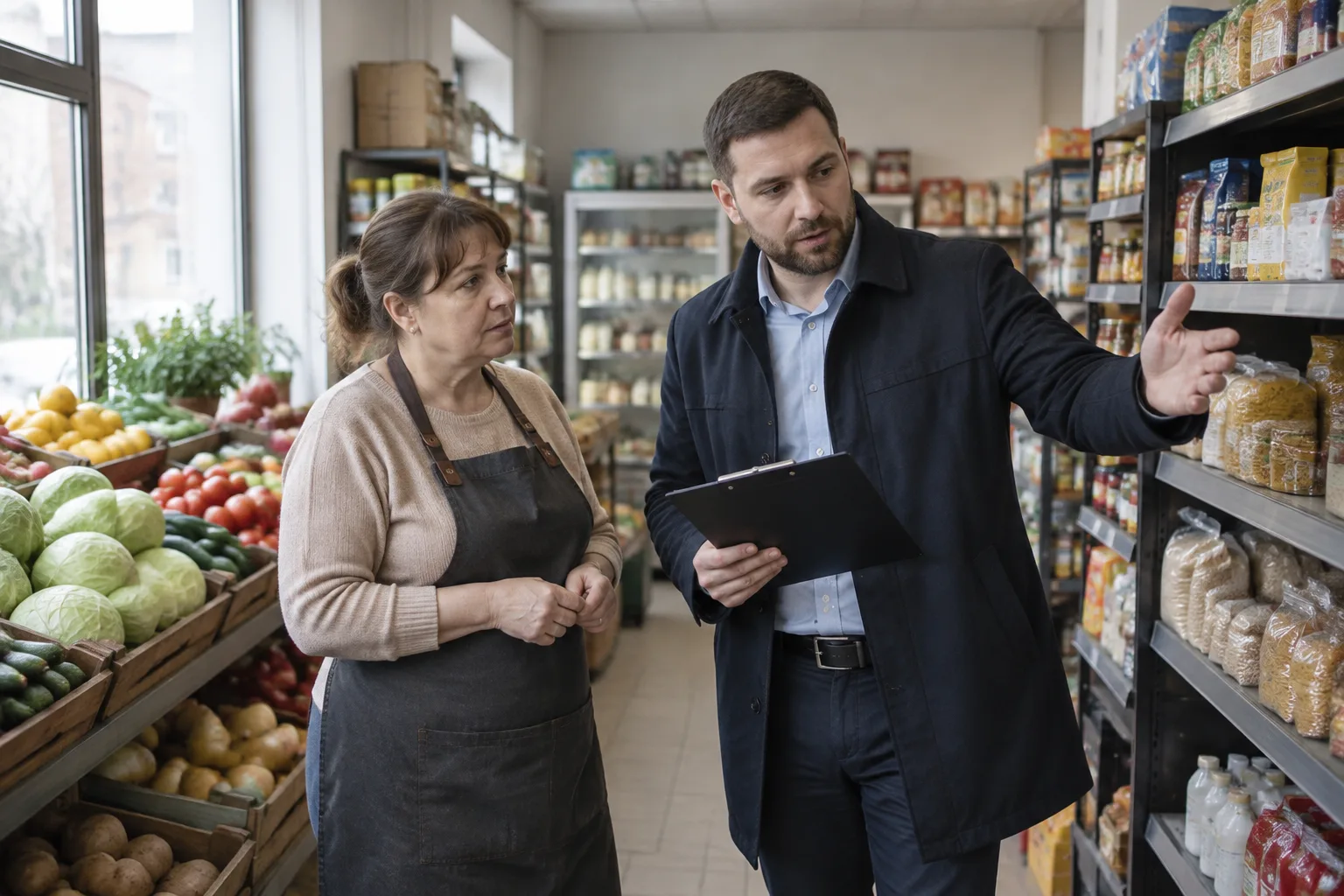
OKOLO franchise reaches 9,000 shops in Russia
OKOLO’s milestone shop has opened in St Petersburg. X5’s direct franchise network has doubled in a year and now operates across 60 Russian regions.
Published
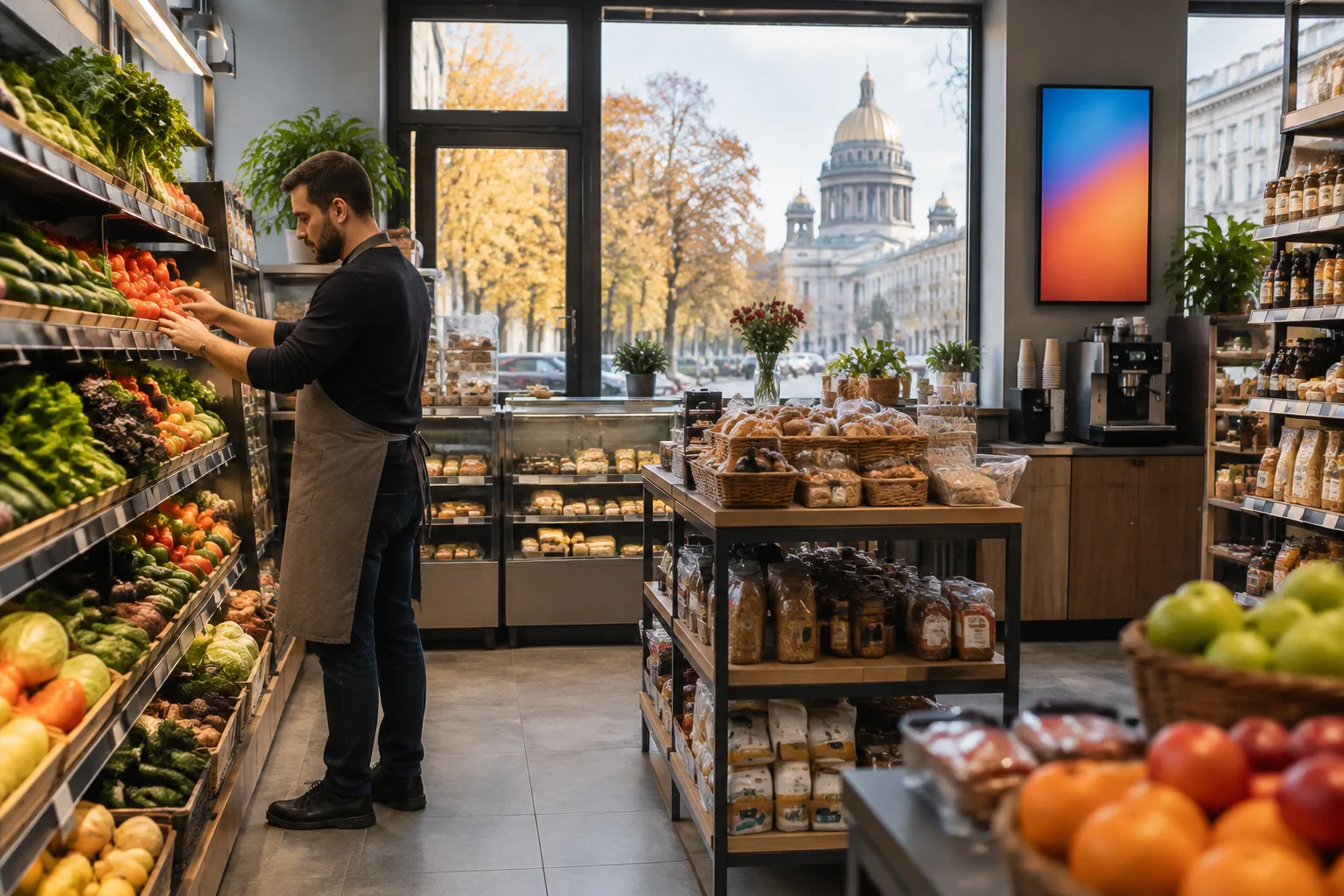
X5 has announced the opening of its 9,000th OKOLO-branded shop. According to the company’s statement dated 26 October 2026, the number of outlets operating under its direct franchising model doubled over the preceding twelve months. The milestone shop is at 2 Dybenko Street in St Petersburg. Alongside expanding the network, X5 is developing its procurement services and equipping partner shops.
St Petersburg shop marks a new milestone for the network
After joining the franchise, the shop on Dybenko Street received new equipment, digital display panels and an OKOLO Bistro coffee station. The milestone opening therefore involved not just new branding but also an equipment upgrade. This shop brought the network’s total to 9,000 outlets.
More than 700 OKOLO shops already operate in St Petersburg and the surrounding Leningrad Region. The network’s managing director, Igor Pletnev, reported a substantial rise in interest in the franchise in recent months. He said that 50 partner shops in the region had already received equipment from X5.
These figures describe different aspects of the network’s development: the 700-plus outlets represent its regional presence, while the 50 equipped shops reflect the reach of its equipment provision programme. They should not be interpreted as numbers of new openings over the same period. For prospective franchisees, the relevant point is the example of support for an existing shop joining the franchise, although the terms for equipping any particular outlet need to be discussed separately.
The network spans 60 regions
The OKOLO franchise operates in 60 Russian regions, from Kaliningrad to Khabarovsk. X5 targets entrepreneurs who already have retail experience. This is an important feature of its intended audience: the model is aimed not simply at potential investors, but at people familiar with running a shop.
The main numerical finding in the announcement is that the number of participating outlets doubled in a year. This refers specifically to shops operating under the direct franchising model. The figure indicates the network’s scale, but does not in itself reveal an individual partner’s financial performance or the number of entrepreneurs operating these outlets.
For Russia’s franchising sector, reaching 9,000 shops is a notable example of a partner network expanding across a broad geographical area. Prospective franchisees should nevertheless assess the offer in relation to their own town or city and the specific premises: a nationwide network’s size is no substitute for calculating local demand, costs and working capital requirements.
Procurement range grows sevenfold
OKOLO partners can buy goods from X5 and around 600 third-party sellers through the OKOLO mobile app and the OKOLO.Market digital distribution platform. Franchisees’ purchasing options are therefore not limited to X5’s own offering: other suppliers are also available through the system.
The platform’s total product range increased sevenfold over the year. Franchisees now have access to more than 200,000 products. This figure describes the range available on the digital platform, not the number of products stocked by each shop in the network. For a small outlet, the practical benefit is being able to select items from the wider catalogue that suit its format and customer demand.
According to the company, more than 70,000 unique customers use the mobile app and OKOLO.Market website each month. This audience should also be distinguished from the shop count: service usage is not equivalent to the number of franchisees or OKOLO-branded outlets.
The expanded catalogue gives entrepreneurs more purchasing options. When assessing the franchise, however, it is worth checking not only whether the platform carries the required product categories, but also the delivery terms for the intended location. Lead times, product availability and purchase prices should all be factored into the shop’s financial projections, alongside the choice of suppliers.
Rankings complement, but do not replace, financial planning
According to an INFOLine assessment cited by X5, OKOLO led networks operating under a direct franchising model on two measures during January–September 2026: outlet numbers and revenue. This comparison applies to that specific group of networks and period, rather than to every retail format.
OKOLO also ranked first in the ‘Investment up to 2 million roubles’ category of Forbes’ 2026 ranking of the ‘30 Most Profitable Franchises in Russia’. The category helps establish the context of the comparison, but its title should not be treated as a start-up budget for any individual shop. Inclusion in the ranking is not a guarantee of profitability for a future partner either.
Practical takeaway: entrepreneurs with retail experience should assess OKOLO on the terms available for their specific outlet. Before deciding to become a partner, it is worth requesting a list of the equipment provided, checking procurement terms for the relevant region and preparing a financial model for the shop. The network’s scale and the breadth of its catalogue are useful indicators, but the decision should rest on the economics of the individual outlet.