Mashenka Bakery Launches Franchise Programme with Four Formats
The Moscow region chain plans five franchise openings by the end of 2026. Talks are under way with prospective partners from two regions.
Published
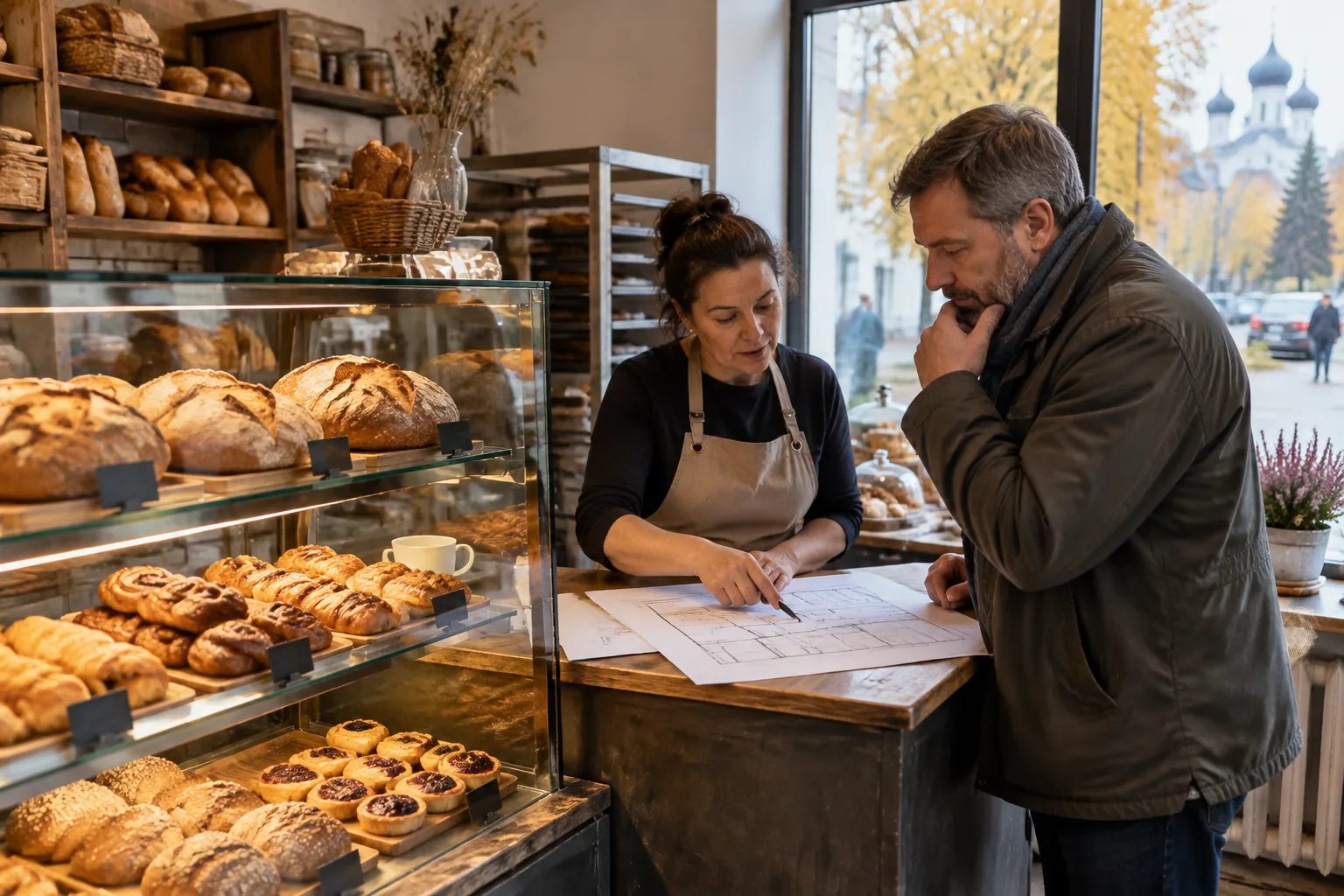
Mashenka, a bakery chain based in Russia’s Moscow region, has announced the launch of a franchise programme. Founder Denis Maksimov aims to open five franchised outlets by the end of 2026. According to a Crispy News report dated 23 October, talks are under way with three prospective franchisees from the Moscow and Tula regions, with the first agreement expected to be signed in October.
From four company-owned outlets to a franchise network
At the time of the announcement, the company operates four of its own outlets. These include a flagship café-bakery in Shchyolkovo, which opened in September 2026. The chain now intends to supplement its company-owned estate with outlets run by independent partners.
For Russia’s franchising sector, this represents a new offering in the bakery and café market. However, it is important to distinguish announced ambitions from results already achieved: the five openings are the founder’s target, not the number of operating franchised outlets. Likewise, talks with three entrepreneurs do not yet amount to signed agreements or confirmed launches.
The chain became widely known after Maksimov raised a question during President Vladimir Putin’s televised public phone-in in late 2025. The entrepreneur highlighted the tax burden on small businesses. Tax arrangements are now once again central to his explanation of the company’s growth strategy, this time in relation to the shift from company-owned outlets to a franchise model.
The business starts with four company-owned outlets, while its franchise programme is only at the stage of securing its first agreements. This is a significant distinction for a prospective partner: running the company’s own premises and supporting an independent franchisee require different capabilities. The new offering should be assessed with this stage of development in mind.
Four formats: from takeaway bakery to gastro café
Prospective franchisees are being offered four outlet formats. The smallest of the options described is a 35-square-metre neighbourhood mini-bakery serving takeaway customers. At the other end of the range is a 100-square-metre gastro café with seating and a chef.
The programme is therefore not limited to a single type of outlet. It accommodates both a small takeaway business and a café where customers can sit down. Maksimov is focusing on smaller formats, linking this choice to the aim of optimising the tax burden.
The difference between the two formats described goes beyond floor space. Seating and a chef imply a different operating model from that of a small takeaway bakery. Prospective partners would therefore benefit from treating each format as a distinct operational proposition, rather than choosing solely on the basis of premises size.
During negotiations, site-specific projections will matter: staffing, equipment, rent and the cost of serving customers. These are issues for a prospective franchisee to investigate, not published performance figures for the new programme. The range of floor areas alone does not establish either start-up costs or the likely payback period.
Tax considerations and protecting the brand name
The founder gives two reasons for launching the franchise. The first is tax optimisation. In Maksimov’s account, following the introduction of a transitional VAT relief period for small food-service businesses running until the end of 2026, a model involving independent legal entities with annual revenue of up to RUB 20 million appears more advantageous than expanding a single large chain that would quickly exceed that threshold.
This assessment should be understood as an explanation of the founder’s business strategy, rather than a universal tax rule for franchise buyers. The suitability of any particular structure and the availability of relief for a future outlet require separate checks. Joining a franchise programme is no substitute for analysing the partner’s own tax obligations.
The second reason concerns brand protection. According to Maksimov, copycat outlets using the Mashenka name have become more common across Russia’s regions. The company intends to bring these entrepreneurs into an authorised franchise arrangement and standardise their operations.
This is a separate avenue for developing the programme: potential partners may include not only entrepreneurs opening a new bakery, but also owners of existing businesses trading under the same name. For now, this remains the company’s stated intention. No completed conversions of such outlets to the franchise model have been announced.
Year-end targets and questions for 2027
The chain’s immediate targets are a first agreement in October and five franchise openings by the end of 2026. Signed agreements and actual outlet launches will provide the next evidence that the programme is being put into practice. These will distinguish initial plans from expansion results.
Maksimov also points to uncertainty over trading conditions in 2027. His concerns relate to whether tax relief will be extended and whether Russia’s patent-based tax regime for food-service businesses could be abolished. The founder believes such changes could make the franchise less attractive to investors. However, the possible abolition of that regime should not be treated as a decision already taken.
Practical takeaway: prospective Mashenka franchisees should separately assess the financial viability of their chosen format and the tax arrangements that will apply after 2026. When buying into a new franchise, the parties’ contractual obligations matter just as much as the chain’s plans.