Franchisees protest outside Poland’s parliament, calling for legislation and VAT changes
Franchisees protested outside Poland’s parliament on 17 September, calling for faster progress on franchise legislation and action on VAT.
Published
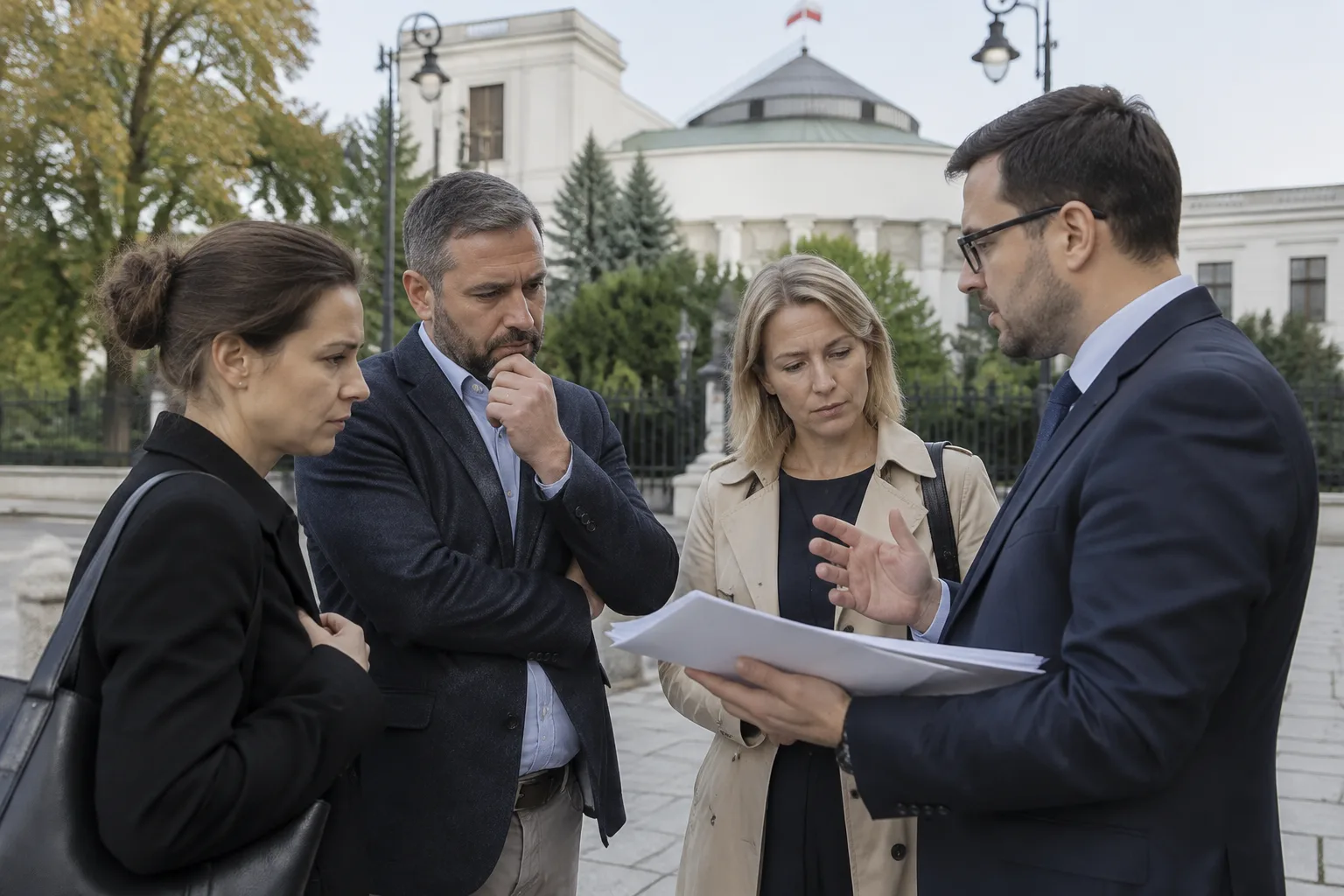
Franchisees protested outside the Sejm, the lower house of Poland’s parliament, on 17 September 2026, calling for faster progress on legislation governing franchise relationships. Their demands also addressed VAT collection from businesses involved in disputes over economic control of goods. For Poland’s franchise community, the protest signals that the debate about protecting smaller partners covers both contractual terms and the tax implications of running a business.
Two demands outside parliament
Business Insider Polska reported on the protest. A separate Videoparlament report dated 17 September describes an intervention by the Confederation of the Polish Crown (KKP), a Polish political party, calling for the urgent passage of franchise legislation and protection for microbusinesses against unequal contracts and tax problems.
According to that report, business owners submitted petitions calling for work to begin on franchise legislation and for VAT collection to be halted for franchisees involved in disputes over economic control of goods. These are two separate demands: the first concerns the rules governing cooperation between franchise parties; the second addresses a specific tax issue.
Participants said work on the legislation had been under way since 2020. This was a position expressed during the protest, rather than confirmation that the legislation had reached a particular stage in parliament. The reports cited provide neither a timetable for further work nor a date when any new rules might take effect.
It is also important to distinguish political support for the demands from a legislative decision. KKP’s appeal and the submission of petitions do not mean that legislation has been passed or that existing tax rules have changed.
Participants’ accounts of debt
During the protest, business owners and advisers described cases involving debts of hundreds of thousands of Polish złoty, and even as much as PLN 1.2 million, according to Videoparlament. These figures were presented as accounts of individual circumstances by those taking part.
They should not be treated as data on average debt among franchisees in Poland. The material provided contains no representative survey, count of similar cases or information that would allow the scale of the issue across the franchise community to be estimated. Nor does it present rulings establishing responsibility for each of the cases described.
Protesters linked the absence of the regulations they sought to legal, social and tax problems. Their statements illustrate the range of concerns being raised, but do not in themselves resolve disputes between business owners and their contractual partners.
An informed debate therefore requires a distinction between three matters: individuals’ experiences, the assessment of clauses in particular contracts, and proposals for rules that would apply to everyone involved in franchising. Each requires different kinds of documentation and evidence.
VAT as a separate point of dispute
The protesters’ tax demand concerned franchisees involved in disputes over economic control of goods. The report cited refers to a petition seeking to halt VAT collection from this group of businesses, not a general VAT exemption for franchises.
This distinction matters in practice. Readers should not infer from news of the protest that their tax obligations have changed, or that being involved in a dispute is itself grounds for stopping VAT accounting and payments. The reports describe a demand addressed to the authorities, not a measure currently in force.
The available information does not explain the detailed design of the proposed measure, the period it would cover or the criteria businesses would need to meet to qualify. Nor does it allow the tax position of any particular outlet to be assessed. That would require an examination of the documents and circumstances of the individual case.
For the franchise community, this is also a reason not to limit discussions about contracts to fees, the length of the relationship or the terms for using a brand. The way deliveries, sales and goods-related settlements are documented also warrants separate scrutiny. This is a precautionary recommendation, not an allegation of irregularities in any particular franchise system.
What this means for business owners
The key confirmed developments remain the protest itself and the submission of petitions. The publications cited do not report that legislation has been passed, that the tax demand has been accepted or that the authorities have issued a binding response. Further reports should therefore be assessed against specific documents and decisions, rather than solely against statements by those involved in the debate.
Business owners considering joining a franchise network should discuss the draft agreement with a lawyer and the accounting and tax arrangements with a tax adviser. Questions worth asking include who is responsible for goods, how liabilities are documented and what happens when the relationship ends. Those already involved in a dispute should organise their contracts, amendments, invoices and correspondence before seeking advice on their individual circumstances.
Practical takeaway: monitor formal decisions on franchise legislation and VAT, but do not change your tax practices solely on the basis of reports about the protest. A demand for a change in the law is not yet a change in the law.
Sources
- Franczyzobiorcy protestują przed Sejmem. Żądają ustawy
- Wingstop wchodzi do Polski. Amerykańska sieć rzuca wyzwanie KFC
- Prezes Związku Aptek Franczyzowych ostro - Strona Zdrowia
- KKP chce ustawy chroniącej franczyzobiorców
- Franczyza jak malowana - Franchising.pl
- Rośnie nam prawdziwy mocarz w handlu. Już dziś ma więcej sklepów niż Żabka czy Biedronka