Franchise Territories: A Guide Before Expanding in the Philippines
Clarify each outlet’s territory, online sales arrangements and exceptions before offering franchises in the Philippines.
Published
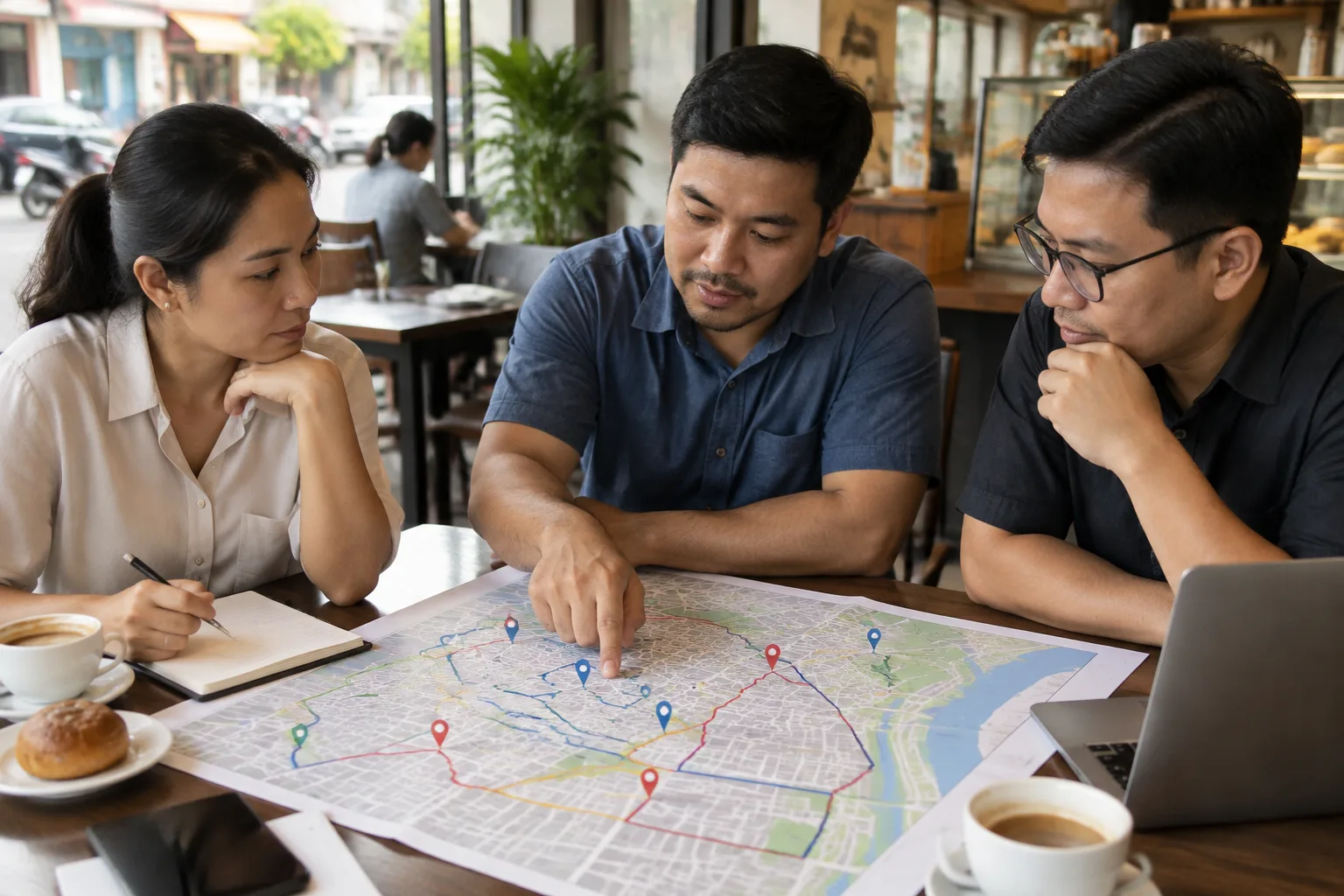
Before franchising your existing business, you need to be clear about where each franchisee may operate and what protection they can expect. A promise that “this area is yours” is not enough. In franchising, clear territory rules help prevent overlapping promises, competition for the same customers and expansion that the business cannot support.
1. Define exactly what you are granting
Permission to open at a particular location is different from exclusive rights within an area. An agreement may authorise only a specific outlet, without any promise that the brand owner will not open another nearby.
Before making an offer, choose a clear arrangement:
- Specific location only: Permission is tied to an address or premises, with no automatic protection for the surrounding area.
- Protected territory: A commitment not to establish certain types of competing outlets within a defined area, subject to specified exceptions.
- Multi-unit development rights: Separate opening schedules, standards and approvals apply to each new outlet.
Do not use the word “exclusive” if there are numerous exceptions to the protection. If you can still open outlets in airports, schools or large shopping centres within the area, say so before the franchisee signs.
Also clarify whether the franchisee simply has the right to operate there or is obliged to serve the entire area. These should not be assumed to mean the same thing.
2. Set boundaries based on evidence
Do not simply use a city name or draw a circle on a map. Two sites may be close together but serve separate customer flows because of a river, a main road or limited access routes. Conversely, shops some distance apart may draw customers from the same area.
Use records from your existing business to assess where customers come from, travel times, delivery coverage and areas with recurring demand. Use aggregated data wherever possible; there is no need to disclose each customer’s name or full address.
Prepare a map and a written description to attach to the agreement. Include roads, barangay boundaries — the boundaries of local administrative units — or other easily identifiable landmarks. If distance is the basis, specify whether you mean a straight-line measurement from the outlet or the actual route travelled.
Record the map’s version and date. Specify which takes precedence if the map and written description do not match. Also review whether relocation requires the brand owner’s approval: even moving across the road could affect another franchisee.
3. Include delivery and online sales
Territory does not end at the shop door. One outlet may receive an order from a customer in another outlet’s area. Head office may also receive a large order from a company with several offices.
Before offering a franchise, answer the following:
- Who receives orders placed through the brand’s main website or app?
- How will the outlet responsible for preparing and delivering an order be selected?
- Who is responsible for complaints, shortfalls and refunds?
- Does territorial protection cover pop-up outlets, events and large orders?
For example, an order could be allocated to the nearest outlet with sufficient stock and delivery capacity. However, the rules should make clear whether an outlet may cross a territorial boundary when the usual outlet is closed or at capacity.
Distinguish between actively advertising outside a territory and customers choosing to visit a shop of their own accord. Do not promise complete control over delivery platforms if the business cannot set their service boundaries.
4. Align the policy with the agreement and the law
The Philippines has no single comprehensive franchise law, but this does not mean there are no specific regulations. Executive Order No. 169, series of 2022, sets out protections for agreements involving micro, small and medium-sized enterprises. These include a written, notarised agreement and minimum provisions that it must contain.
It also directs the Department of Trade and Industry (DTI) to establish a registry of franchise agreements. Confirm the applicable process and current rules with the DTI; do not confuse business name registration with compliance with obligations relating to the franchise agreement.
The Civil Code also matters for contract validity and performance, as does the Intellectual Property Code for use of the brand, and Republic Act No. 10667 for competition. Have a lawyer review territorial and sales restrictions; a condition is not automatically fair or valid simply because it has been signed.
Practical takeaway: Before accepting payment, prepare the map, exceptions and order-handling rules. Make sure the promises in your offer, agreement and day-to-day operations are consistent.
Sources
- Franchising Law and Practice in Philippines
- Franchise Business
- How to Legally Start a Franchise Business in the Philippines
- How Much Does Registering a...
- Kodigo ng Pag-uugali sa Franchise Pilipinas | QFA
- How do I Franchise my Business? - Blog
- Philippines: Franchise & Licensing
- Low-Cost Franchise Business in the Philippines - Wise