No Brand Burger expands compact stores with 40% less floor space as opening strategies diverge
No Brand Burger and Lotteria are expanding smaller, space-efficient stores, while Mom’s Touch, Burger King and bhc are introducing experience-led venues. Store formats increasingly reflect local trading conditions and customers’ reasons for visiting.
Published
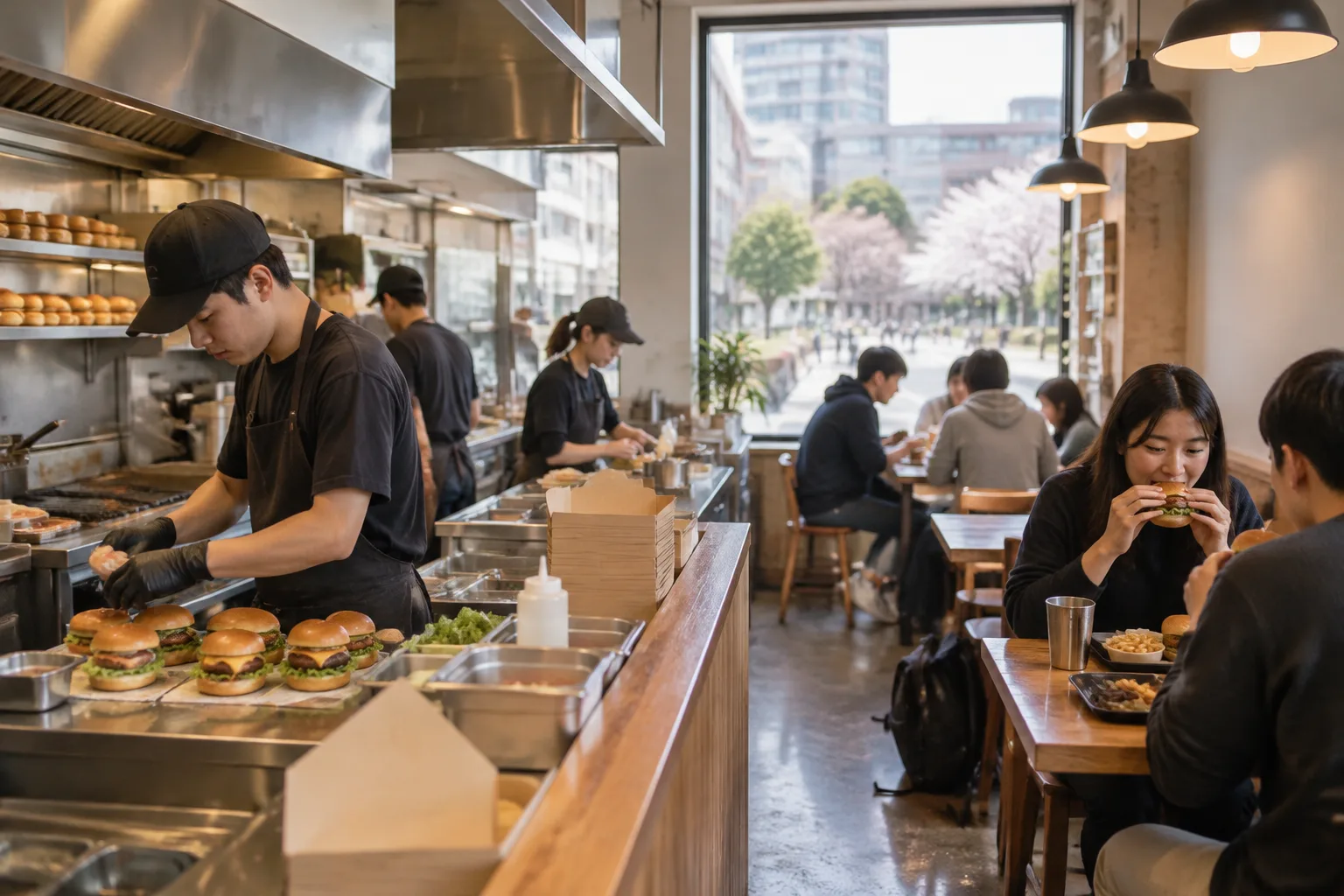
Store-opening strategies in South Korea’s restaurant franchise sector are diverging over size. No Brand Burger and Lotteria are introducing compact outlets with smaller footprints and streamlined workflows, while Mom’s Touch, Burger King and bhc are operating specialist stores that emphasise the setting and dining experience. Even within individual brands, formats vary according to local trading conditions and customers’ reasons for visiting.
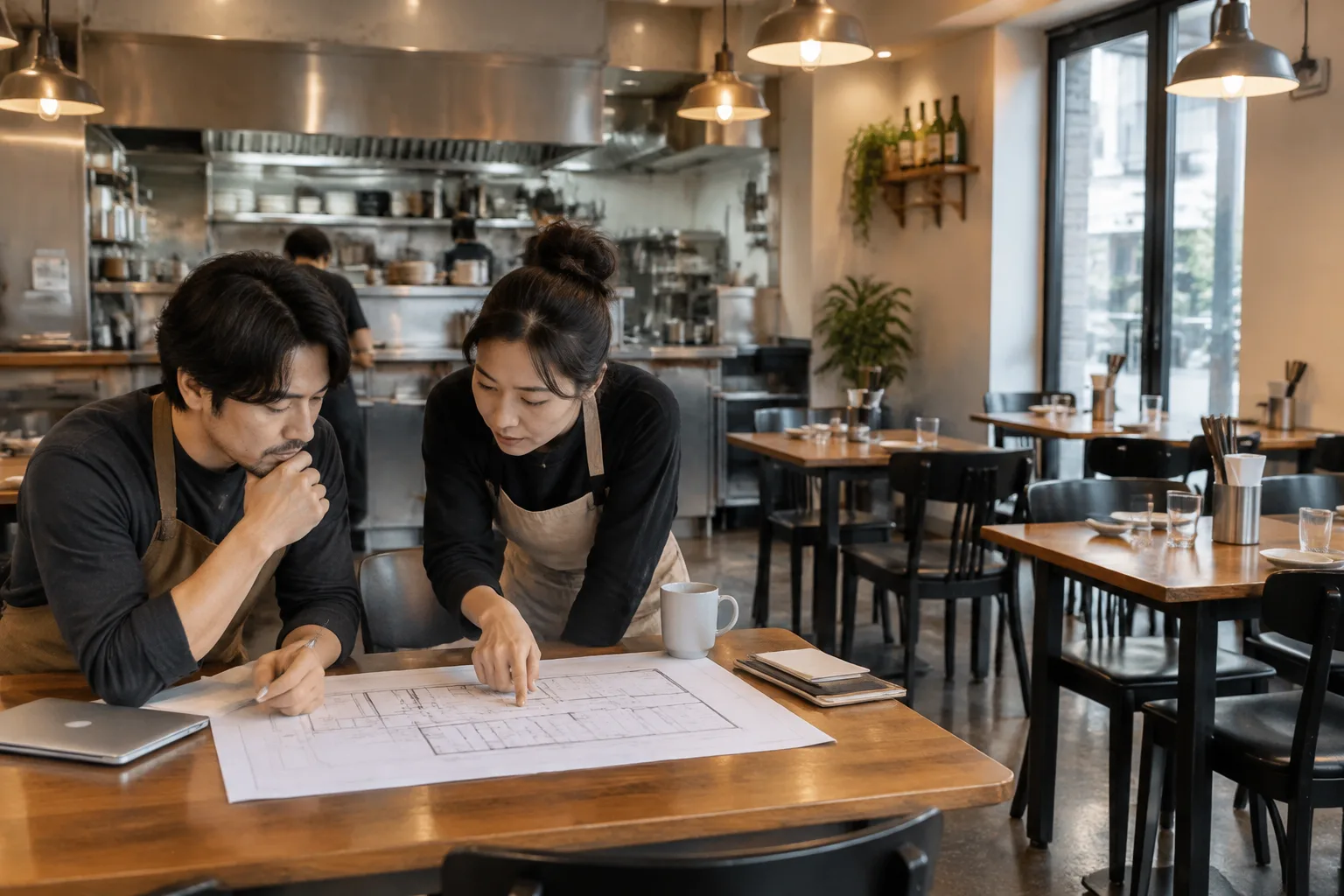
No Brand Burger cuts floor space and targets university districts
According to a Financial News report on 8 November, Shinsegae Food’s No Brand Burger is expanding new openings of its compact format, which uses around 40% less floor space than its standard stores. Rather than securing large premises, the model focuses on efficient kitchen equipment and fit-outs, bringing start-up costs down to the KRW 90–99 million range.
The format is growing mainly in university districts, where demand for quick, simple meals is strong. Around 40% of No Brand Burger outlets on university campuses and in nearby commercial areas operate in the compact format. The Konkuk University branch in Seoul’s Gwangjin district was the brand’s first compact store.
The two percentages should be read separately. The reduction of around 40% in floor space is a comparison with the existing standard format. The roughly 40% share of compact outlets applies only to stores on university campuses and in nearby commercial areas, not to No Brand Burger’s entire estate.
The quoted start-up cost of KRW 90–99 million also requires closer scrutiny when assessing an actual opening. Prospective franchisees should establish which equipment and building works are included, and identify any additional costs arising from the condition of their proposed premises. A smaller footprint alone is not enough to determine an individual outlet’s investment requirements or profitability.
No Brand Burger’s approach is not about imposing a single store size across the brand. While expanding the compact model in university districts, it also operates specialist test and pop-up stores in Seoul’s Seongsu-dong neighbourhood. The same brand is using different spaces to serve customers seeking a convenient meal and those looking for a new experience.
Lotteria combines smaller formats with cooking automation
Lotteria has also introduced stores with modified layouts and operating models. Its Gangnam Station SELECT branch, in the commercial district around Seoul’s Gangnam Station, is a compact outlet with a smaller menu and footprint than conventional stores. Notably, it has adjusted both its product range and its space to process orders more quickly.
The key point here is the simultaneous adjustment of the menu and layout, rather than simply a reduction in seating. Prospective franchisees considering a small-format outlet should examine not only its size, but also the menu, the cooking equipment required, and the flow from ordering to collection.
Lotteria’s Noryangjin Station branch has introduced cooking robots. The report presented this as an example of improving staffing efficiency. The smaller format at Gangnam Station SELECT and the automation at Noryangjin Station were introduced at different outlets, so they should not be treated as standard features shared by all compact stores.
When assessing automation, it is more useful to establish which processes the equipment handles and how tasks are divided between machines and staff than simply to note its presence. This example illustrates a change in operating methods, but does not establish how much an individual outlet could save on labour or how quickly its investment would pay back.
Larger stores offer reasons to visit beyond a meal
At the other end of the spectrum, brands are strengthening the role of stores as places to experience the brand. Mom’s Touch has opened its largest outlet at Everland, a theme park in Yongin, Gyeonggi Province. Its 1960s American diner-style interior is designed to carry the theme park atmosphere into the restaurant.
The Mom’s Touch Everland branch makes use of both its scale and the character of its location. By tailoring the atmosphere to a theme park setting, it takes a different approach from compact outlets designed to meet demand for convenient meals in university districts. When comparing the two models, customers’ reasons for visiting matter more than size alone.
In Seoul’s Seongsu-dong, Burger King operates Flame Ground Seongsu, its first flagship store worldwide, directly beside No Brand Burger’s specialist outlet. Its ‘The Gastro’ offering reinterprets burgers as a multi-course meal. T-shirts and a photo booth are also available.
Burger King’s format stands out by offering an experience beyond the usual process of ordering and eating a burger. Combining a multi-course meal with a space for taking photos represents a different direction from stores focused primarily on price or speed. In Seongsu-dong, several brands are using distinctive venues to engage with consumers.
bhc has opened its first flagship store near Seoul’s Gangnam Station. With upgraded surroundings and service, alongside a more varied menu, it is targeting lunchtime and afternoon dining as well as the evening drinks and delivery trade traditionally associated with Korean fried chicken outlets.
The important point is not simply the store’s size, but the expansion of reasons to visit across different times of day. While Burger King has added multi-course dining and experiential features, bhc is using its setting and menu to attract daytime diners. Both are specialist stores, but their operational priorities differ.
Local market fit matters more than store size
The report identified increasingly polarised consumer spending amid high prices and an economic downturn as the backdrop to these changes. Customers are willing to spend on experiences they consider worthwhile while seeking value for money in everyday meals. Rent and labour costs were also cited as factors prompting brands to adjust store formats.
However, these examples should not automatically be viewed as standard models that can be applied to every franchise outlet. Flagships, test stores and compact outlets each serve different purposes. Prospective franchisees should first check whether their preferred format is actually available for franchise openings, then compare investment terms.
There are lessons for existing franchisees too. Before deciding to expand or reduce an entire store, they can review when customers visit, which menu items they buy and how they use the space. Other brands’ examples can help identify questions worth exploring, but should not be treated as a guarantee of similar results.
A practical starting point is to compare customers’ reasons for visiting the proposed trading area, the menu, staffing and equipment requirements, and total investment in a single table. Rather than choosing a large or small store first, the priority is to establish whether the format can operate sustainably in that location.