Natuur closes dedicated shops but retains brand and focuses on packaged ice cream
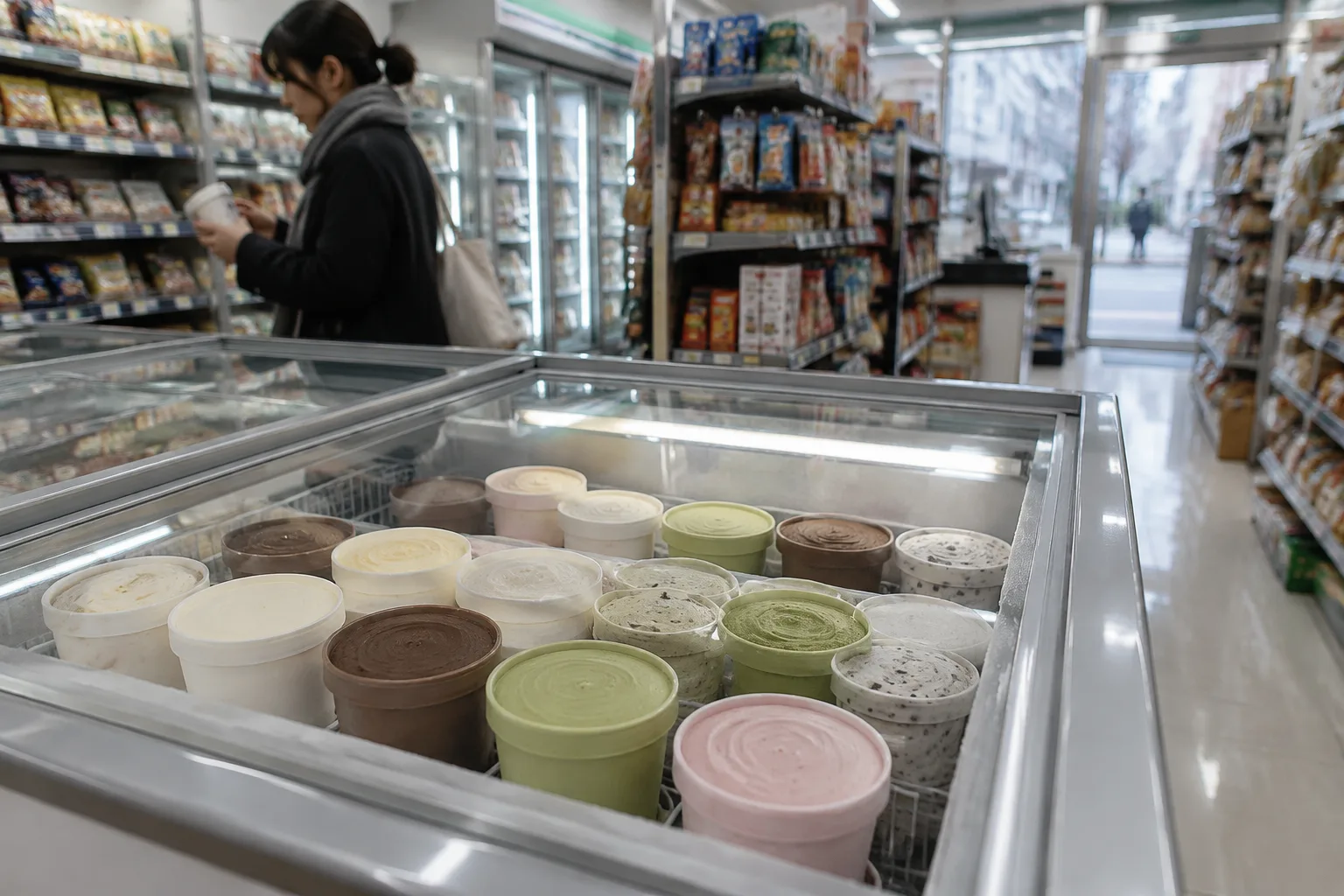
Natuur has voluntarily cancelled its franchise disclosure registration and closed its dedicated shops. The shift comes 28 years after the brand’s launch, with sales now focused on packaged ice cream through hypermarkets, convenience stores and online channels.
Published

Natuur, Lotte Wellfood’s premium ice cream brand, has wound down its dedicated shop business to focus on packaged ice cream distribution. The brand will remain, but the channels through which it reaches consumers are changing. For those following South Korea’s franchise market, it is important to distinguish shop closures from the disappearance of a brand, and to track changes in established brands’ sales models as well as new openings.
Launched in 1998, Natuur winds down its dedicated shop business
According to a News1 report on 8 November, Natuur voluntarily cancelled the registration of its franchise disclosure document in August. Its existing dedicated shops have also closed. The move ends its dedicated shop business 28 years after the brand’s launch in 1998. It now plans to concentrate on distributing packaged ice cream through hypermarkets, convenience stores and online channels.
The key change is not the disappearance of the Natuur name, but the end of its shop-based sales model. The closure of its shops should not be taken to mean that sales of its products have also stopped. Natuur has set out a direction that retains the brand while focusing on retail channels for packaged products.
For consumers who previously visited its shops, this changes where they can buy its ice cream. However, the focus on hypermarkets, convenience stores and online channels does not mean that every retailer will stock the same products. Customers should check availability with the retailer they intend to use. The overall distribution strategy and the product range at any individual outlet are separate matters.
From a franchising perspective, the decision cannot be explained simply as a change in outlet numbers. Natuur has not merely reduced its shop estate; it has wound down the dedicated shop business altogether. This is therefore better understood as a change in its operating model and sales channels, rather than a slowdown in expansion.
Four facts are established: the voluntary cancellation of the disclosure registration, the closure of existing dedicated shops, the retention of the brand and the focus on packaged product distribution. These facts alone do not establish weak sales across the brand or imply that its future performance will improve. The change in strategy and its results need to be assessed separately.
Disclosure cancellation and shop closures are distinct issues
In South Korea, a franchise disclosure document sets out information such as the franchisor’s financial position, franchise outlet numbers and contract terms. Once its registration is cancelled, the franchisor cannot enter into new franchise agreements until it registers again. Prospective franchisees should therefore check the current registration status independently of how well known the brand is.
However, cancellation of a franchise disclosure registration does not always mean that existing franchise outlets will close. In Natuur’s case, both the voluntary cancellation and the closure of its dedicated shops have been confirmed. Although these are related developments, understanding each separately helps avoid confusion when comparing other brands.
Häagen-Dazs, mentioned in the same report, illustrates this distinction. It also cancelled its disclosure registration on 30 October, but said that its three existing franchise outlets in South Korea were operating normally. It stated that there would be no change to their operations. This differs from Natuur’s situation in terms of whether existing shops remain open.
It would therefore be inaccurate to describe both brands as withdrawing from dedicated shops solely because both cancelled their disclosure registrations. Whether a brand can sign new agreements, whether its existing shops remain open and where its products are sold must each be checked separately. The same administrative change can accompany different operating circumstances.
Anyone considering a franchise should prioritise the current registration status and guidance from the franchisor over old recruitment advertisements or outdated shop lists. In particular, the continued sale of a brand’s products in retail outlets is not evidence that new franchise agreements are available. Product sales and franchise recruitment require separate checks.
Shop expansion and retail distribution coexist in the market
Natuur’s decision does not mean that the entire premium ice cream shop market is moving in the same direction. New brands have also continued to enter the physical retail market. Some brands are expanding their dedicated shops while others are concentrating on packaged product distribution; Natuur has chosen the latter.
In July, A Twosome Place opened the first South Korean shop for US premium ice cream brand Van Leeuwen near Gangnam Station in Seoul. It subsequently opened shops at Shinsegae Department Store’s Gangnam branch and near Sinnonhyeon Station. These openings show that established brands can be closing dedicated shops at the same time as new brands are launching them.
When comparing these developments, it is also important to distinguish opening a shop from recruiting franchisees. News of a physical shop opening does not, on its own, mean that prospective business owners can join the brand as franchisees. Whether recruitment is actually taking place and agreements can be signed must be verified separately.
Assessing Natuur’s transition also requires looking beyond outlet numbers. Checking whether its dedicated shops have closed is different from establishing which channels continue to sell its packaged products. To understand future developments accurately, it helps to consider brand continuity, sales channels and franchise operations separately.
Nor should a familiar brand name be taken as evidence that its previous operating structure remains unchanged. Natuur’s case shows that even a long-established brand can change how it reaches consumers. Whether that choice delivers results must, however, be assessed separately from the channel shift itself.
Check current operations before considering a franchise
The first point prospective franchisees should note is that Natuur’s dedicated shops have closed. They should avoid treating examples of its former shops as a business model still available today. There is a clear distinction between a brand continuing to exist and an opportunity to operate one of its dedicated shops.
The same checks apply when considering other ice cream brands. Start by establishing whether the franchise disclosure document is currently registered, whether new franchisees are actually being recruited and how existing shops operate. Checking the current contractual and operational position should come before relying on expansion targets or promotional material.
An announcement that a brand will focus on packaged product distribution does not, in itself, guarantee wider availability at any particular retailer or improved profitability for individual outlets. Natuur’s confirmed policy concerns the direction of its sales channels. Specific results or additional plans that have not yet been confirmed should not be treated as settled facts.
In practice, check brand continuity, dedicated shop operations and the availability of new franchise agreements separately. Natuur is retaining its brand while winding down its dedicated shop business. Understanding that distinction is an essential starting point both for consumers deciding where to buy and for prospective franchisees assessing a potential agreement.