Mega MGC Coffee and Dujjim expand support for existing franchise takeovers
South Korean franchisors including Mega MGC Coffee and Dujjim are supporting transfers of existing outlets. Unlike opening a new outlet, taking over an established business requires separate checks on trading records and acquisition terms.
Published

South Korean foodservice franchisors are expanding support for prospective franchisees looking to take over existing outlets. Mega MGC Coffee helps with listing checks and takeover consultations, while Dujjim offers consultations based on head-office-recommended listings. As new openings slow, these initiatives reflect efforts to maintain franchise networks by transferring operating outlets to new franchisees.
Head offices get involved, from listing checks to takeover consultations
According to an ENewsToday report on 30 October, major foodservice franchisors are stepping up their efforts to connect buyers with existing outlets for sale and advise on takeovers. They are broadening their engagement with prospective franchisees beyond new openings by helping match operating outlets with their next operators.
Mega MGC Coffee runs a programme called ‘Clean Transfer’, under which head office directly supports listing checks and takeover consultations. By acting as a point of contact for people seeking to acquire an existing outlet, the franchisor offers a service distinct from advice on opening a new location.
Kiyoung F&B, which operates Dujjim, also announced on 6 October that it was offering franchise takeover consultations using head-office-recommended listings. Both examples show franchisors extending their start-up support to include changes of operator at existing outlets.
However, a franchisor checking or recommending a listing is not the same as guaranteeing an individual outlet’s profitability. The reported support covers listing checks and consultations. It should not be interpreted as a guarantee of sales or profits after the takeover.
For prospective franchisees, this means more routes to advice. Rather than reducing due diligence simply because head office is providing the consultation, buyers should ask which items the franchisor has checked and which they still need to review independently.
Takeover advice expands through platforms and trade fairs
Consultations on acquiring existing outlets are no longer confined to individual franchisors’ own programmes. Ediya Coffee, Jadam Chicken and Won Grandma Bossam have taken part in the dedicated business-transfer section of franchise start-up platform MyFranchise, offering advice on outlet acquisitions.
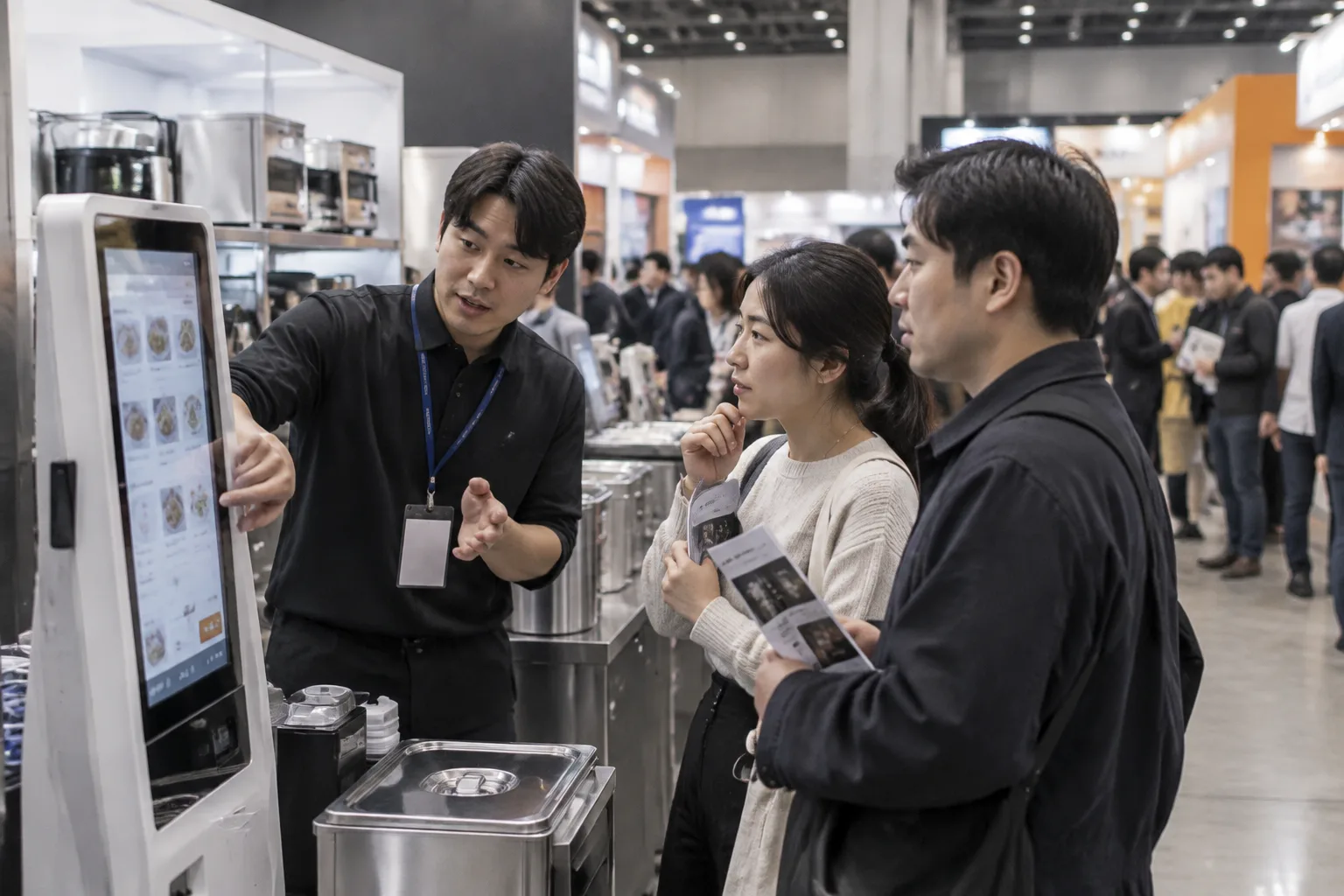
Similar consultations have also appeared at trade fairs. No Brand Burger and Insaeng Agujjim were among the brands with stands at a fair held from 29 to 31 October at KINTEX in Goyang, Gyeonggi Province. The 30 October report said these brands were holding one-to-one consultations with prospective franchisees interested in taking over existing outlets.
These examples show franchise consultations expanding beyond locations and opening requirements for new outlets to include acquisition terms for existing businesses. Even when considering the same brand, someone planning a new opening may need different information from someone taking over an established outlet.
For an existing outlet, actual trading records and current operating conditions are key areas to review. Rather than accepting sales figures alone, buyers should establish the period covered and check which costs, if any, are reflected in the figures presented. The terms of the business transfer and those of the franchise agreement also need to be addressed separately.
Participation in a platform or consultations at a fair does not indicate how many deals have been completed. The report did not provide consultation totals or completed acquisition figures for each brand. The demonstrable change is therefore an expansion in channels connecting franchisors and prospective buyers, rather than a confirmed rise in transaction volumes.
Dujjim records more operator changes as new openings fall
Dujjim’s franchise disclosure figures provide a concrete example of this trend. According to ENewsToday, citing a disclosure document registered on the Korea Fair Trade Commission’s franchise information system, Dujjim recorded 45 new openings in 2025, down from 48 the previous year.
Over the same period, registered changes of franchisee rose from 79 to 109, an increase of 38.0%. The key point is that new openings and registered franchisee changes moved in opposite directions. Adding new outlets and changing the operators of existing outlets should be treated as separate activities.
Registered franchisee changes should not be counted as new openings. Nor do these figures reveal the acquisition price, profitability or reason for the change in any individual transaction. Care is also needed before treating one brand’s figures as representative of transaction growth across the franchise sector.
Nevertheless, Dujjim’s figures illustrate the limitations of assessing a franchise network solely through new openings. Prospective franchisees evaluating a brand should consider both how many outlets have opened and the pattern of operator changes within its existing network.
The same distinction applies when reviewing a listing recommended by head office. Brand-wide opening figures and the trading performance of the outlet being considered are different sets of information. Network-level data can provide context, but an investment decision should follow a separate review of the outlet’s own records.
Distinguish head-office support from transaction due diligence
The common thread in these initiatives is that franchisors are using existing-outlet transfers both to maintain their networks and to attract prospective franchisees. As support for connecting outgoing and incoming operators grows, the scope of information provided during consultations becomes increasingly important.
A practical first step is to ask the franchisor exactly what its support covers. Does it simply introduce listings, or does it also check trading records and advise on acquisition terms? Buyers should not infer the scope of support from a programme’s name or the label ‘recommended listing’ alone.
Buyers need to review cost records alongside sales data. Lease terms, the condition of premises and equipment, what is included in the purchase price, and obligations under the franchise agreement also belong on the checklist. These are general checks for anyone considering a takeover, not an indication that problems have been identified at any particular brand.
It is also important to check whether the franchisor’s account matches that of the current operator. Keeping written records of the periods covered by performance figures and what the acquisition terms include can make comparisons clearer and support a better-informed decision.
Practical takeaway: Use head-office transfer support as a route to advice, not as a guarantee of profitability. When considering an existing outlet, start by checking the scope of the franchisor’s support, the outlet’s trading records and the actual contract terms separately.