IFS closes after drawing over 15,000 visitors, with franchise advice extending to equipment and operations
More than 15,000 people visited the 61st IFS at COEX in Seoul. Payment and ordering systems, alongside programmes offering hands-on experience in food outlets, put the spotlight on preparing for day-to-day operations after opening.
Published
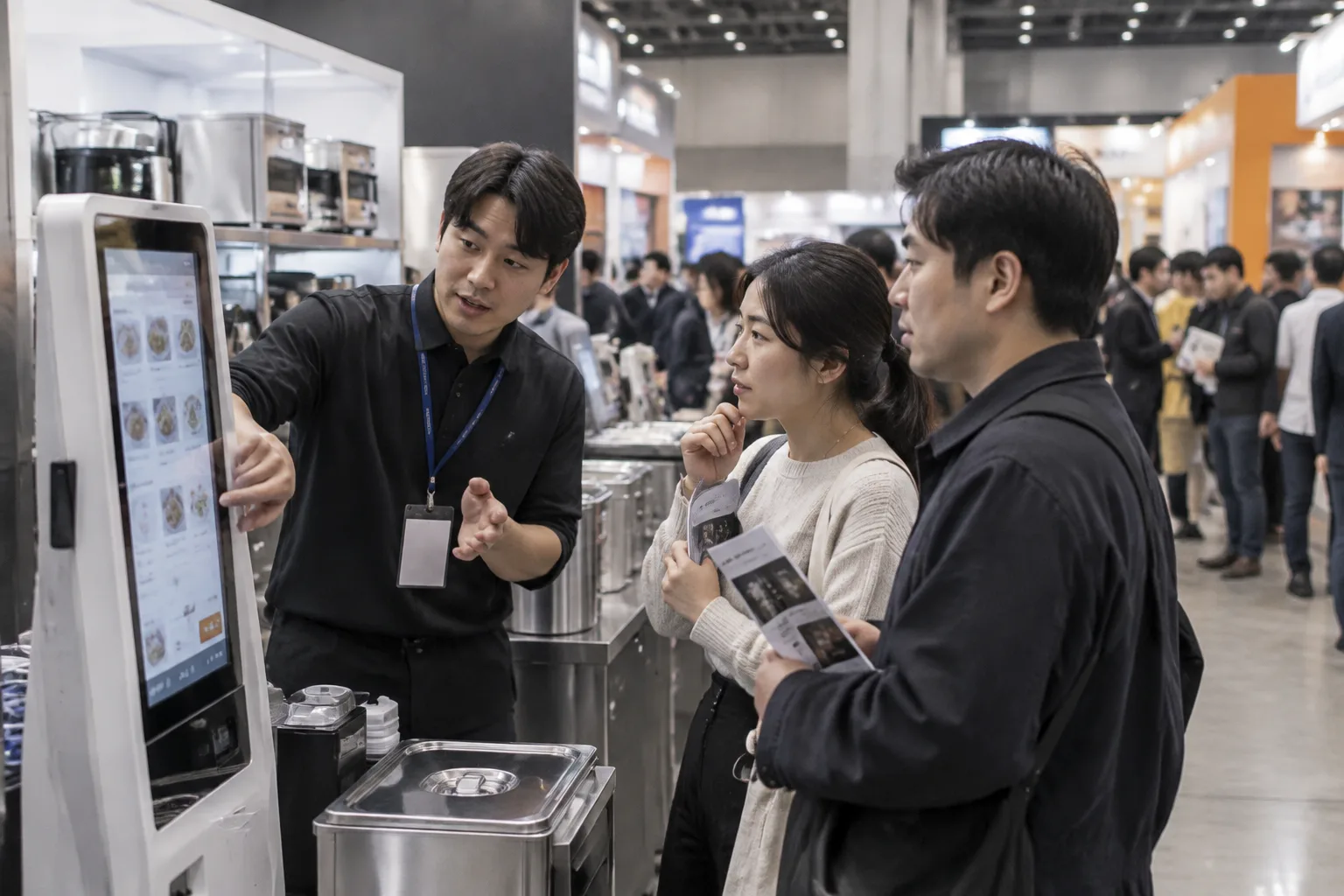
The 61st IFS Franchise Expo, held at COEX in Seoul in the second half of 2026, closed on 24 October. More than 15,000 people attended the three-day event, which began on 22 October. Alongside franchise brands and menus, the exhibition featured equipment and services needed to run an outlet, including payment systems, kitchen equipment and supply-ordering solutions. The event showed how interest within the franchise community extends beyond preparing to open a business to the practical requirements of running it.
Around 200 companies and 530 stands, with a focus beyond opening day
According to a Sports Chosun report published on 26 October, around 200 companies took part across 530 stands. This was the final IFS event held in Seoul that year, attracting both first-time prospective business owners and existing operators considering a change of business type. People at different stages of their business journey were able to explore brands and operational tools in one place.
The exhibition went beyond franchise brand introductions. It also featured self-service kiosks, payment systems, kitchen equipment and supply-ordering solutions. A dedicated ‘One-Person Business Zone’ brought together brands designed to operate with minimal staffing. This reflected demand among independent business owners to reduce staffing requirements and operating costs amid high prices and labour costs.
Visitor numbers and stand counts indicate the scale of the event, but should not be read as evidence of franchise agreements secured. Visiting, making enquiries and signing a contract are separate stages. The key takeaway is not only that the event attracted a large audience, but also that prospective operators were presented with a broad range of equipment and services alongside the brands themselves.
For first-time business owners, the exhibition offered an opportunity to examine everyday tasks, from taking orders and preparing food to processing payments and ordering supplies. For operators considering a change of business type, it provided a setting to ask not just about new menus or signage, but also about changes to their existing equipment and working methods. However, individual visitors’ purchasing decisions and any resulting cost savings have not been established.
Payments, kitchens and supply orders: assess how the operations connect
The equipment and services presented at the exhibition serve different purposes. Kiosks and payment systems support customer ordering and payment, kitchen equipment supports food preparation, and supply-ordering solutions help with purchasing ingredients and other supplies. Even when products are all described as improving ‘operational efficiency’, prospective buyers need to distinguish which tasks each one supports.
Prospective franchisees should also ask specific questions. Which tasks still require staff during peak ordering periods? What happens in the kitchen after an order is received? Who checks stock and places supply orders? These are not judgements about any particular product’s performance, but practical checks to help operators assess whether the options on display suit their own outlet.
Models promoted as requiring minimal staffing are particularly difficult to assess on equipment alone. Operators need to review the full workload, including preparation, cooking, customer service, cleaning and closing procedures. While the event did bring low-staffing brands together in a dedicated area, this does not mean every outlet can achieve the same results with the same number of people.
It is also worth separating upfront costs from ongoing operating costs. Beyond equipment purchase and installation terms, buyers should check maintenance arrangements, usage fees and the support available when faults occur. The report did not provide prices or evidence of savings for individual products. Exhibition participation should therefore be treated as a starting point for comparing quotations and contract terms after an enquiry, rather than as proof of value for money.
Gusia Food Market introduces an operating partner programme for outlet experience
At the event, Gusia Food Market introduced an ‘Operating Partner’ programme through which prospective operators can gain experience in a foodservice outlet. Gusia Food Market is a university dining brand offering rice bowls, Korean snack dishes, Chinese food, rice noodles and pork cutlets in one space. Its presentation stood out for adding practical operating experience to the brand introduction.
While the equipment displays presented tools for running an outlet, this programme focused on giving prospective operators experience of a foodservice business. However, the information presented does not establish the programme’s duration, cost, responsibilities or relationship to any subsequent contract. Interested participants should check these conditions separately before deciding whether it offers the experience they need.
It is also important to distinguish the brand’s multi-menu format from the specific training covered by the operating partner programme. A varied menu does not necessarily mean participants will experience every cooking or management task. Asking which duties participants perform themselves, which they observe and who guides them on site will make the assessment more useful.
Before joining an experience programme, it helps to decide what you want to assess. Examples include ingredient preparation, allocation of tasks during busy periods, customer service and closing procedures. These are questions to ask before committing, not confirmation that the programme includes those activities. Defining the scope of the experience matters more than simply knowing that a programme exists.
Link franchisor support claims to actual tasks
Participating brands highlighted franchisee support and distinctive menus as competitive strengths. Damga Hwarogui presented its single-pack ingredient system and logistics arrangements as ways to ease kitchen workloads, alongside support for outlet development and marketing. Juk Story emphasised ingredient management and menu diversification. Each brand approached support differently, reflecting differences in how its outlets operate.
Visitors showed interest not only in business concepts but also in outlet efficiency and franchisor support systems. However, reports of interest at the event should not be treated as a survey of all prospective business owners’ preferences. What the exhibition demonstrated was that, amid high prices and labour costs, operational questions formed an important part of franchise discussions.
To align franchisors’ descriptions of support with franchisees’ expectations, it helps to break support down into individual tasks. Check whether assistance is provided before opening, remains available during trading, or involves additional charges for the franchisee. Organising brochures and consultation notes against the same criteria also makes it easier to compare brands.
Practical takeaway: If a brand or piece of equipment caught your interest at the exhibition, use follow-up discussions to build a one-page comparison of expected tasks, staffing requirements, recurring costs and the scope of franchisor support. For operating experience programmes, check the participation terms and the work you will actually experience before signing up.