Kyochon plans Gamajjim debut in Daegu in March 2027, with franchising to be considered after company-owned trial
Kyochon F&B is preparing the first company-owned outlet of its braised chicken brand, Gamajjim, in Daegu’s Suseong district. It aims to open in March 2027 and will assess customer response before deciding whether to franchise the concept.
Published
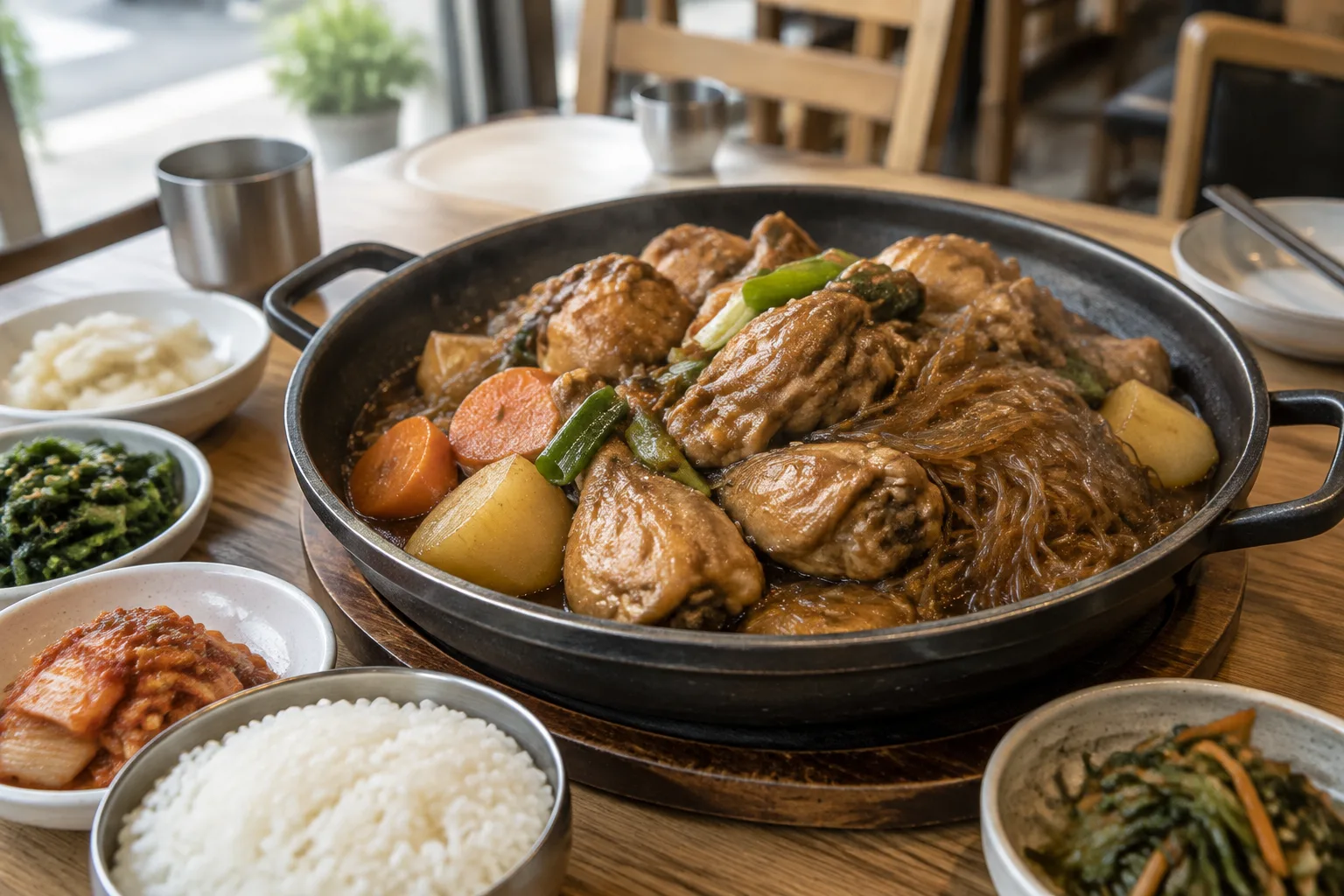
Kyochon F&B is preparing to add a meal-focused restaurant concept to its portfolio with Gamajjim, a new brand specialising in jjimdak, or Korean braised chicken. Its first outlet will be company-owned and located in Dusan-dong, Suseong district, Daegu, with a target opening date of March 2027. For those following South Korea’s franchise market, the significance lies not just in the new brand but also in the proposed expansion sequence. Rather than recruiting franchisees from the outset, Kyochon plans to assess customer response at the first outlet before deciding whether to franchise the business.
First company-owned outlet in Daegu’s Dusan-dong, with braised chicken and set meals in development
According to a Maeil Business Newspaper report on 10 November, Kyochon F&B is constructing a building for Gamajjim’s first company-owned outlet on land it owns in Dusan-dong, Suseong district, Daegu. The site is where chairman Kwon Won-kang’s home is located. The company’s stated opening target is March next year, meaning March 2027 relative to the report’s publication date.
As its name suggests, Gamajjim will focus on jjim dishes — Korean steamed or braised dishes — made with chicken. By the first half of 2026, Kyochon had developed four jjimdak dishes, one bansang, or Korean set meal, and three side dishes. Having grown around fried chicken, the company is preparing a new restaurant that uses the same core ingredient but places greater emphasis on full meals.
The details confirmed so far are the brand name, the first outlet’s location, company-owned operation, the target opening date and progress on menu development. The types and number of dishes developed should not be treated as the final menu that will be available at launch. Completing menu development and deciding what to sell in the restaurant are separate matters.
Crucially, this is not an announcement confirming franchise recruitment for Gamajjim. The company’s position is that it will monitor the response to the first company-owned outlet before deciding whether to franchise. For prospective franchisees, it is therefore a brand to watch for operating results and further announcements after launch, rather than an immediate opportunity to consider signing an agreement.
Domestic chicken business accounts for 93.6% of revenue: the context for adding new brands
Kyochon’s revenue mix provides the backdrop to Gamajjim’s development. Kyochon F&B reported consolidated revenue of KRW 255.6 billion in the first half of 2026, with its domestic Kyochon Chicken franchise business accounting for 93.6%. Despite the introduction of new brands, most revenue still comes from its chicken business in South Korea.
New businesses, comprising sauces, new brands and craft beer, accounted for 2.6% of revenue over the same period, down from 3.0% in 2024. These figures describe the new businesses’ share of revenue; they do not indicate the sales or profitability of individual brands. Nor do they provide a reliable basis for predicting Gamajjim’s performance.
Kyochon introduced buckwheat restaurant Memil Danpyeon in 2024 and deli brand Sosit in 2025. Gamajjim would add meal-focused chicken dishes to that line-up. The move is notable because it involves developing brands with different menus and restaurant formats, rather than simply increasing the number of outlets under the existing chicken brand.
However, increasing the number of brands and materially changing the revenue mix are separate issues. The published figures still show a heavy reliance on the domestic chicken business. With Gamajjim yet to open, the announcement is best understood as a plan to test a new operating model, not evidence that diversification has already delivered results.
Like Memil Danpyeon, franchising will be considered after company-owned testing
Kyochon’s proposed sequence for Gamajjim is to operate a company-owned outlet, assess customer response and then decide whether to franchise. It is keeping franchising open as a possibility while starting with direct operation. The first outlet’s opening date should therefore not be confused with a franchise launch date.
Memil Danpyeon has followed a similar path. Its first restaurant opened in Yeouido, Seoul, in February 2024, and all its outlets remained company-owned at the time of the report. From its third outlet, in Gwanggyo, the brand has reduced restaurant size to assess whether the concept can work in smaller premises.
A Kyochon representative explained that, if customer response is judged satisfactory, the next step would be to consider how to put the necessary foundations in place for franchising. The representative also said that franchising remained a possibility for Gamajjim. This indicates that further assessment would cover not only customers’ views of the menu but also the preparations needed to support franchise operations.
What the Memil Danpyeon example demonstrates is a review process involving company-owned operation and adjustments to restaurant size. It cannot be assumed that the same approach will be applied in full to Gamajjim, as no floor area or small-format model has been announced for the new brand. What the two concepts share is the intention to gather evidence from company-owned outlets before committing to franchise expansion.
For the franchise sector, distinguishing between these stages matters. Testing customer response in a company-owned restaurant and establishing the conditions under which independent franchisees can operate are separate tasks. The company itself has said it will assess customer response before reviewing the foundations needed for franchising.
Kyochon & Meals also in preparation: each brand is at a different stage
Before Gamajjim opens, Kyochon plans to launch the first Kyochon & Meals outlet near Seohyeon Station in Seongnam, Gyeonggi Province, in December 2026. The restaurant will sell chicken, burgers and salads. Its menu differs from Gamajjim’s focus on braised chicken, but it represents another move to broaden meal choices beyond chicken alone.
Kyochon’s developing restaurant portfolio therefore does not fit a single format. Memil Danpyeon focuses on buckwheat dishes, Sosit is a deli concept, Kyochon & Meals combines chicken with burgers and salads, and Gamajjim centres on steamed or braised dishes. With such different menu directions, operating experience at one brand should not be treated as evidence of another brand’s performance.
Prospective franchisees should also assess future developments separately for each brand. For Gamajjim, the first points to check are whether the company-owned outlet opens on schedule, what its actual menu looks like and what subsequent decision the company makes about franchising. These are matters to monitor, not confirmed terms for opening a franchise.
When reviewing a franchisor’s new-brand announcements, it helps to distinguish plans from actual operations. The firm commitment communicated in the Gamajjim announcement is the preparation of the first company-owned outlet; franchising remains a decision to be made after customer response has been assessed. Likewise, the target opening date should be distinguished from the actual start of trading.
In practical terms, Gamajjim should be classified as a brand awaiting company-owned testing, not one that has begun recruiting franchisees. Any assessment of it as a franchise investment should follow the first outlet’s actual trading performance and subsequent announcements on franchising.