TEAR has 78 franchised locations in its 230-site Japanese network, with training to support entrants from other sectors
As at the end of August 2026, funeral services provider TEAR had 230 locations across Japan, including 78 franchises. We look at its franchise network, which includes businesses from other sectors, and the training and support available before and after opening.
Published
TEAR Co., Ltd., which operates funeral halls under the TEAR brand, had 230 locations across Japan as at the end of August 2026, including 78 franchises, according to a report published by Green Belt on 24 September. Businesses from sectors including railways, construction, care services and temporary staffing have joined the network. Pre-opening training and ongoing support after opening underpin the company’s franchise network.
A national network of 230 locations, with franchisees from varied sectors
The report outlines the scale of TEAR’s Japanese network and its arrangements for welcoming companies adding funeral services to their business portfolios. The figure of 230 locations refers to the entire chain, of which 78 are franchised. Prospective franchisees should distinguish between the overall network and the franchised estate.
Participating companies operate in sectors including railways, construction, care services and temporary staffing. This shows that the network includes not only established funeral businesses but also companies with a background in other industries. For businesses moving into an unfamiliar service, a key consideration alongside brand recognition is how they will acquire the necessary knowledge and practical skills.
However, the material provided does not give individual franchisees’ location counts, earnings or time taken to open. Although participation by companies from different sectors is documented, this alone is not enough to assess the financial viability of any particular new venture. The size of the network and the suitability of a business plan for a company’s proposed location and operating conditions need to be assessed separately.
An emphasis on transparent pricing and advance funeral consultations
Green Belt’s report describes the market backdrop in terms of expected growth in demand as Japan’s population ages, closures among independent funeral businesses and the growing popularity of small, family-focused funerals. These are the market conditions described in that report; the material provided contains no specific figures for market size or growth rates.
Against this backdrop, the report highlights TEAR’s efforts to make funeral pricing more transparent and encourage consultations during a person’s lifetime about their future funeral. The company aims to be “the funeral company that receives more expressions of thanks than any other in Japan”. Its approach encompasses not only conducting funerals but also advance consultations and explanations of costs.
Prospective franchisees should establish how this approach is put into practice in everyday customer service. Questions might include what communication skills consultation staff need and how their understanding of costs and service options is checked. These are not specific training modules disclosed in the material, but points worth raising during franchise discussions in light of TEAR’s emphasis on transparent pricing and advance consultations.
The report also identifies the credibility associated with being a listed company and the strength of the brand as features of the business. However, it is important not to equate brand reputation with the quality of service delivered in every locality. A starting point for any assessment is to clarify which responsibilities fall to the franchisee and what support the franchisor provides.
Training at a dedicated facility before opening, followed by ongoing support
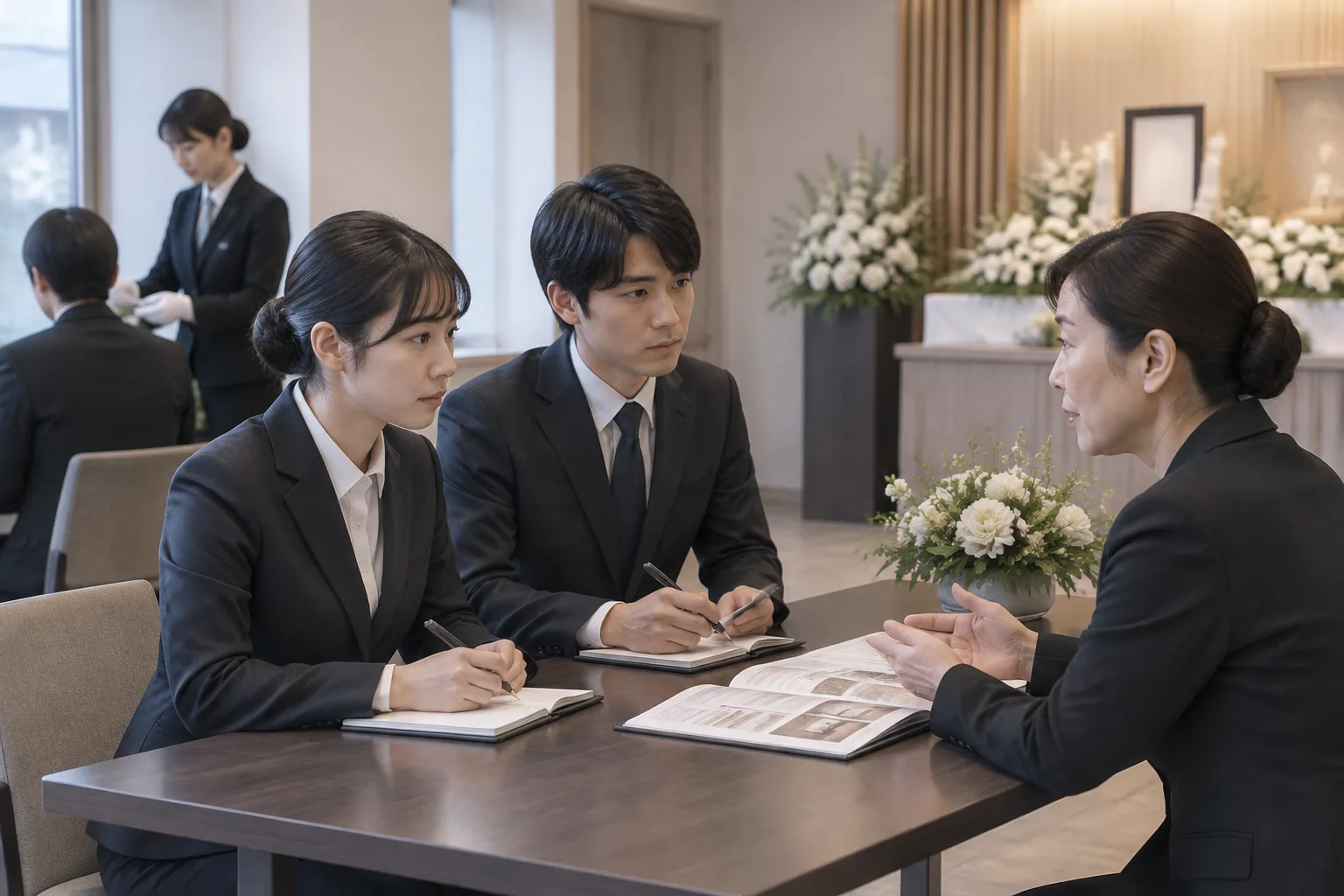
Before opening, franchisees receive classroom-based and on-the-job training at a dedicated training facility. The stated scope runs from customer care to funeral operations, combining knowledge acquisition with practical learning. For companies entering from other sectors, the inclusion of training in the pre-opening process is a confirmed feature of the support package.
After opening, a supervisor provides continuing support. Assistance therefore extends beyond initial training, with support from the franchisor available once trading begins. The information provided describes a framework linking introductory training with subsequent operational support.
However, the material does not specify the duration of training, the number of participants, costs or how proficiency is assessed. Nor does it explain how often supervisors visit, how franchisees can seek advice or precisely what their support covers. Knowing that training and ongoing support are available should not be confused with having a clear picture of staffing requirements or preparation times.
In discussions with the franchisor, prospective franchisees should establish at what stage new recruits attend training and which tasks they are expected to have mastered by opening day. This will help clarify the preparations required. It is also worth asking about the process for obtaining further training or advice when additional learning is needed or uncertain situations arise after opening.
Assess network performance separately from operating requirements
This news concerns TEAR’s network as at the end of August 2026 and the main features of its franchise support, rather than a single new opening. The principal confirmed facts are its 230 locations nationwide, including 78 franchises; participation by companies from varied sectors; and support through classroom-based training, on-the-job training and supervisors.
For those considering Japan’s franchise market, the notable point is the role of training when businesses from other industries enter a specialist service sector. TEAR’s example gives prospective franchisees a basis for comparing not just brands and location counts, but also the learning and advice available before and after opening. However, the material alone is insufficient to assess the effectiveness of that support or the financial position of individual franchisees.
Factors directly affecting the business plan also require separate checks, including the initial investment, franchise fee, ongoing payments, staffing needs and location requirements. Companies should likewise discuss with the franchisor whether their existing premises or staff can be used, based on their own circumstances rather than assuming this is possible simply because other businesses have entered from different sectors.
Practical takeaway: When considering a TEAR franchise, establish exactly what the training and post-opening support involve, then assess them against costs, staffing needs and local conditions. Use the national network’s track record as a reference, but prioritise a realistic operating plan that enables your company to deliver the service reliably.