MATCHAMON steps up franchise recruitment, outlining seven-store footprint and 14-day training
Japanese matcha brand MATCHAMON is stepping up franchise partner recruitment. It has outlined its track record across seven locations in Japan and overseas, including temporary outlets, alongside 14 days of training and support before and after opening.
Published
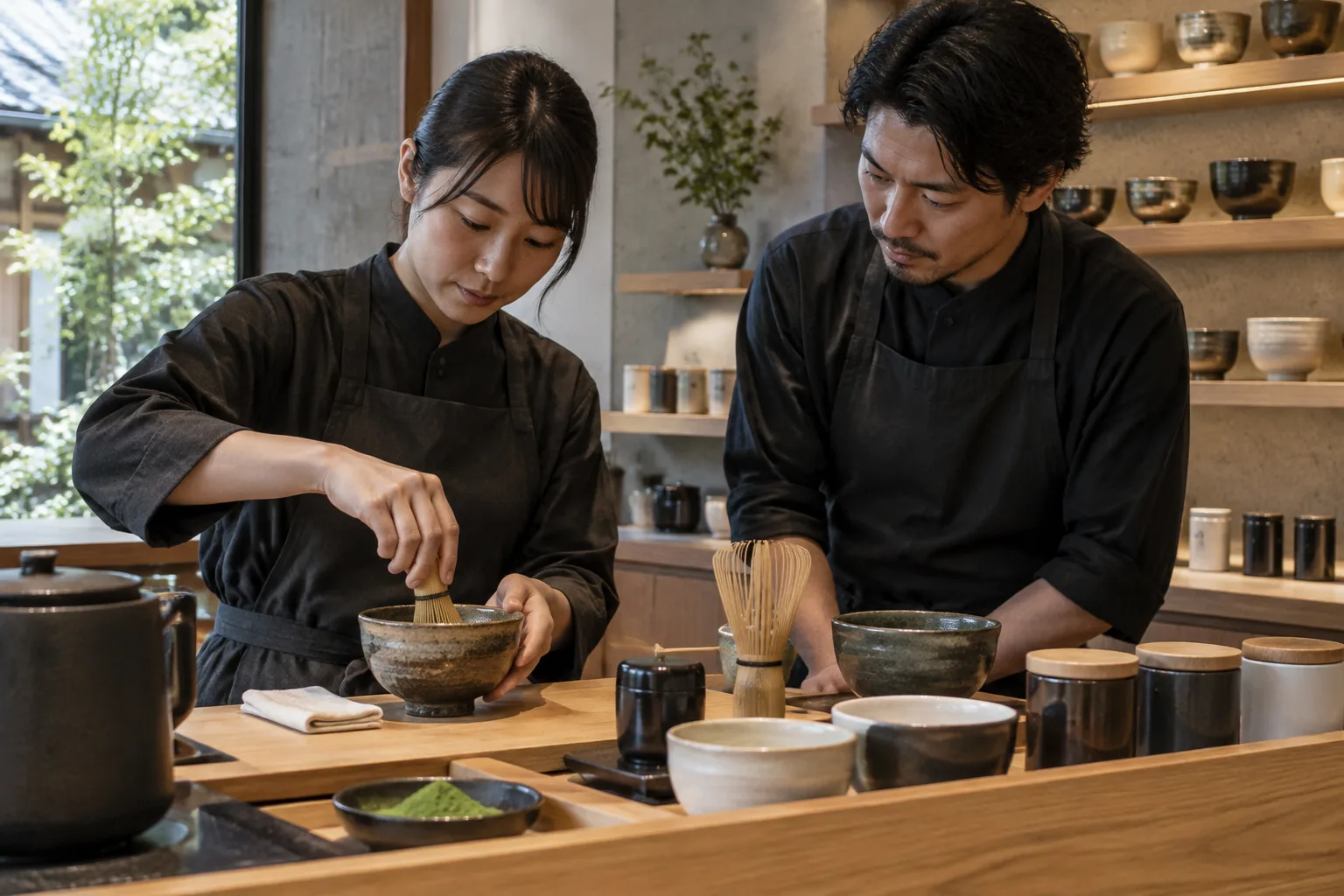
Matcha Frontier, the operator of Japanese matcha brand MATCHAMON, announced on 13 November 2026 that it was stepping up recruitment of franchise partners. The company outlined its track record across seven locations in Japan and overseas, including temporary outlets, and detailed a 14-day training programme and support for setting up stores. It is seeking owners and businesses willing to take an active role in managing and running outlets in their local markets.
From the first Kyoto outlet to seven locations in Japan and overseas
Matcha Frontier is headquartered in Chiyoda, Tokyo. MATCHAMON’s first outlet, Kyoto Nijo Castle East, opened on 28 February 2026. Subsequent locations have included Asakusa, Kanazawa, Ginza, Shimokitazawa and the Yaesu side of Tokyo Station, as well as Amsterdam overseas.
According to the company, the brand reached seven locations in Japan and overseas within around seven months of its first opening. This total includes temporary outlets, so it should not be read as a count of permanent stores alone.
The announcement specifically identifies opening dates for two franchised outlets: Kyoto Nijo Castle East in February 2026 and Shimokitazawa in September of the same year. Franchising has therefore been part of the business since its first Kyoto outlet. The latest announcement marks an expansion of recruitment based on existing franchise operations, rather than the launch of a new franchise scheme.
Expansion across several Japanese markets and overseas illustrates the brand’s overall development. However, prospective partners should distinguish between the total of seven locations and the franchise track record specifically described in the announcement. When considering joining, it is important to examine examples that closely match the proposed store format and location.
Seeking local operators to share matcha culture
MATCHAMON’s stated mission is to ‘create the world’s best matcha experience’. The company positions it as a Japanese ‘third-wave matcha brand’, presenting matcha, a traditional part of Japanese culture, in ways suited to modern lifestyles.
It is seeking owners and businesses that will share Japanese matcha culture while taking an active role in managing and operating stores in their local markets. The recruitment announcement makes clear that candidates are expected not only to understand the brand but also to take responsibility for running a local outlet.
For the franchise community, a key consideration is the relationship between the brand’s quality and service standards and the franchisee’s responsibility for local store management. Alongside identifying with the brand’s mission, prospective franchisees should be ready to discuss the practical arrangements they would put in place for day-to-day operations.
The company cites its ability to attract customers in different locations as a reason for stepping up recruitment. However, its expansion record should not be taken as a guarantee of sales or profitability at any individual franchise. Assessing the brand’s development and testing a business plan for a proposed location should remain separate exercises.
A 14-day training programme and support with opening preparations
Franchise partners are offered a training programme lasting 14 days in total. Its purpose is to help them understand the brand’s quality standards and serving methods, and learn how to operate a store. The recruitment announcement also sets out a commitment to ongoing support before and after opening.
Support with opening preparations includes site and catchment-area research, assistance with preparing a business plan, and introductions to design and construction firms. These measures cover aspects of site assessment, business planning and store fit-out.
It is important to distinguish precisely what each form of support entails. For business plans, the company specifies ‘assistance with preparation’; for design and construction, it offers ‘introductions to firms’. Prospective franchisees should establish how far the franchisor’s involvement extends and which decisions and arrangements they must handle themselves. This will help clarify responsibilities during the run-up to opening.
For training, candidates should confirm not only the 14-day duration but also who is expected to attend, when it takes place and which store operations it covers. How training fits into the preparation timetable is a practical consideration when planning an opening and allocating staff.
Support covers supplies, store management and marketing materials
Operational support outlined in the announcement includes the supply of ingredients and materials, as well as a store management system and promotional materials. Alongside training in the matcha brand’s quality standards, the support package therefore covers supplies used in-store and tools for management and promotion.
The announcement provides a framework for considering how operations would work after joining the franchise. Prospective partners should use individual discussions to clarify supply terms, the tasks covered by the store management system and how promotional materials can be used. It is useful to assess not just whether support is available, but how it would fit with their own operating arrangements.
The main pillars of the recruitment drive are the brand’s domestic and overseas expansion record, its existing franchised outlets, and its training and operational support. MATCHAMON’s search for local operators represents an effort by a matcha-focused brand to broaden its engagement with potential franchise partners.
The practical takeaway is to look beyond the headline figure of seven locations and check the differences between permanent and temporary outlets, as well as their operating models. Candidates should then assess the terms of training, supply arrangements and opening support against their own plans, and clarify the respective responsibilities of the franchisor and franchisee.