Makizume Research Institute opens in-store franchise recruitment beyond referrals, with 18 locations in Japan’s Kanto region
Makizume Research Institute has opened applications for its in-store franchise model, which uses spare space in existing premises. Previously expanded through referrals, the network is now accepting applications from other business operators, with training and customer acquisition support available.
Published
Kindle Co., Ltd., based in Shibuya, Tokyo, announced on 30 October that it had formally opened recruitment for its Makizume Research Institute footcare franchise to general business operators on 26 October 2026. The in-store model uses an existing business’s staff, equipment and spare space. Previously built through referrals, the franchise network is now accepting applications from operators without an introduction.
From 12 referral-based franchises to open recruitment
As of 29 October 2026, Makizume Research Institute had 18 locations across Saitama, Tokyo and Kanagawa: 12 franchised outlets and six operated by a group company. According to the company, all 12 franchisees joined through referrals from existing outlets or business contacts.
Recruitment is aimed at operators with treatment space who want to establish an additional revenue stream. Examples include judo therapy clinics, manual therapy practices and beauty salons. Recruitment is focused on Kanto, the region surrounding Tokyo, with territory availability discussed individually.
The brand originated within Bright Stars Co., Ltd., which operates judo therapy and acupuncture clinics. Kindle Co., Ltd. handles franchise recruitment and franchise agreements, while Bright Stars runs the company-operated locations. Prospective franchisees should therefore distinguish between the operating track record of the outlets and the roles of the companies responsible for contracts and support.
The announcement is primarily about widening access to the franchise, rather than opening a batch of new outlets. Business operators can now apply directly to join a network that previously grew through existing connections.
Adding a specialist service to an existing business
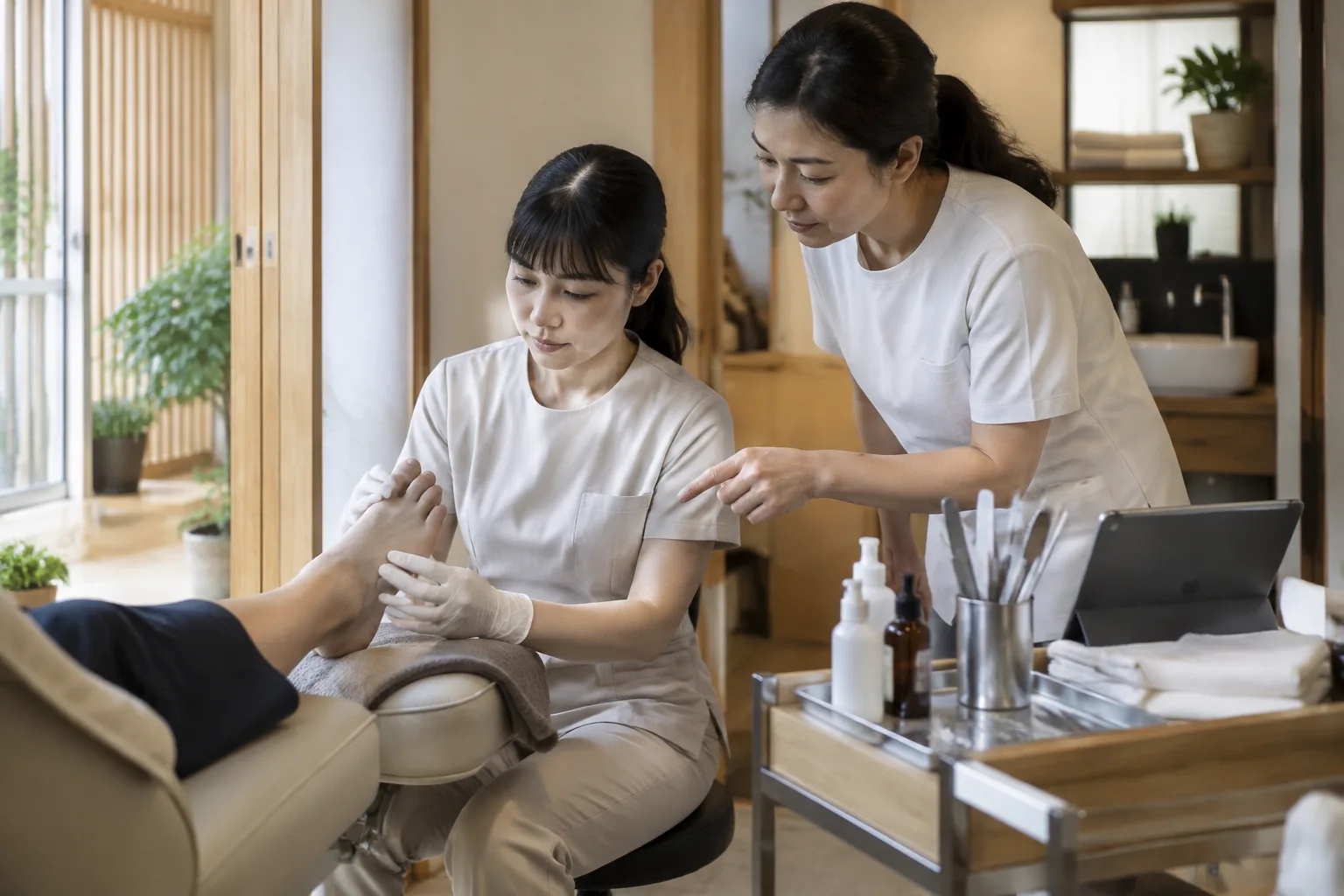
The in-store model uses staff, equipment and space already available within a business, rather than requiring a separate outlet for ingrown toenail care. Operators without existing expertise in this service are also eligible. The franchisor says it provides training to develop the necessary skills, alongside marketing support to help customers find the service.
According to the company, the business began during the COVID-19 pandemic. While facing losses of around ¥2 million a month, it added ingrown toenail care to the service menu at its Tama-Plaza location, initially generating monthly sales of ¥300,000. It subsequently developed a dedicated website, a Google Business Profile and a process for encouraging customer reviews. Presenting the service as a specialist offering helped it expand to other locations.
Current franchise support follows the same approach, including dedicated websites, local search optimisation to improve visibility in map results, and processes for generating reviews. The model focuses not just on adding a service to an existing business, but on presenting it as a specialist option to people seeking ingrown toenail care.
However, the reported monthly sales of ¥300,000 describe the business’s early development. They are not an indication of average franchise sales or future earnings. The ability to use existing space should be assessed separately from whether the service will be commercially viable at a particular location.
Training results disclosed, with care explicitly defined as non-medical
Training combines practical sessions before launch with video-based learning to prepare staff to begin providing the service. The company reported that, by the end of July 2026, it had trained more than 30 practitioners. The average time from starting training to beginning practice was around one month, and no trainees had dropped out before reaching that stage.
At the Asakadai location, for example, a receptionist with no previous experience of providing treatments reportedly completed training and became a practitioner. This illustrates how existing staff can take on a new role, but the average training period of around one month does not guarantee that everyone will acquire the skills within the same timeframe. The company also says that practical experience in the workplace is necessary after training.
Makizume Research Institute explicitly describes its offering as non-medical footcare, with no diagnosis, medical treatment or other medical procedures. Alongside training and customer acquisition support, franchisees can seek advice when uncertain whether it is appropriate to provide care in a particular case.
For operators, due diligence should cover not only the training period, but also how the service will fit alongside existing duties and how staff can obtain advice when unsure whether to proceed. Even when based within a clinic or salon, the scope of the non-medical service should be clearly explained to customers.
Check costs, territories and contract terms in the information materials
After registering through the LINE messaging app, prospective franchisees can access a franchise information webinar lasting around an hour, a recorded discussion and details of territory availability, all free of charge. The subsequent stages are an individual meeting, screening and signing a contract. Opening recruitment to general applicants does not mean that applicants can join without being assessed.
Joining the franchise involves costs. The announcement did not disclose specific amounts; the company says its approach to territories, the breakdown of fees and the contract duration will be explained in the webinar and materials available after registration. Prospective franchisees should weigh the benefit of using existing space against the actual expenditure required and the contractual conditions.
Makizume Research Institute’s open recruitment broadens the options for operators looking to add a specialist service to an existing business. A practical first step is to assess available treatment space and staffing, then use the individual meeting to clarify costs, post-training support and the scope of care franchisees may provide.