Lawson rolls out optional VR training for franchisees to reduce training time and support foreign-national staff
Lawson has begun offering InstaVR’s staff training tools to interested franchise stores across Japan, aiming to reduce training time and expand training resources for foreign-national staff.
Published
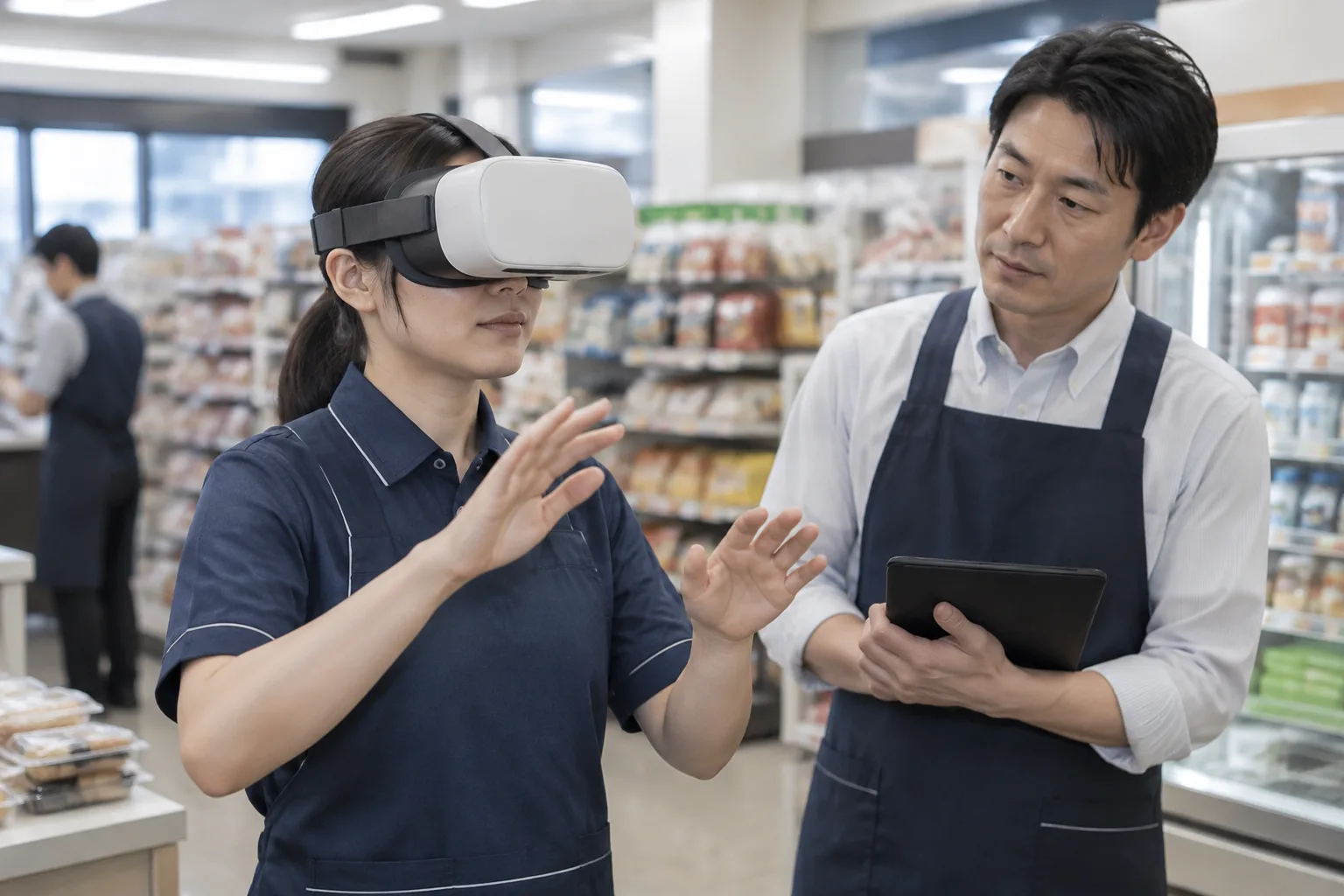
Lawson has begun rolling out VR tools for staff training at its franchise stores. The developer, InstaVR, announced the initiative on 5 November 2026. Stores across Japan can apply to use the tools on an opt-in basis. The initiative aims to reduce training time and expand the training resources available for foreign-national staff.
Available to interested stores across Japan
The training tools use InstaVR’s VR platform, InstaVR Enterprise, and are intended for staff development at Lawson franchise stores. InstaVR is headquartered in Toshima, Tokyo, while Lawson is based in Shinagawa, Tokyo.
The announcement specifies nationwide availability, with participation open to stores that wish to use the tools. This makes it a nationwide offer rather than a rollout restricted to selected regions. However, it does not mean that every Lawson franchise store will introduce the tools at once. The geographical scope of the offer should be distinguished from the number of stores that actually take it up.
For franchisees, this provides an opportunity to consider whether a new training method would suit their store. The starting point should be an assessment of current training needs, rather than simply an interest in VR technology itself.
This announcement concerns staff development support for existing franchisees, not store network expansion or recruitment for a new brand. From a franchise network management perspective, the focus is on the training resources provided by head office and how stores can put them to use.
Two aims: reducing training time and supporting foreign-national staff
Lawson has identified two objectives: reducing training time and expanding training tools for foreign-national staff. The initiative therefore combines efforts to review the time spent on staff development with efforts to broaden the training options available to employees who are not Japanese nationals.
It is important to distinguish these objectives from demonstrated results. The announcement sets out an intention to reduce training time; it does not provide specific figures for time saved or percentage reductions. When assessing effectiveness, franchisees should likewise distinguish between introducing the tools and establishing whether they have actually changed the time required for training.
For foreign-national staff, the announcement focuses on expanding the available tools. The stated aim of supporting these employees does not, by itself, establish that particular languages or translation features are supported. Stores considering the tools should check the content to assess whether their staff will be able to understand the materials and work through the training.
Reducing training time and ensuring that staff understand the required content are separate considerations. When evaluating the tools in-store, recording any supplementary explanations needed after training, as well as the time taken, can help managers refine how they use them.
Application, delivery and in-store training
The announcement outlines three steps for getting started. First, interested stores submit an application. InstaVR then delivers the VR staff training tools to the store. Finally, the store begins using them for training.
In other words, the process starts with the franchisee opting in, followed by delivery and then in-store training. The announced procedure specifies that training begins at the store. Owners and managers considering adoption should plan not only for the application process but also for who will oversee training after delivery and when sessions will take place.
Points to check before adopting the tools include terms of use, costs, delivery lead times, the tasks covered by the materials and the equipment or facilities required. The announcement does not establish specific conditions on these points; they are matters stores should clarify before deciding whether to proceed.
Stores also need to consider how much of their existing training the tools can replace, based on the actual content provided. Identifying which stages will use VR and which will require explanations or checks by store personnel can help clarify the trainer’s role from the outset.
Franchisees should plan how to use the tools after adoption
The rollout gives interested Lawson franchisees the option of incorporating VR into staff development. When assessing the support available within a franchise network, it is important to look not only at whether training materials are provided but also at how stores can begin using them.
One way to assess effectiveness is to document existing training content and the time it takes, then keep comparable records after introducing the tools. Differences in trainees’ experience and assigned duties should also be recorded. This can help identify any additional explanations or checks required that a simple comparison of training times might miss.
When using the tools with foreign-national staff, stores could also ask trainees which sections they found difficult to understand and provide supplementary explanations where needed. This is a practical measure stores can prepare in line with the initiative’s aims, rather than an announced feature or demonstrated outcome.
Practical takeaway: Interested franchisees should check the training content and terms of use before applying, and assess how well they address their store’s training needs. After adoption, they should review how the tools are used by looking at both training time and staff understanding.