DANCE GRAND to open first independently owned franchise in Shinkoiwa by taking over a local dance school
DANCE GRAND plans to open its first independently owned franchise in Shinkoiwa on 1 October 2026. A husband-and-wife team will take over an established local school, with its former operator continuing to teach as a special adviser.
Published
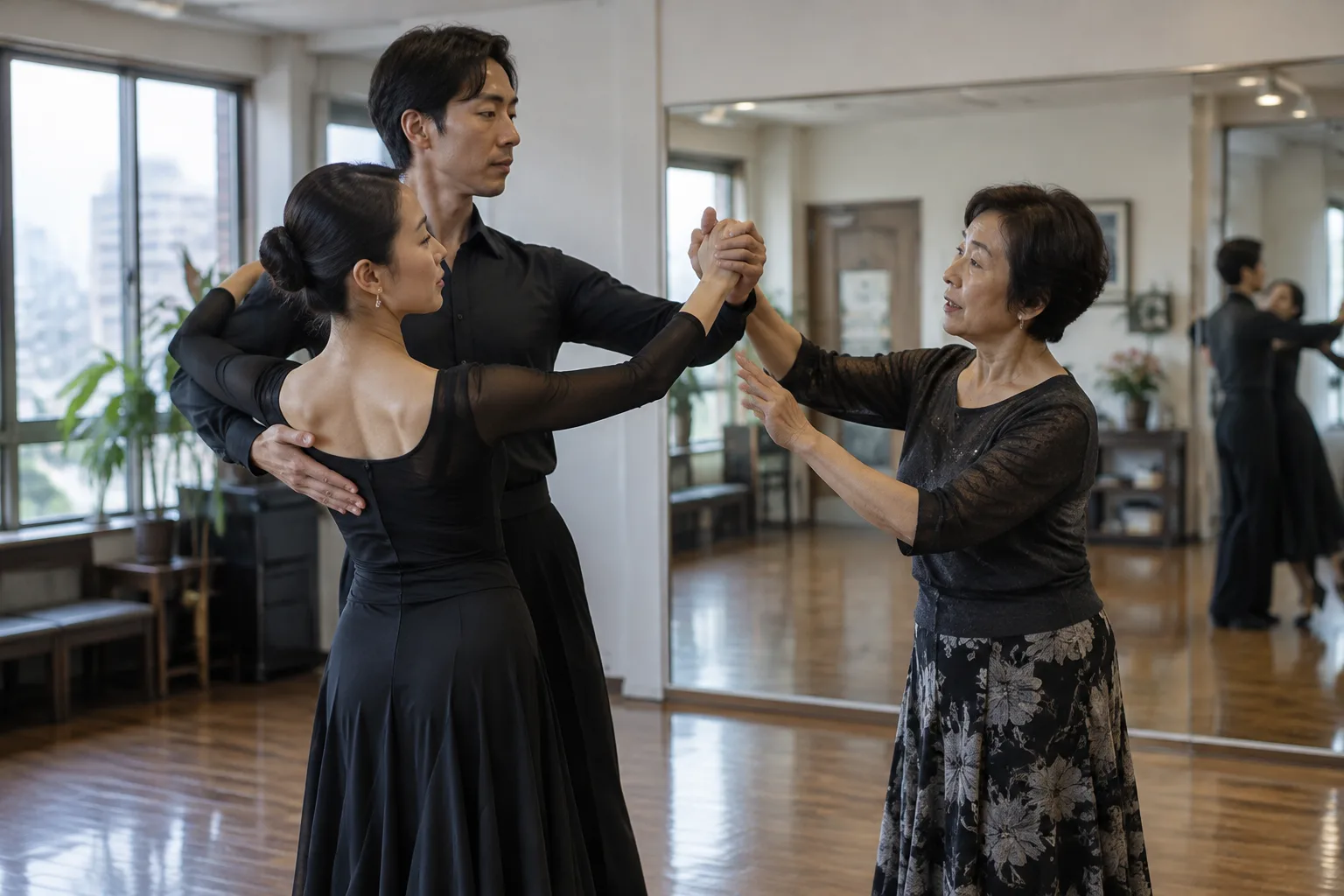
Gold Phoenix, the company behind ballroom dance school brand DANCE GRAND, announced on 25 September 2026 that its first independently owned franchise, DANCE GRAND Shinkoiwa, will open on 1 October. Under the plan, a husband-and-wife team will take over a long-established school in Shinkoiwa, Tokyo, linking the transfer of a local business with franchise expansion.
The Otsuka couple take over a local school
The new outlet will be based on the existing Miyoko Suzuki Dance Academy in Shinkoiwa. Masahide and Natsue Otsuka will take over the school and open it as DANCE GRAND Shinkoiwa. Although it will launch under a new brand name, the central feature of the announcement is the transfer of an existing school to new owners.
The former operator, Miyoko Suzuki, will continue teaching as a special adviser after the opening. The arrangement therefore involves not only a change of management but also the continued involvement of the instructor who has supported the school to date. Management by the new owners and continuity of teaching by the former operator are the specific succession arrangements set out in the announcement.
However, the announcement does not establish how existing tuition contracts, fees or lesson structures will be carried over. Continuity of teaching staff and continuity of terms for students are separate matters. Existing students should check the conditions applying to their own lessons alongside the information provided about the new management arrangements.
For the franchise sector, the significance of this example goes beyond an increase in outlet numbers. It also lies in the method of opening: taking over an established local school and launching a franchise with the former operator still involved in teaching.
Opening planned for 1 October, with weekday hours until 9pm
DANCE GRAND Shinkoiwa is scheduled to open on 1 October 2026. Its announced opening hours are 10am to 9pm on weekdays and 10am to 7pm on Saturdays, with the school closed on Sundays and public holidays.
The key details are as follows:
- School name: DANCE GRAND Shinkoiwa
- Planned opening date: 1 October 2026
- Existing school being taken over: Miyoko Suzuki Dance Academy
- New owners: Masahide and Natsue Otsuka
- Special adviser: Miyoko Suzuki
- Opening hours: Weekdays, 10am–9pm; Saturdays, 10am–7pm
- Closed: Sundays and public holidays
These plans are based on the company’s announcement of 25 September. An opening announcement is not evidence of performance after trading begins. Nor do the published opening hours necessarily correspond to individual lesson times or available booking slots. Prospective students will need to check with the school about their preferred tuition and times.
The material released does not provide specific tuition fees, booking procedures or class timetables. Alongside the continuity offered by taking over a local school, prospective students will want to establish the practical terms for attending.
Starting with Shinkoiwa, the group aims for 38 locations by 2029
Gold Phoenix intends to step up DANCE GRAND’s franchise expansion, starting with the Shinkoiwa school. Its business activities include operating ballroom dance schools and acting as a franchisor. The announcement identifies Harajuku and Mitaka as company-owned locations.
The company’s expansion target is to reach 38 locations across the group by 2029, combining company-owned and franchised schools. This is a future target, not the current network size or the number of confirmed openings. It also does not mean that all 38 locations will be franchises.
The company says it will support both the takeover of established local schools and owners setting up new dance schools. Shinkoiwa falls into the former category. Support for new openings is also part of the stated strategy, so the expansion plan is not limited to taking over existing businesses.
The material does not specify future opening regions, annual opening targets or the split between company-owned and franchised schools. The target of 38 locations should therefore be considered separately from any specific opening plans or support arrangements announced subsequently.
What to check when considering a franchise takeover
The Shinkoiwa announcement provides a concrete example of a franchise structure connecting an existing school with new independent owners. However, it is not clear whether the same operating arrangements will apply on the same terms to all future franchisees. The former operator’s continued involvement as a special adviser should also be understood as an arrangement announced specifically for Shinkoiwa.
Anyone considering joining the franchise or taking over a school should assess not only the brand’s expansion target but also the circumstances of the particular school and the scope of support offered by the franchisor. Key points to clarify in a takeover of this kind include the division of management responsibilities, contracts with instructors, communication with existing students and the treatment of tuition terms.
The material does not disclose franchise fees, royalties, opening costs or earnings projections. It is therefore not possible to assess the financial viability of joining the franchise or the funding required from this announcement alone. The significance of the opening should be considered separately from the information needed to make an individual investment decision.
Practical takeaway: When joining a franchise through the takeover of an existing school, start by identifying what will carry over and what will change. Even when using Shinkoiwa as a reference, the starting point is to check three areas separately: continuity of teaching, contractual terms and franchisor support.