Cleaning franchise Builds tackles staff shortages through local owners, sales support and robots
Aqua’s cleaning franchise Builds is expanding its service coverage through partnerships with local franchise owners. Alongside head-office sales support and a conditional revenue guarantee, it is developing an approach that combines cleaning robots with human labour.
Published
Demand for cleaning services remains steady, but a shortage of staff to carry out the work poses a challenge. Aqua Co., Ltd., which operates the building-cleaning business Builds, combines partnerships with local franchise owners with sales support from head office. A J-CAST News article dated 1 October 2026 explored this model and the use of cleaning robots through an interview with the company’s president, Masahiro Kaneko.
Supporting cleaning operations through local franchise owners
Building maintenance continues to see steady demand, driven in part by ageing buildings and greater awareness of hygiene. However, staff shortages and an ageing workforce have long been challenges. Demand for work and the ability to secure the people to carry it out are separate issues, making the service delivery model crucial.
Aqua treats cleaning as a specialist service and operates Builds as a franchise. Rather than deploying its own workforce across Japan, it aims to expand the number of sites it serves by working with franchise owners in each area.
A key feature of this model is that head office can extend service coverage by collaborating with local operators without directly employing everyone involved. Unlike an expansion model in which head office alone adds branches and staff, local owners take responsibility for on-site operations.
Franchising does not, however, remove the need for cleaning staff. This approach should not be seen as solving labour shortages through a single business structure. Instead, it combines local service delivery, head-office support and changes to working methods. For Japan’s franchise community, it is also relevant to the question of how to balance geographical expansion with day-to-day operations.
Sales support helps owners focus on service delivery
Builds has a system under which head office handles sales on behalf of franchise owners. The aim is to allow owners responsible for on-site work to concentrate on cleaning and customer service, rather than spending a large share of their time on sales activity.
This division of responsibilities—local owners delivering cleaning services and head office supporting sales—is a central part of the business model. It goes beyond sharing a brand to define how the work of winning contracts and delivering services is divided.
The company also reportedly offers a revenue guarantee subject to certain conditions. The important point is that conditions apply. The term “revenue guarantee” should not be taken to mean that a set level of revenue is assured in every circumstance.
Prospective franchisees should examine the sales support and revenue guarantee separately. For sales support, they should establish which activities head office handles and what customer contact is expected of the owner. For the revenue guarantee, a practical starting point is to check the eligibility conditions, the period covered and how it is set out in the contract.
Revenue and profit are also different. Rather than judging viability solely by whether a guarantee exists, prospective owners need to weigh it against their workload and required expenditure. This is not a judgement on Builds’ profitability, but an important distinction when assessing its support arrangements.
Combining robots with human labour
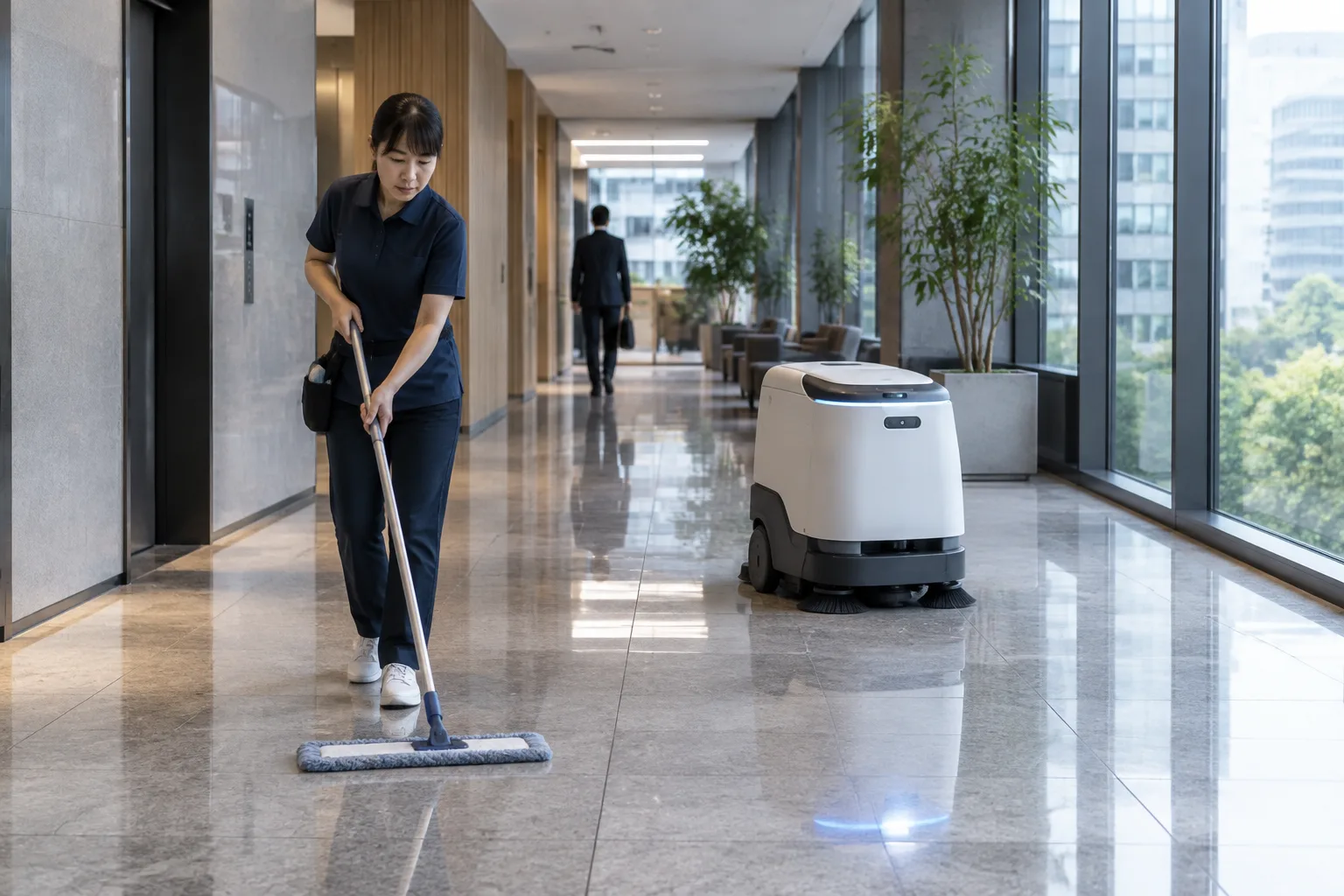
Alongside cleaning using specialist techniques, Aqua is developing an approach that combines cleaning robots with work carried out by people. While partnerships with local owners address who delivers the service, this initiative addresses how the work is done.
The approach described is not one in which robots complete the entire cleaning process. It combines robotic and manual work, using equipment while retaining a role for people.
Sales support and robot use both affect operations, but they address different tasks. Sales support concerns the time owners spend on winning business, whereas the combination of robots and people concerns how cleaning is carried out. Keeping these two functions distinct makes it easier to understand what head office supports and what remains the owner’s responsibility.
For those considering adoption, the question is not simply whether robots are used, but which tasks they can perform at the sites the owner will serve. Prospective operators should also seek an explanation of the effects on staffing requirements and working time based on specific site conditions. The existence of the initiative and its benefits at individual sites need to be assessed separately.
Assess support arrangements alongside site requirements before joining
Builds’ approach consists of several elements: partnerships with local franchise owners, sales handled by head office, a conditional revenue guarantee, and the use of technology and equipment. It responds to continuing demand for cleaning services by sharing responsibilities with local operators, rather than relying solely on a workforce directly employed nationwide by head office.
For the franchise community, the key question is how the system for expanding service coverage connects with the arrangements that enable owners to carry out their daily work. Sales support does not remove the need for cleaning and customer service. Likewise, using equipment still depends on combining it with tasks performed by people.
Prospective franchisees should assess the support offered in the context of the full workflow, from winning contracts through to cleaning and customer service, rather than reviewing each item in isolation. Comparing the division of responsibilities with head office, the conditions attached to the guarantee, and the staffing and equipment needed on site will help build a clearer picture of operations.
The practical takeaway is to look beyond the labels attached to sales support and guarantees, and assess the contract terms alongside the cleaning work the owner will actually be responsible for.