Refurbishment and Equipment Replacement Costs: What to Check Before Joining a Franchise in Japan
Start-up costs alone do not reveal how much funding you will need after joining a franchise. Learn what to check about refurbishment and equipment replacement, including timing, who pays, approval procedures and investment payback.
Published
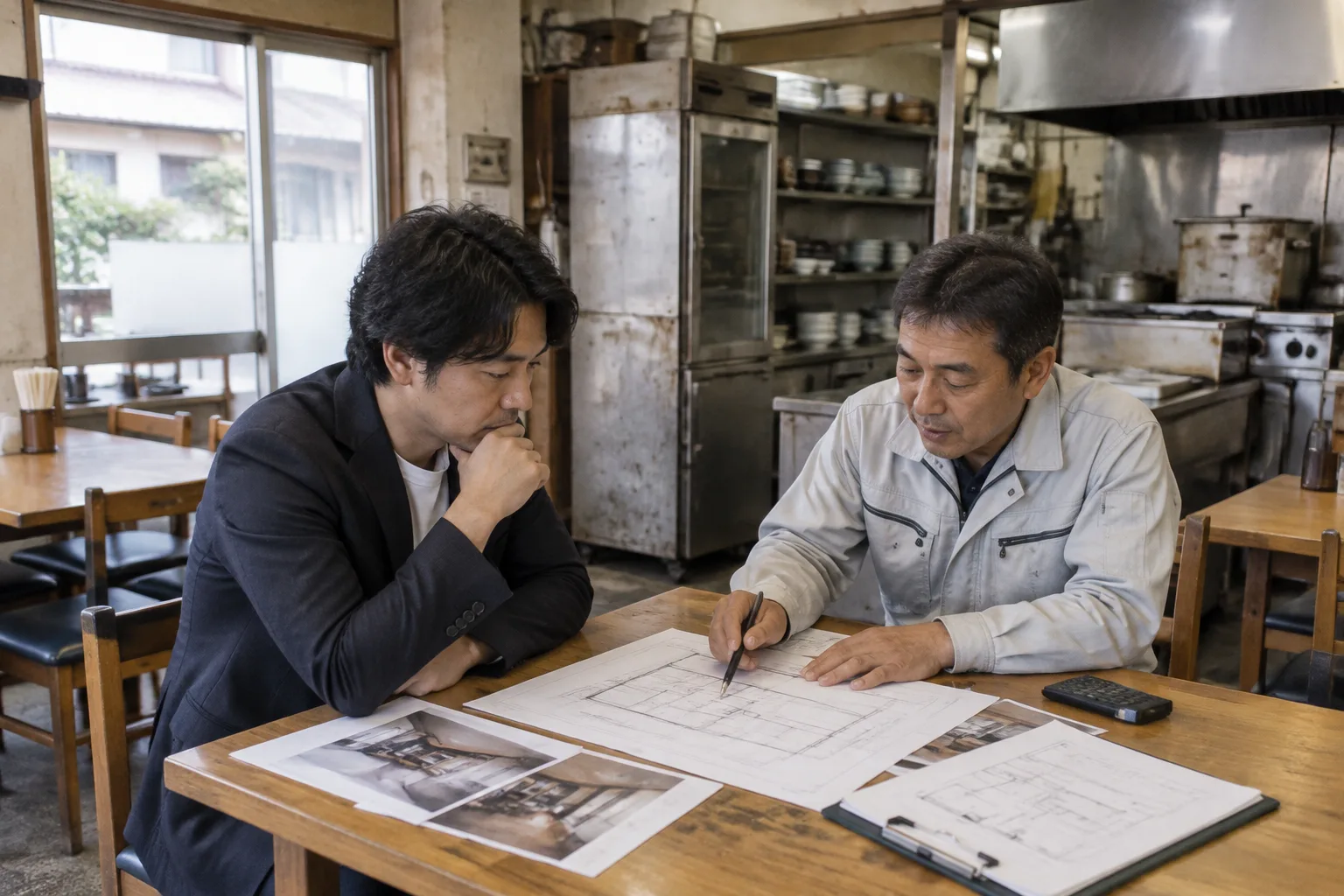
When joining a franchise, it is easy to focus on the initial fit-out and equipment. Yet refurbishment and equipment replacement after opening also affect cash flow. To build a lasting business within a franchise network, where franchisor and franchisees work together, establish exactly who decides what, when decisions are made and who pays before you sign the agreement.
1. Distinguish between repairs, equipment replacement and brand refurbishment
Start by comparing the equipment list supplied by the franchisor with the agreement, and categorise the work and purchases you may need to undertake after joining. The following three categories may seem similar, but the criteria for deciding whether and when they are needed differ.
- Repairs: Work to maintain current operations, such as repairing a broken fridge.
- Equipment replacement: Replacing ageing equipment to maintain performance or safety.
- Brand refurbishment: Updating signage, customer seating areas, the exterior or other features to meet new brand specifications.
Pay particular attention to broadly worded clauses such as, “The franchisee must refurbish the premises at its own expense whenever the franchisor deems it necessary.” This wording alone does not tell you whether to expect minor repairs or a complete refurbishment requiring the business to close temporarily.
Ask the franchisor what work is mandatory, what criteria trigger the requirement and how much notice you will receive before work must begin. Even if work is described as “recommended”, check the contractual consequences of declining it. Do not rely on the label “optional”: examine whether the terms give you a genuine choice.
Also clarify who owns the equipment. Equipment owned by the franchisee, loaned by the franchisor or leased from a third party may have different repair contacts and replacement approval procedures. The party responsible for paying may not be the owner, so it is useful to list both.
2. Use past refurbishments to check what estimates cover
An assurance that costs are “not usually a significant burden” is not enough to build a financial plan. Ask for examples of refurbishments at premises similar in size and operating format to your proposed outlet, including when the work took place, its scope and how many days the business was closed. Past costs do not set a ceiling on future spending, but they can help you check what an estimate includes.
Documents to review include refurbishment specifications, equipment replacement criteria, itemised quotations, and construction and delivery terms. If documents relating to individual outlets cannot be disclosed, request anonymised examples or an explanation of standard work items.
Costs extend beyond building work and equipment. Check whether design, removal, disposal, transport, temporary arrangements, necessary applications and pre-reopening cleaning are charged separately. When comparing quotations, ensure you account for whether tax is included and how long each price remains valid.
If the franchisor specifies contractors or equipment manufacturers, ask why, and whether you may obtain competing quotations or use equivalent products. Where approval is required, clarify the documents you must submit, the deadline for a response and how any refusal will be explained. This can reduce misunderstandings just before you place an order.
Replacing existing equipment early may also leave outstanding purchase payments or lease charges. Check not only the price of the new equipment but also any payments needed to end the arrangements for the old equipment.
3. Factor closure periods and the remaining contract term into your financial plan
When assessing a refurbishment, distinguish between “Can I pay for the work?” and “Can I recover the investment?” Even if you can raise the money, the financial burden may be substantial if you have only a short period of trading left.
Set out the dates for deposits, interim payments and final payments in your financial plan, then add rent, staff costs, loan repayments and other outgoings during that period. Estimate separately the costs that continue while the business is closed and those needed to prepare for reopening. This will give you a clearer picture of the cash reserves required.
If the franchisor forecasts higher sales after refurbishment, ask for the supporting evidence. Check the locations and sizes of the outlets used for comparison, the periods measured before and after refurbishment, and any changes in opening hours. Consider whether you could maintain cash flow if sales do not rise. The need for refurbishment and the certainty of increased sales are separate issues.
Take particular care with refurbishment near the end of the franchise agreement. Carrying out the work does not necessarily guarantee renewal. Compare the remaining trading period, the expiry date of the premises lease and how long you expect to be able to use the equipment. Check that these support your assumptions about recovering the investment.
Do not assume that additional borrowing will be available. If your plan depends on a loan, prepare equipment quotations and a payment schedule, and discuss these alongside your existing repayments with a lender. If the franchisor offers financial support, check when it will be paid, which costs qualify and any conditions requiring repayment. You will also need funds to cover expenditure before that support arrives.
4. Distinguish legal protection from contractual negotiation
Japan does not have a law setting a uniform cap on refurbishment costs or a standard cost-sharing ratio for all franchises. Your first step should therefore be to check the obligations and procedures in the agreement.
Article 11 of Japan’s Act on the Promotion of Small and Medium-sized Retail Business requires franchisors whose operations fall within the Act’s category of “specified chain businesses” to provide prospective franchisees with written disclosures and explanations before an agreement is signed. However, not all franchises fall within its scope. If the disclosure documents do not adequately explain refurbishment obligations after joining, ask further questions about the contract clauses and how they operate in practice. Statutory disclosure does not, in itself, guarantee a ceiling on future costs.
The Japan Fair Trade Commission’s guidelines on franchise systems under the Antimonopoly Act also apply to a broad range of franchises, not just retail and food service. Franchisors and franchisees are independent businesses. A franchisor that uses a superior bargaining position to impose an unfair disadvantage may raise concerns about abuse of a superior bargaining position.
However, refurbishment that imposes costs on a franchisee is not automatically unlawful. Each case must be assessed in light of factors such as the need for the work, the nature of the burden and the discussions between the parties. General laws, including the Civil Code, also govern matters such as contractual interpretation and breach of contract. It is therefore sensible to have a lawyer review clauses imposing substantial obligations before you sign.
5. Agree a consultation process before orders are placed
Even if you cannot fix the cost of future work, you can define the process for reaching a decision. After hearing the franchisor’s explanation, consider whether you can agree at least the following points:
- Written advance notice of the purpose, specifications and estimated cost of refurbishment.
- Time to review quotations and discuss financing.
- Confirmation of the cost of additional work or specification changes before orders are placed.
- Discussions about phased work or postponement if funding is difficult.
- Clear points of contact and allocation of responsibility for delays, defects and warranty claims.
Phased work or changes to cost-sharing arrangements will not necessarily be permitted, so negotiate your preferred terms before joining. Rather than relying on an assurance that “individual circumstances will be considered”, establish who will make the decision and what documents they will need. This makes the consultation process more meaningful.
Practical takeaway: Before deciding whether to join, prepare a one-page summary of refurbishment and equipment replacement covering the scope, decision-maker, timing, total expenditure and consultation procedure. Do not treat unresolved items as costing nothing: retain them as uncertainties in your financial plan and factor them into your decision.