Hunt Bikes launches e-bike franchise offer from €25,000
The Caserta-based brand is offering shops with workshops, exclusive territories and a 4% royalty. Its franchise launch comes at a difficult time for the e-bike market.
Published
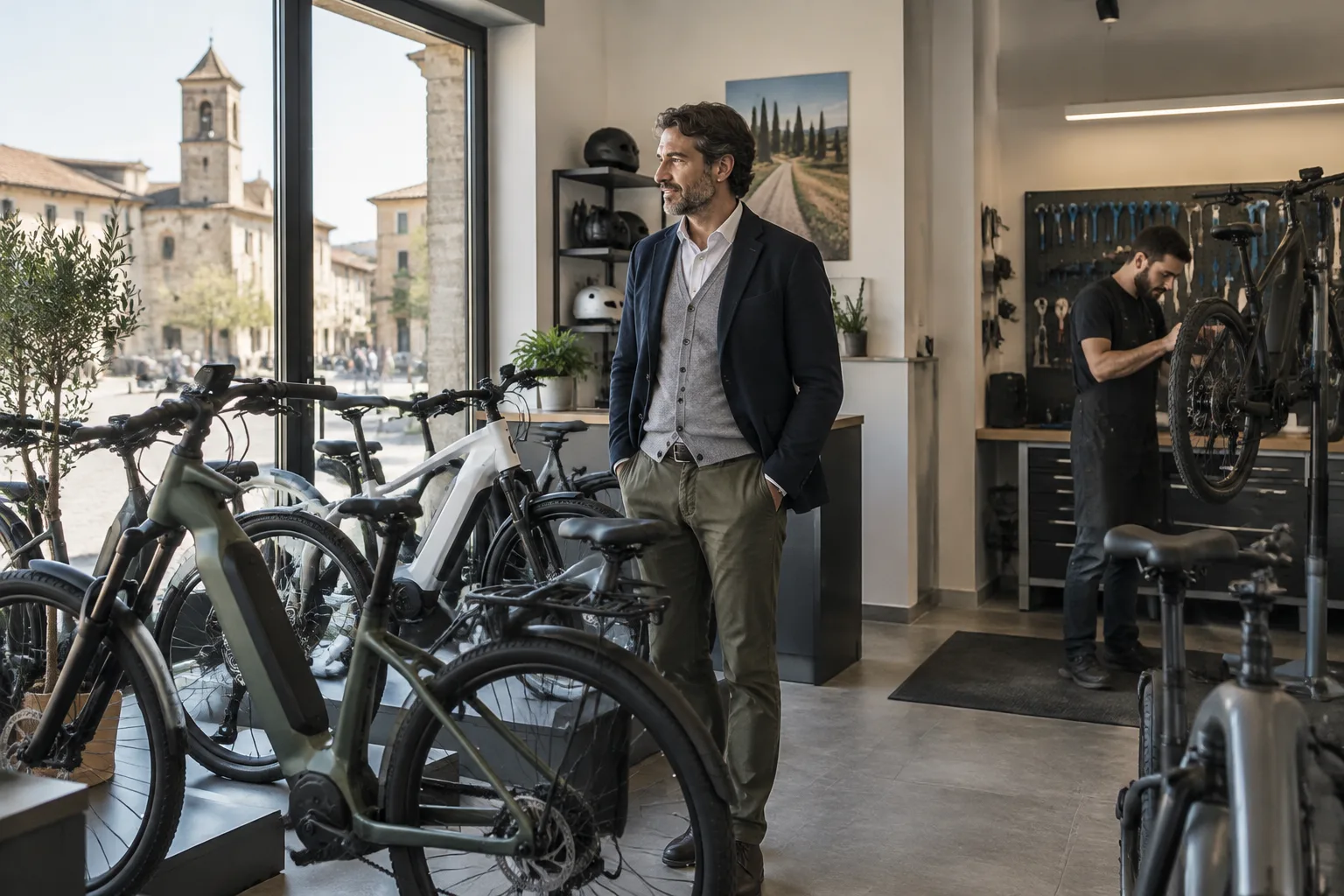
Hunt Bikes is opening its electric bicycle retail format to franchisees. Based in Caserta, Italy, and trading since 2024, the brand is offering an indicative initial investment of €25,000, a royalty of 4% of sales and an exclusive territory. For prospective franchisees, it is a new opportunity to assess by weighing up entry terms, operational support and market conditions.
From Caserta to recruiting franchisees
The launch was reported by L’Express Franchise on 12 November 2026. Hunt Bikes, whose e-bike range has a motorsport-inspired identity, is offering a route to opening Hunt-branded shops.
Its current retail presence remains limited: the only outlet listed on the brand’s website is its showroom and workshop on Via San Carlo in Caserta. It also operates an e-commerce channel offering free delivery throughout Italy. The invitation to apply should therefore not be mistaken for an established franchise network across the country.
A dedicated page collects enquiries from prospective partners, with a response promised within 48 hours. This is the initial contact with head office, separate from the subsequent assessment of the proposal and the shop opening process. The news therefore concerns the launch of the franchise model, rather than a schedule of confirmed openings.
Stated investment, premises and opening timescale
The offer is presented as a turnkey package starting at €25,000. According to the published terms, this includes shop fittings and an initial stock of bicycles. A royalty of 4% of sales also applies. These figures are indicative and are adjusted by head office according to the location.
Premises must have a floor area of at least 60 square metres, preferably at street level. The brand does not require previous experience and offers a territory reserved for a single franchisee. Its stated estimate from signing to opening is 45 days: this is a timescale proposed by the brand, not one that should automatically be assumed to apply to every location.
For anyone considering joining, the next useful step is to turn these headline terms into a quotation for a specific property. The advertised investment and listed inclusions are no substitute for checking the total funding required: rent, any work needed on the premises, operating expenses and initial working capital should all be clarified before making a commitment.
Territorial exclusivity also calls for a close reading of the contract. Prospective franchisees should check the geographical boundaries allocated to them and how exclusivity interacts with online sales, given the brand’s nationwide e-commerce channel.
Training and customer enquiries managed by head office
The advertised support covers several aspects of day-to-day operations. Shop fittings are supplied to a pre-designed layout, while stock replenishment comes from the central warehouse. Head office manages online advertising and directs enquiries from nearby customers to the shop.
Before opening, franchisees receive a one-week course, including workshop training. This element deserves attention: Hunt’s offer describes the shop not simply as a place to display and sell bicycles, but also as a business requiring preparation for technical work.
Candidates without experience should therefore ask about the course content, the skills required and the arrangements for ongoing support. Likewise, centralised advertising needs to be explained in practical terms: how enquiries are allocated, which tasks fall to the shop and how customer contact is coordinated. These are points to verify, not additional services to assume are included.
A launch in a shrinking market
The move into franchising comes at a challenging time for electric bicycles. According to Confindustria ANCMA figures cited by L’Express Franchise, 256,000 e-bikes were sold in Italy in 2025, 7% fewer than in the previous year.
The reported decline for specialist shops was 14%, while e-commerce and mass-market retailers returned to growth. This makes it particularly important to assess the local catchment area and the relationship between the physical shop, workshop and digital channel. These figures describe the market, not the financial performance of Hunt Bikes or its future franchisees.
Practical advice: before choosing premises, request a full cost breakdown, details of territorial exclusivity and the terms of technical and commercial support. The entry investment is the starting point for assessing the opportunity, not the conclusion.