Indonesia’s MSME Ministry Encourages Franchises to Access Capital Markets
Indonesia’s MSME Ministry is encouraging local franchises to explore capital markets and KUR loans, supported by stronger operations, governance and legal compliance.
Published

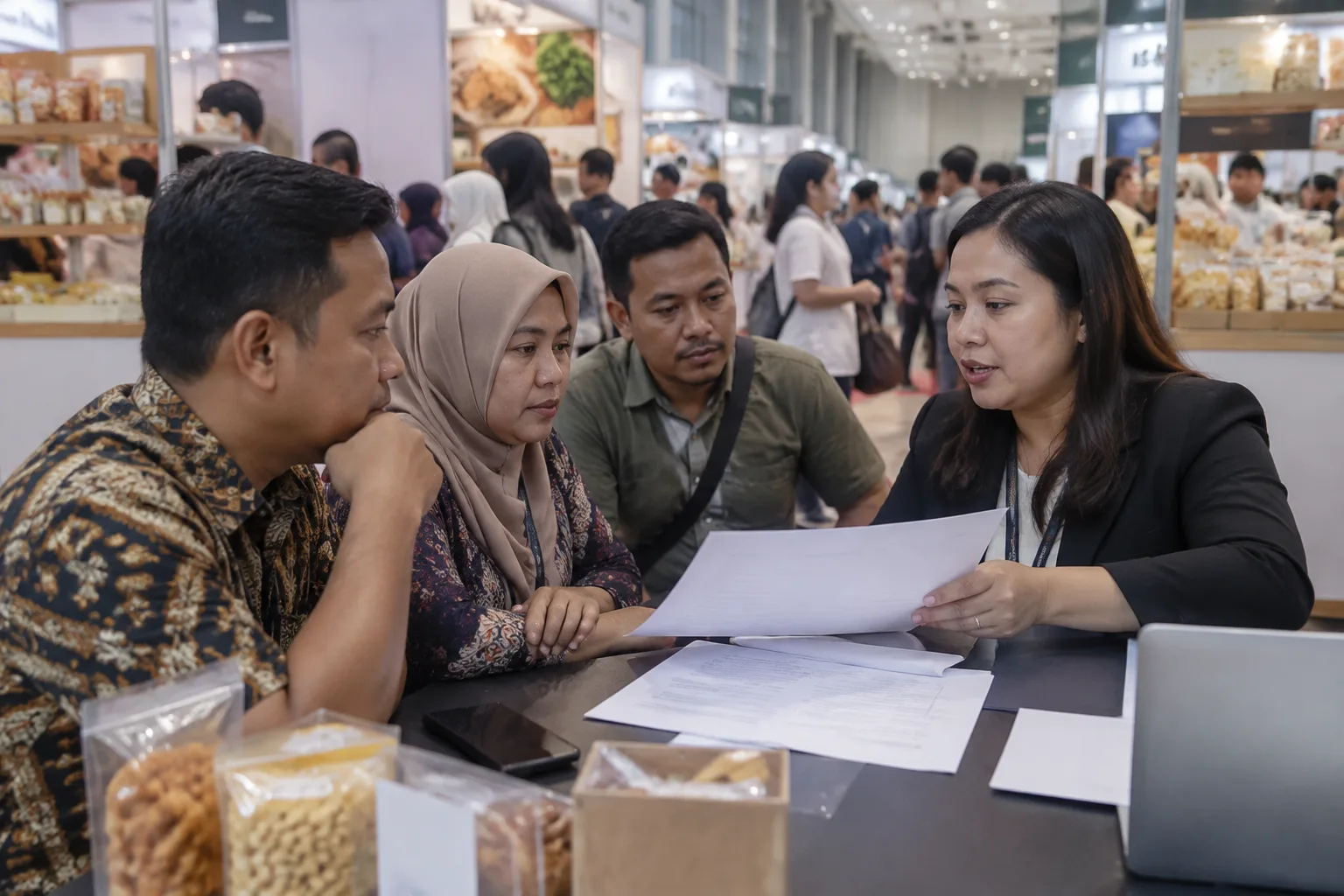
Indonesia’s Ministry of Micro, Small and Medium Enterprises (MSMEs) is encouraging businesses in the local franchise sector to use capital markets as an alternative source of funding for expansion. Bagus Rachman, the ministry’s Deputy for Medium Enterprises, made the call at the Indonesia Franchise & Business Concept (IFBC) event in Tangerang, Banten, on Friday, 6 November 2026, stressing the importance of business readiness before seeking wider access to finance.
Acceleration Board offers a funding option
In remarks reported by ANTARA and Indoposco, Bagus highlighted the Indonesia Stock Exchange’s (IDX) Acceleration Board as an opportunity for franchise businesses with strong fundamentals that meet the relevant requirements. The government wants more local brands to grow into larger companies with professional governance.
According to Bagus, around 43 small and medium-sized enterprises have used the Acceleration Board, raising a total of Rp2 trillion. He said this demonstrated that capital markets could provide an alternative source of finance to accelerate the growth of small and medium-sized companies.
These figures refer to small and medium-sized enterprises using the Acceleration Board, not the number of franchise brands that have secured funding. For the franchise sector, the data was presented as an illustration of the funding options available to businesses ready to meet the requirements.
Bagus linked this opportunity to the process of becoming a publicly listed company through an initial public offering. However, the government’s encouragement remains conditional on readiness: businesses must have strong fundamentals and meet the applicable requirements. The central message is not simply to seek additional funds, but to prepare companies to scale up sustainably.
KUR loans also encouraged for franchisors and prospective franchisees
Alongside capital markets, the MSME Ministry is promoting bank financing through Kredit Usaha Rakyat (KUR), Indonesia’s government-backed business loan scheme. Bagus encouraged franchisors and prospective franchisees to consider the scheme when starting or expanding a business.
The financing discussion at IFBC was therefore not aimed solely at companies preparing to go public. Prospective franchisees looking to start a business, and franchisors seeking to expand their networks, are also included in this push for broader access to funding.
The MSME Ministry presented KUR and capital markets as alternative financing routes for businesses. For access to the Acceleration Board, Bagus specifically emphasised compliance with the requirements and business readiness. The call to use KUR, meanwhile, covered both start-up and expansion needs.
For the franchise sector, this policy direction broadens the discussion about capital: it is not just about funding new outlets, but also about whether a company is ready to manage growth. The financing message at the event therefore went hand in hand with strengthening operating systems and business management.
Operations and legal compliance form the foundations
Bagus stressed several areas that businesses need to strengthen before scaling up. These include standardised operating procedures, consistent product and service quality, professional governance, and trade mark protection.
These four elements are central to the government’s push to build sustainable franchise businesses. Additional capital is framed as part of developing businesses whose systems, quality standards and management are ready to support network growth.
Legal compliance was also highlighted. Bagus said compliance with the requirements for the Surat Tanda Pendaftaran Waralaba (STPW), or Franchise Registration Certificate, was necessary to ensure professional relationships between franchisors and franchisees and provide legal certainty. Readiness to secure funding is therefore inseparable from administrative obligations and legal safeguards for franchise relationships.
For context, the Ministry of Trade records show that 169 domestic franchisors hold an STPW. In 2024, Indonesia’s franchise sector generated turnover of more than Rp143 trillion and employed around 98,000 people. These figures illustrate the sector’s economic scale, while the financing push is intended to support the development of businesses with strong foundations.
Stronger businesses are the basis for wider growth
The MSME Ministry hopes to see more local brands develop into companies with strong governance and the ability to reach wider markets. Bagus also emphasised the need for product quality, business systems, management capacity and operating standards that are ready for competition in international markets.
Beyond financing, the ministry is preparing to develop a cluster-based Holding UMKM programme. The programme aims to strengthen links between businesses and build an integrated business ecosystem. Closer business connections form part of the agenda to strengthen MSME capacity outlined at the event.
For franchisors and prospective franchisees, the practical next step is to assess business readiness before choosing a funding route. Review operational consistency, governance, trade mark protection and STPW compliance, then examine the financing requirements that match the business’s expansion plans.