Batu City Government Briefs Franchisees on Registration Before Opening
Batu City Government reminds franchisees to arrange their Franchise Registration Certificate (STPW) before opening where registration falls under district or city authority.
Published
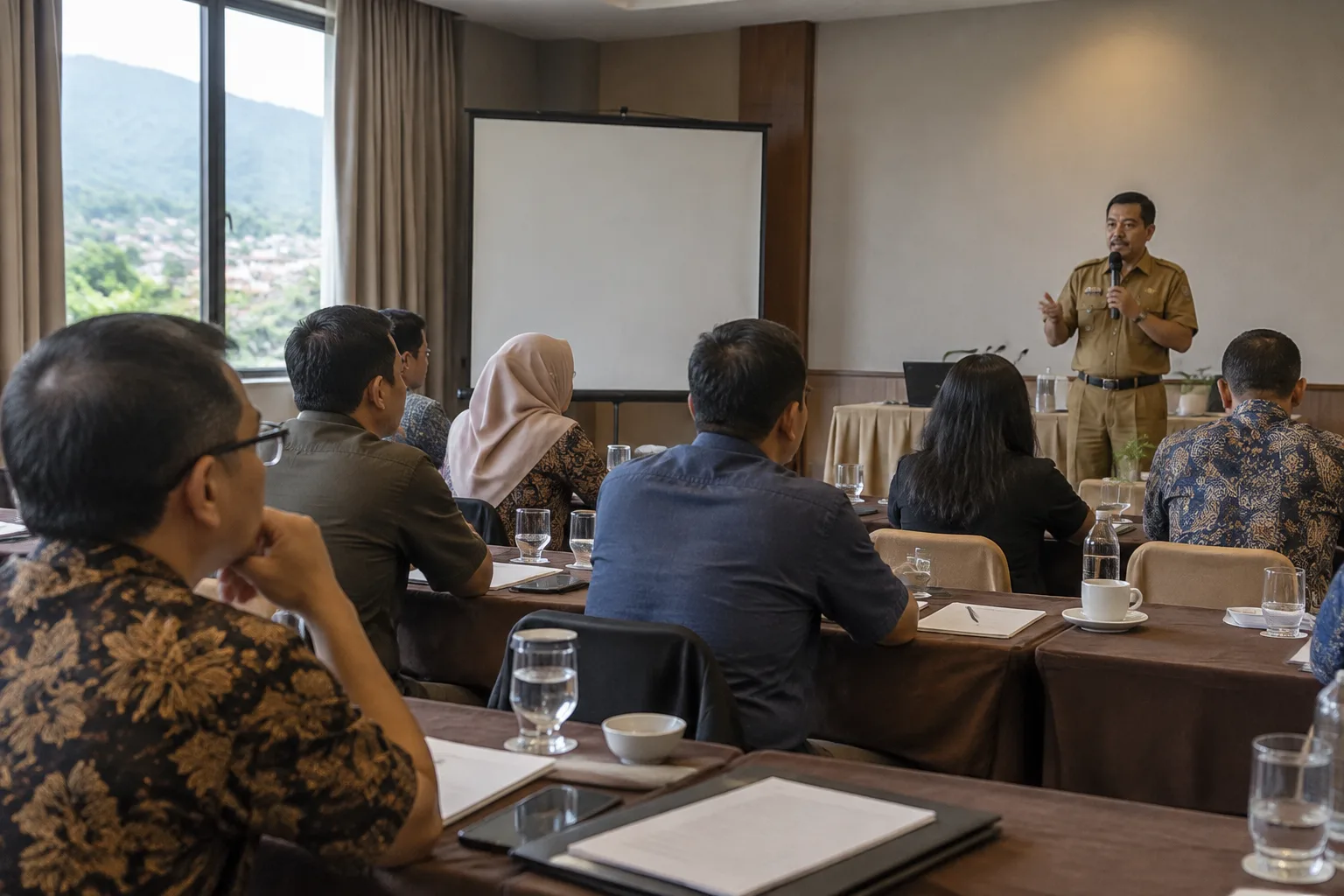
Batu City Government held a briefing on the Franchise Registration Certificate (Surat Tanda Pendaftaran Waralaba, or STPW) on 18 November 2026 to improve the local franchise community’s understanding of licensing requirements. Held at El Hotel Kartika Wijaya, the event covered registration obligations, the division of government responsibilities and the importance of arranging STPW registration under district or city authority before a business starts trading.
Licensing in focus for Batu’s franchise community
Batu’s Department of Cooperatives, Micro Enterprises, Industry and Trade (Diskumperindag) organised the event to help business operators better understand franchise management and encourage compliance with legal requirements. According to a report published by Ketik on 19 November 2026, holding an STPW was one of the main business licensing issues discussed.
Participants received information on the legal framework, franchise definitions and criteria, and operators’ obligations. The discussion went beyond registration documents to clarify who must register and which authorities are responsible for processing applications.
For Batu’s franchise community, the event highlighted administrative readiness as part of preparing to launch a business. Even a proven business model comes with licensing obligations. Understanding registration procedures should therefore go hand in hand with plans to open and run an outlet.
The briefing also explained how Diskumperindag and Batu’s Investment and One-Stop Integrated Services Department (DPMPTSP) support businesses in meeting local requirements. This gave participants an overview of how the licensing process connects with support from local government.
Responsibility depends on the type of franchise operator
Indra Haryanto, a representative of East Java’s Department of Industry and Trade, explained that the STPW is a form of business licensing processed through the Online Single Submission (OSS) system. He stressed that responsibilities are divided between central and local government.
“Responsibility for STPW registration rests with central government, particularly for franchisors, while district and city governments are responsible for franchisees,” Indra explained.
According to his explanation, there are eight classes of franchise operator: four categories of franchisor and four categories of franchisee. District and city governments have responsibility for franchisees under the applicable rules, with an exception for franchisees of overseas franchisors.
Businesses should pay attention to this distinction when preparing to register. The briefing made clear that the same authority does not handle STPW registration for every type of operator. Businesses first need to establish whether they are acting as a franchisor or a franchisee.
Prospective operators should therefore not assume that the entire process falls under city government simply because their outlet will be in Batu. Identifying the operator category and confirming the responsible authority are practical steps to take before proceeding through OSS.
Franchisor requirements and registration timing for franchisees
At the event, Indra also outlined several requirements that franchisors must meet to obtain an STPW. These include demonstrating that the business has been profitable for two consecutive years and has operated for at least three years.
These two requirements place the business’s track record at the heart of franchisor registration. For owners considering expansion through franchising, readiness involves more than offering a brand to prospective partners: it also means meeting the requirements attached to franchisor status.
Indra emphasised the timing of STPW registration where it falls under district or city government authority. “An STPW that falls under the authority of a district or city government must be arranged before the business starts operating,” he said.
This message is relevant to franchisees preparing to open a business. STPW registration needs to be included in pre-opening preparations rather than treated as something to address once the outlet is trading. Operators can use the explanation of categories and responsibilities as a starting point when seeking further guidance from the relevant authorities.
Compliance supports transparent business relationships
Kairo Latif Setiawan, head of Batu’s Diskumperindag, stressed that all franchise operators, both franchisors and franchisees, need to understand regulatory compliance. He said meeting legal requirements was necessary to create a healthy, transparent business environment and provide legal protection for the parties involved.
His comments highlighted that the briefing was not simply about one party’s administrative needs. Franchisors and franchisees both need to understand their obligations, even though their categories, requirements and responsible registration authorities may differ.
Practical steps: before opening a franchise business in Batu, establish your operator category, confirm which authority handles your STPW registration and consult the relevant agencies about the requirements. Where registration falls under district or city authority, arrange it before the business starts trading.
Sources
- Pizza Hut Siapkan 15 Gerai Baru pada 2027, Bidik Pemalang
- Temu Bisnis Waralaba untuk Ekonomi Indonesia Maju
- Berita gerai Hari Ini - Kabar Terbaru Terkini | Liputan6.com - Page 6
- Waralaba KFC Ajukan Perlindungan Kebangkrutan, 44 Gerai Ditutup
- Diskumperindag Kota Batu Sosialisasikan Aturan Waralaba, Pelaku Usaha Wajib Pahami STPW