LH Group expands Hao Guo Ri Zi through franchising, with Singapore outlet open by June
LH Group has signed a franchise agreement with Singapore’s Gohan for its Hao Guo Ri Zi brand, with one outlet open by the end of June 2026. The group also holds a 29.4% stake in Gohan, combining brand licensing with equity investment in its overseas expansion.
Published
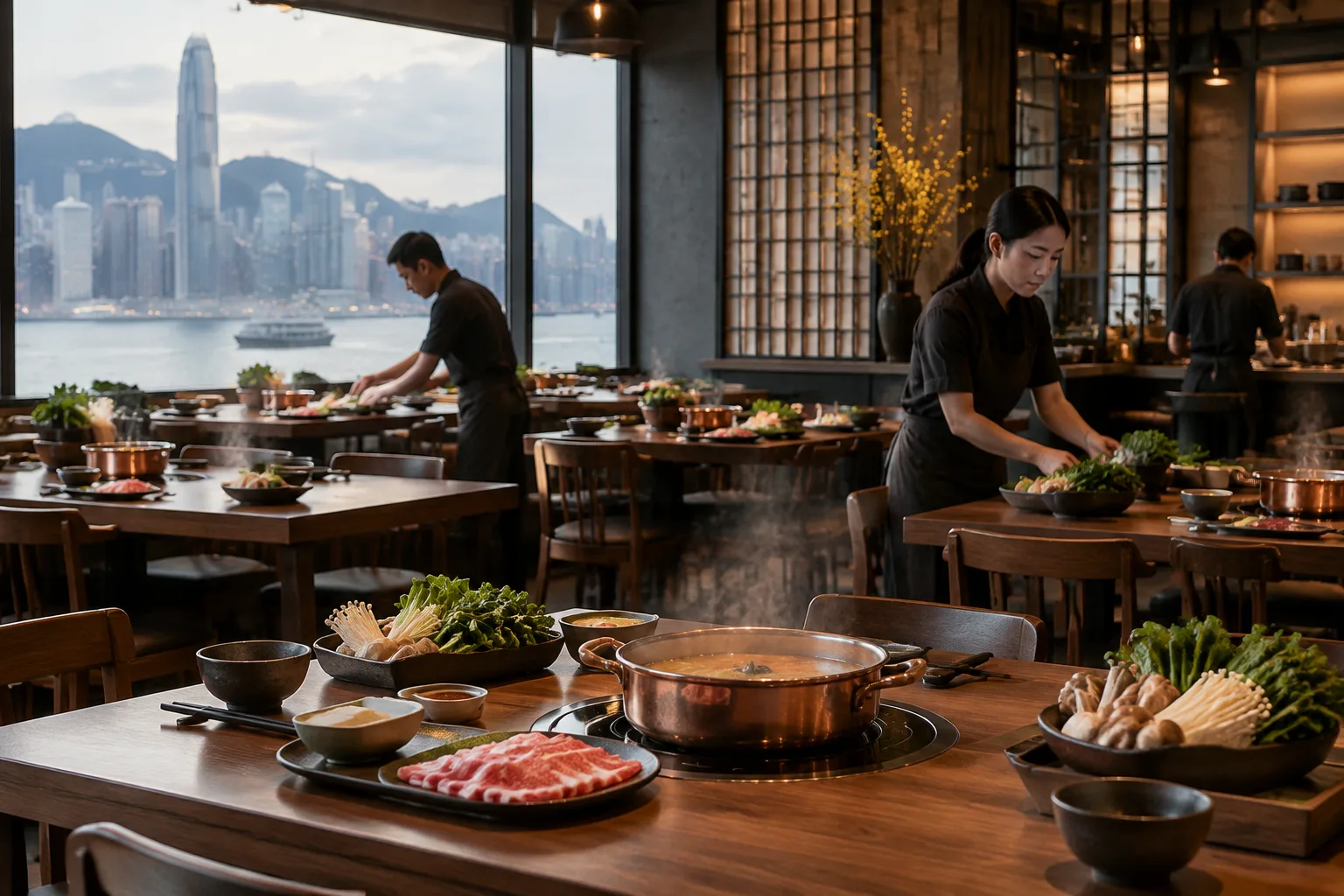
LH Group has taken its own restaurant brand, Hao Guo Ri Zi (好鍋日子), to Singapore. According to an on.cc report dated 9 November 2026, citing the group’s interim results, LH Group has entered into a franchise agreement with Gohan Concepts Pte. to operate the brand. One outlet had opened in Singapore by the end of June 2026. The arrangement offers a case study for those interested in Hong Kong’s franchise market of how a local brand can expand overseas through licensing.
Taking an owned brand overseas through licensing
Hao Guo Ri Zi is one of LH Group’s own restaurant brands. Unlike the group’s model of operating overseas franchise brands in Hong Kong, this arrangement allows a Singapore partner to operate an LH Group brand under a franchise agreement.
Gohan, the partner named in the report, also operates one Hikiniku to Come outlet and one Torikizoku outlet in Singapore. With a Hao Guo Ri Zi outlet already open by the end of June, the overseas venture had moved beyond the agreement stage into actual operation.
Combining equity investment with brand licensing
LH Group holds a 29.4% stake in Gohan, so the relationship involves equity investment as well as brand licensing.
In the first half of 2026, LH Group recorded a share of loss from an associate of HK$1.732 million. According to the report, this mainly reflected initial set-up and pre-opening costs associated with its investment in Gohan. This figure should not be treated as the operating loss of the single Hao Guo Ri Zi outlet in Singapore: the scope of the business and the accounting basis are different.
For those assessing overseas partnerships involving Hong Kong franchise businesses, it is important to distinguish between equity ownership, brand licensing and outlet-level operating performance, rather than conflate financial figures from different parts of the arrangement.
Hong Kong franchise brands remain profitable at the operating level
Despite the overseas expansion, Hong Kong remains LH Group’s main source of operating profit. At the end of June 2026, the group operated 62 restaurants in Hong Kong: 20 under its own brands and 42 under franchise brands.
In the first half, the group’s franchise-brand business recorded an operating profit of HK$31.94 million, down 7.7% year on year. Its own-brand business recorded an operating loss of HK$9.046 million, widening from HK$1.342 million a year earlier.
The group’s franchise brands include Gyu-Kaku, Gyu-Kaku J, On-Yasai, The Matcha Tokyo, Hikiniku to Come and Yamamoto’s Hamburg. The differing performance of the two business segments also highlights why overseas outlet openings should be assessed separately from the established Hong Kong operations.
Assess expansion alongside financial performance
LH Group’s first-half revenue was HK$506 million, down 6.29% year on year. It recorded a loss of HK$17.453 million, compared with a loss of HK$633,000 in the same period a year earlier. Cash and cash equivalents at the period end stood at HK$114 million, down 18.44% year on year. The group hopes overseas development will provide new sources of growth, but opening an outlet does not in itself mean it is contributing to profit.
Practical takeaway: when considering a similar cross-border franchise partnership, first establish whether your role is that of brand licensor, shareholder or outlet operator. Then examine the capital commitments, opening costs and arrangements for sharing returns individually. Performance should likewise be assessed using figures relevant to the particular business activity.