At least 70 Hong Kong shops reportedly closed in October: franchise investors should check what the figures cover
Media reports citing market figures suggest at least 70 Hong Kong shops closed in October, up around 75% from roughly 40 in September. Prospective franchisees assessing the risks of opening a shop should distinguish between individual closures, rental data and overall market performance.
Published
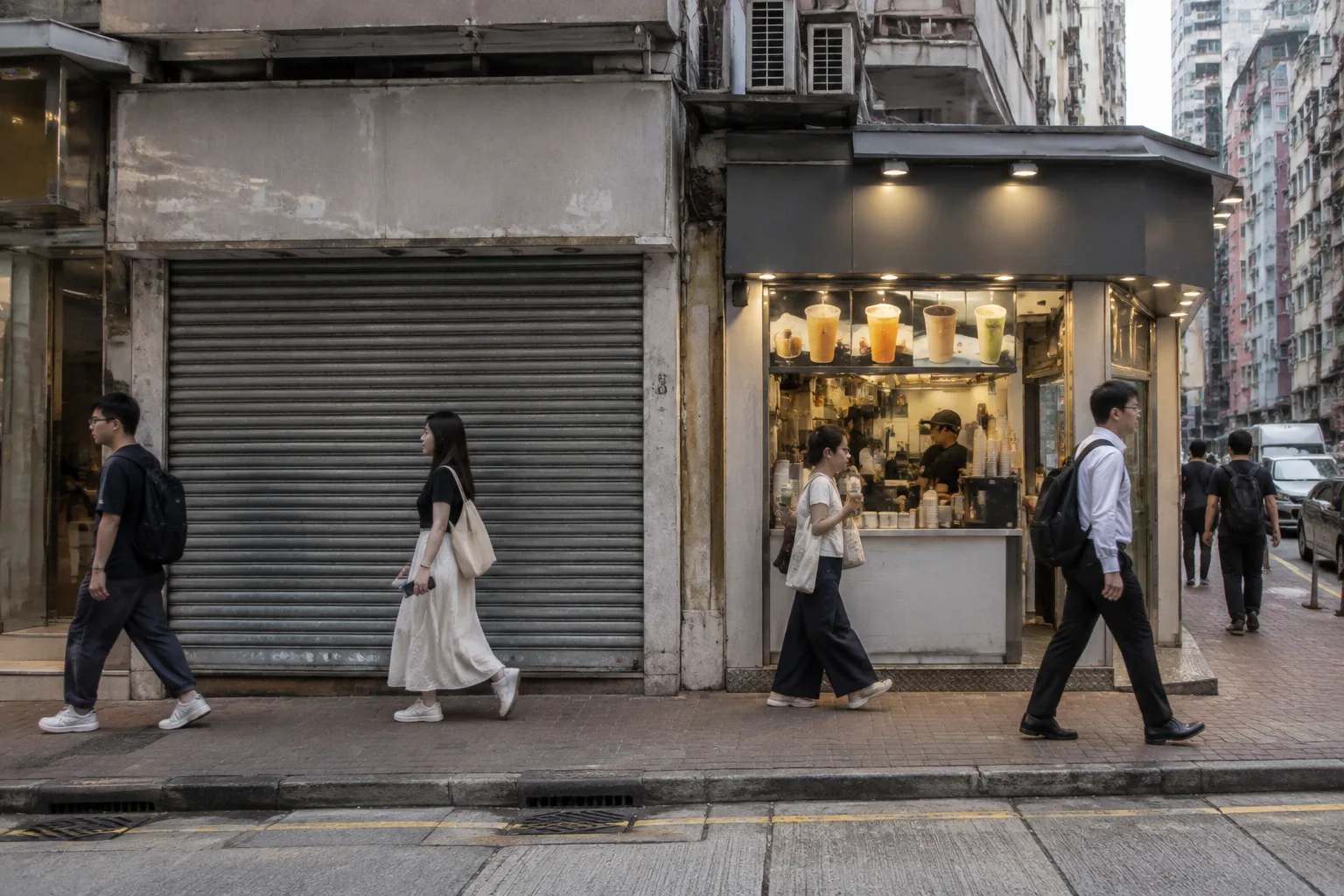
Shop closures in Hong Kong are attracting renewed attention. A United Daily News report dated 1 November 2026, citing Hong Kong media coverage drawing on Property Station and market figures, said at least 70 shops across Hong Kong closed in October, compared with roughly 40 in September — an increase of around 75%. These figures merit attention from the franchise community, but anyone assessing locations and investments should still establish what the statistics cover and examine the circumstances of individual outlets.
More closures do not establish a franchise failure rate
The reported figures cover shops in Hong Kong generally, rather than franchise outlets specifically. Both ‘at least 70’ and ‘roughly 40’ are qualified figures. The increase of around 75% should be read with those qualifications in mind, not treated as a precise measure of change across the entire market.
Closure numbers alone do not show how many new shops opened over the same period. Nor can they be used directly to calculate the net decline in shop numbers or the franchise failure rate. Prospective franchisees can treat them as a signal to investigate local trading areas more closely, rather than as grounds for judging every brand’s prospects.
Hefu Noodle closure highlights the need to assess lease costs
The same report noted that Hefu Noodle’s first Hong Kong outlet had closed. The premises were leased in early 2024 for approximately HK$300,000 a month, with a gross floor area of around 1,570 sq ft and a monthly rent of about HK$191 per sq ft. The outlet ceased trading less than three years after opening.
These details provide useful rental context, but are insufficient to reconstruct the outlet’s profit and loss. Rent alone cannot establish why it closed. The report did not identify the outlet as a franchise, so this chain-store closure should not automatically be counted as a franchise closure.
A change of tenant requires separate scrutiny of old and new lease terms
The report also said that Mixue’s outlet at Bank Centre in Mong Kok closed when its lease expired. Hong Kong brand Tong Siu Yee took over the premises at a monthly rent of HK$190,000.
This shows that another brand took on the premises after the previous tenant left. However, HK$190,000 is the new tenant’s rent: it does not establish what the former tenant paid or whether rent rose or fell. For franchisees seeking premises, the fact that a brand previously traded at an address does not mean a new outlet can rely on the same trading assumptions.
Assess changing spending patterns at the local level
The report cited Hong Kong residents travelling to mainland China to shop and spend, high operating costs, funding pressures and changing spending habits among younger consumers as background to the closures. These are useful factors to monitor, but should not be assumed to explain every shop’s closure.
When assessing an opportunity, franchise investors should check market reports separately from the proposed premises’ lease terms, footfall and budget. They should also ask brands to distinguish clearly between trading data for company-owned and franchised outlets.
Practical takeaway: do not decide whether to proceed based on closure totals alone. Before signing, test the break-even point using the actual costs of the proposed premises, then assess how much financial headroom you would have if turnover fell short of expectations.