Da Yung’s Exits Hong Kong as Mixue Closes Its First Mong Kok Store: Distinguishing Store Closures from Market Withdrawals
Da Yung’s has closed its last Hong Kong branch, while Mixue’s first store in Mong Kok has shut after its lease expired. Investors assessing franchise networks must distinguish individual closures from a full market withdrawal.
Published
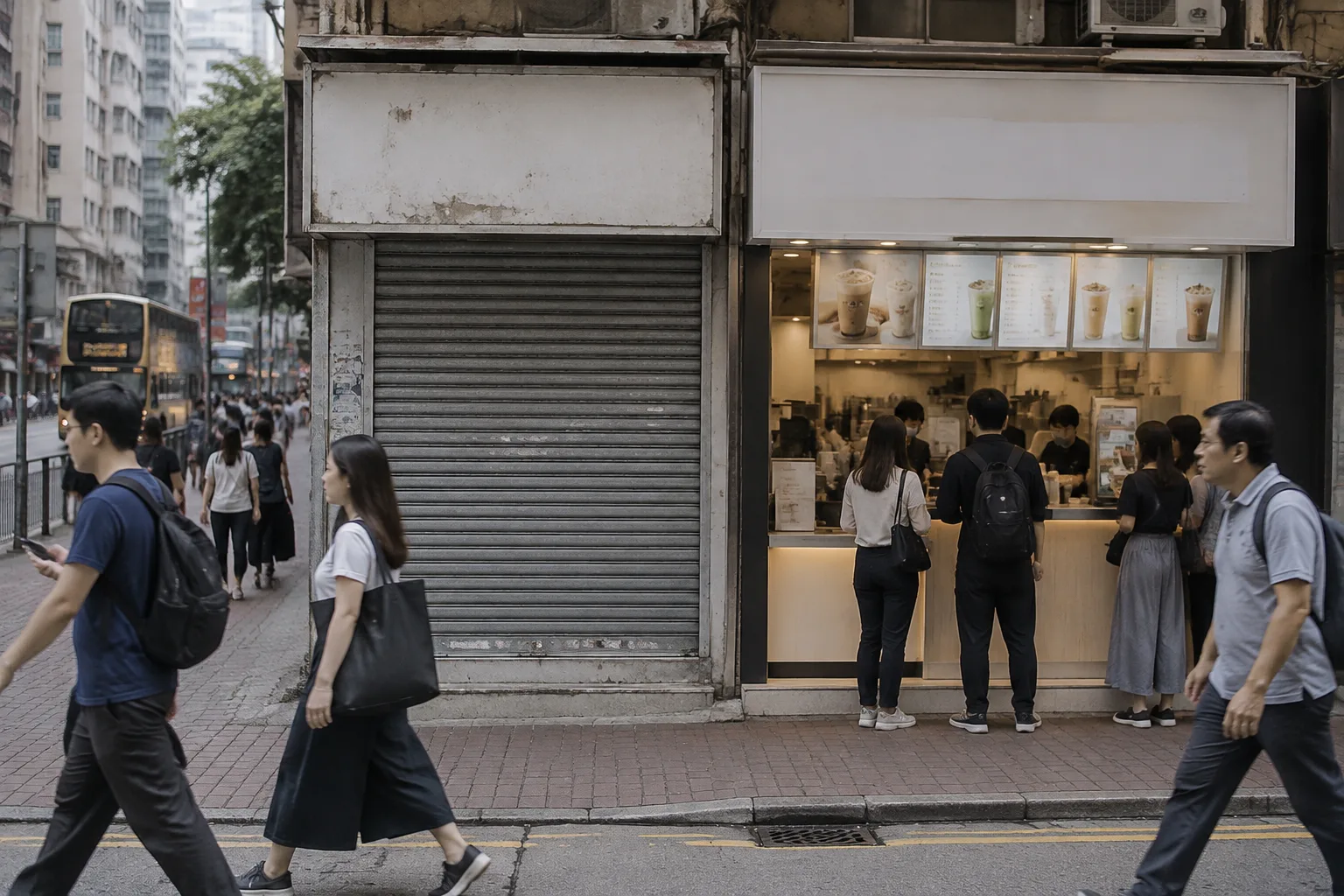
Hong Kong’s tea drinks retail market is seeing further changes. According to a report in the Hong Kong Economic Times on 1 November 2026, Da Yung’s has ceased operating in the city, while Mixue’s first Hong Kong store, at the Bank Centre in Mong Kok, has also closed. These represent different types of network change. For prospective franchisees assessing brands and premises in Hong Kong, the closure of a brand’s first store should not automatically be read as a withdrawal from the market.
Da Yung’s closed its last store in October
The report stated that, four years after entering Hong Kong, Da Yung’s closed its last branch, at The Wai shopping centre in Tai Wai, on 12 October, marking its complete withdrawal from the city. The significance goes beyond a shopping centre losing a tea drinks outlet: the brand’s entire Hong Kong store network has ceased operating.
Ching Yu also withdrew from Hong Kong that month. According to the report, the Taiwanese tea brand was brought to the city in 2015 by its Hong Kong operator, opening its first store in Mong Kok under a franchise arrangement. The departure of these two Taiwanese brands provides recent context for assessing brands’ ability to sustain operations in Hong Kong. It does not, however, mean that other tea drinks brands will make the same decision.
Mixue’s first-store closure does not mean a full Hong Kong exit
Mixue’s situation is different. Its first Hong Kong store, at the Bank Centre in Mong Kok, reportedly closed after its lease expired. Local brand Tong Siu Yi has taken over the premises at a monthly rent of HK$190,000.
This confirms a change in the tenancy and operation of a specific site, not Mixue’s complete withdrawal from Hong Kong. The report did not specify whether the store was company-operated or run by a franchisee, so its closure should not be attributed directly to any particular franchise model.
The incoming tenant’s rent may offer a useful reference when assessing locations, but it does not establish what the previous tenant paid. Nor can that figure alone reveal the former store’s turnover, profitability or reasons for closing. When comparing brand performance, lease expiry should be treated separately from a broader contraction of the store network.
October’s closure figures need to be read in context
Citing Hong Kong media, property websites and market statistics, the report said that at least 70 shops across the city closed in October, up approximately 75% from around 40 the previous month. These figures cover shop closures generally, rather than tea drinks outlets or franchised stores specifically. They are not an official closure rate for Hong Kong’s franchise sector.
The report discussed recent closures against a backdrop of Hong Kong residents travelling to mainland China to shop and dine, operating costs and funding pressures. However, wider market conditions are distinct from the direct causes of an individual store’s closure. Without store-level financial and operating data, it would be inappropriate to assume that every closure had the same cause.
Verify the network and premises before assessing a franchise opportunity
For prospective franchisees, these developments highlight two checks. First, establish how many stores a brand still operates in Hong Kong and which locations have been confirmed as closed. Second, verify the actual rent, lease term and renewal conditions for the premises under consideration. Do not build a budget solely around the rent paid by an incoming tenant at another nearby shop.
A brand’s complete market withdrawal, the expiry of a single store’s lease and the takeover of premises by another brand are three different situations. Before signing an agreement, request an updated store list from the brand and check the lease terms and operating costs item by item before deciding whether to invest.