Who Can Negotiate Your Franchise in Guatemala?
Define who can negotiate, approve exceptions and sign franchise agreements in Guatemala to avoid unauthorised commercial commitments.
Published
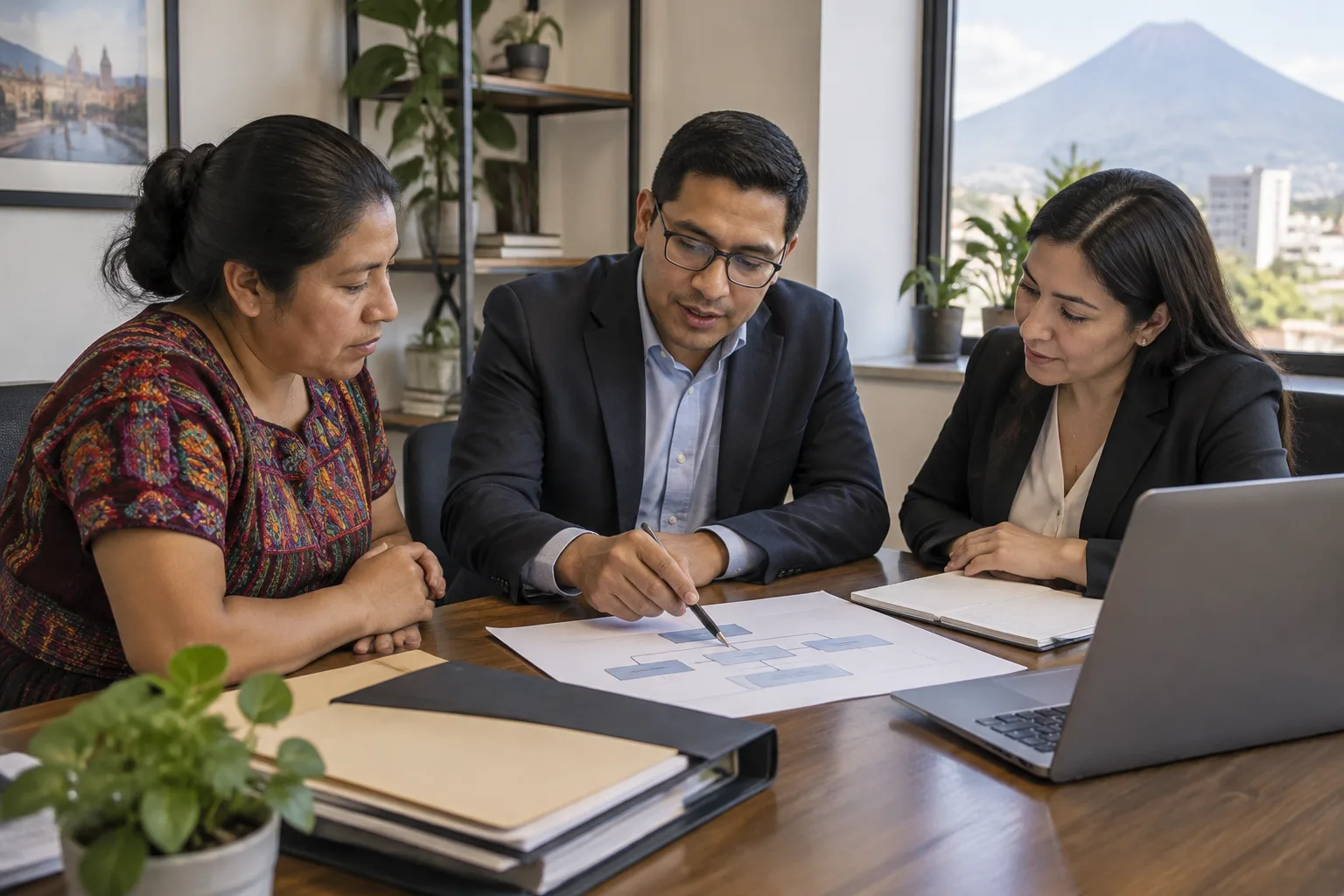
When franchising an existing business, having a proposal and a contract is not enough: you also need to decide who can commit your company during negotiations. A salesperson, intermediary or business partner may offer terms that later prove difficult to fulfil. To build a strong franchise network, set clear limits on authority before starting discussions with prospective franchisees.
1. Separate providing information, negotiating, approving and signing
These four functions are not interchangeable. Someone presenting the franchise model may explain its features without being authorised to grant discounts, change obligations or sign documents. Even when one person performs several functions, it is worth distinguishing them in writing.
Prepare a commercial authority matrix identifying who is responsible for each function and the limits of their authority:
- Providing information: sharing the current presentation, explaining the process and answering questions using approved information.
- Negotiating: receiving requests and discussing alternatives within predefined parameters.
- Approving: accepting or rejecting exceptions to financial, operational or contractual terms.
- Signing: signing documents with sufficient legal authority to represent the company.
Include matters that often seem minor: extending a deadline, offering additional training, allowing payment by instalments or covering opening costs. Each can create costs or expectations.
Do not confuse internal authorisation to negotiate with legal authority to represent the company. Before signing, arrange a review of the signatory’s authority and the documents establishing it. The title ‘commercial director’ alone is not sufficient evidence.
2. Apply Guatemala’s legal framework
Guatemala has neither a dedicated, comprehensive franchise law nor a generally mandatory pre-contractual disclosure regime equivalent to those in some other countries. A franchise agreement is treated as an atypical commercial contract—one not specifically regulated as a distinct contract type. It is governed by the Commercial Code, Decree 2-70, with the Civil Code, Decree-Law 106, applying on a supplementary basis, alongside other applicable rules.
Article 669 of the Commercial Code establishes the principles of truthfulness and good faith in the interpretation and performance of commercial obligations. The terms communicated during negotiations should therefore be consistent with those ultimately agreed.
The Industrial Property Law, Decree 57-2000, is also relevant when offering the use of a trade mark and sharing protected know-how. Providing sales materials should not be confused with authorising a prospective franchisee to use the trade mark or operate the business.
An internal authority matrix does not replace a legal review of actions taken on the company’s behalf. Nor does it automatically mean that a promise has no legal effect simply because the salesperson failed to follow instructions. The conduct, documents and circumstances must be assessed in each case.
The QFA Code of Conduct is an association standard, not national law. Its guidance on non-misleading information and clear obligations can help guide the sales team, but does not replace Guatemalan legislation.
3. Prepare the team for difficult requests
Before allowing anyone to negotiate your franchise, train them using realistic scenarios. The Guatemalan Franchise Association highlights the importance of preparing sales staff for both the practical aspects and the legal implications of their work.
One useful role-play exercise involves three requests: reducing a fee, extending initial support and accepting a different opening date. The person must identify what they can explain, what they need to refer for approval and what they must not promise.
Use responses that make the status of each discussion clear:
- ‘I can submit your request; it has not yet been approved.’
- ‘The current proposal includes these services; any additional support needs to be assessed.’
- ‘This term will only be included once the necessary approval and documentation are in place.’
If you work with external intermediaries, define their role, remuneration, approved materials and negotiating limits in writing. Also clarify whether they may receive documents or money on the company’s behalf; do not leave this implicit.
Avoid incentives that reward only securing a signature. Assess the accuracy of the information provided and compliance with the process as well.
4. Document exceptions before closing the deal
Keep a file for each prospective franchisee containing the version of the proposal sent, relevant questions, special requests and decisions made. Record who approved each exception and on what conditions.
Before signing, compare that file with the contract and its schedules. If additional support was approved, it must be clearly described. If a request was rejected, communicate this clearly rather than leaving the impression that a concession is still pending.
If you discover an unauthorised promise, preserve the evidence, notify the person responsible and seek legal advice before attempting to put matters right. Simply deleting the message or assuming the contract will resolve any inconsistency is not enough.
Practical takeaway: before recruiting prospective franchisees, define who provides information, who negotiates, who approves and who signs. A one-page summary of responsibilities, backed by training and a record of decisions, can prevent commitments your business is not equipped to fulfil.
Sources
- How to promote your franchise in Guatemala without overpromising
- Starting a Business in Guatemala: Expat Guide
- La importancia de las franquicias para hacer negocios en Guatemala - BLP Legal
- notarioguatemala.com › contratos › mercantilContrato de Franquicia Comercial — Modelo Guatemala (Word ...
- Código de Conducta para Franquicias en Guatemala
- The importance of franchises to do business in Guatemala - BLP Legal
- ¿Cómo franquiciar su negocio? - Asociación Guatemalteca ...
- Franquicias Guatemaltecas | PDF