Business continuity for franchises in Guatemala
Prepare your business to respond to utility outages, system failures and temporary closures before bringing franchisees on board.
Published
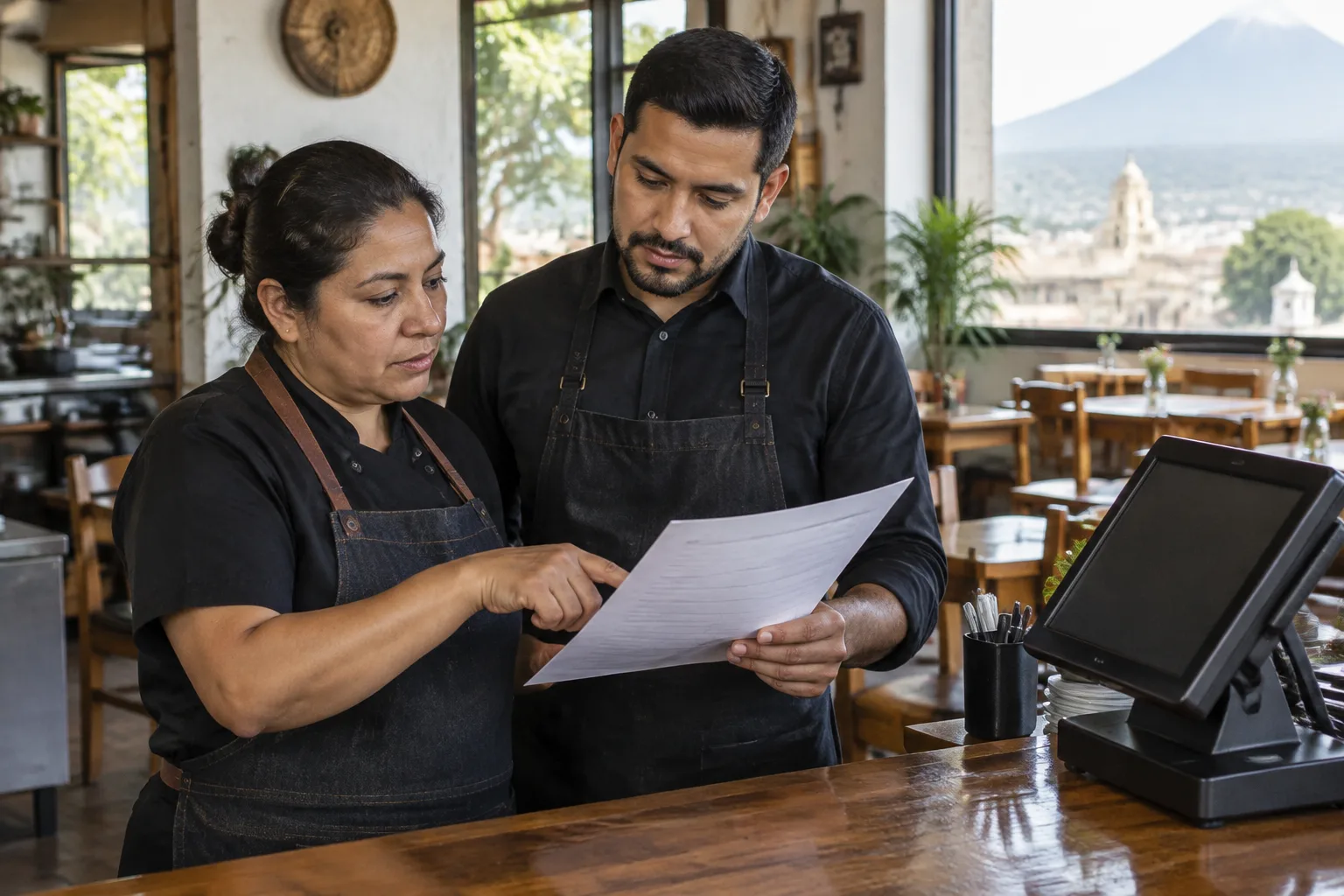
Before franchising a business in Guatemala, it is worth deciding what will happen when an outlet cannot operate normally. A power cut, a payment system failure or damage to the premises may require immediate decisions. A business continuity plan helps protect people, coordinate responsibilities and maintain trust across the franchise network, without promising that every disruption can be avoided.
1. Identify what requires operations to stop
Not every failure requires closure, but nor does every improvised solution make it acceptable to continue serving customers. Start by identifying the activities whose interruption would compromise safety, service quality or compliance with obligations.
For each activity, prepare a short record covering four elements:
- Critical dependency: electricity, water, connectivity, access to the premises or availability of the payment system.
- Consequence of failure: inability to take payments, store products safely, confirm appointments or provide the service safely.
- Approved alternative: a temporary procedure that the business has already assessed.
- Trigger for suspension: a circumstance in which an activity, or all customer service, must stop.
For example, losing connectivity does not necessarily mean losing the ability to serve customers. However, taking payments through an alternative procedure requires controls and accounting checks. If the disruption affects safe food storage, the decision cannot be based solely on avoiding lost sales.
Set observable thresholds, rather than vague instructions such as “resolve as soon as possible”. Technical criteria must suit the activity and be reviewed by specialists where appropriate.
2. Allocate decisions between franchisor and franchisee
The plan should allow people to act without waiting for an endless chain of approvals. Distinguish between urgent protective decisions, temporary adjustments and authorisation to resume operations.
A practical allocation of responsibilities might include the following:
- The outlet manager takes immediate steps to protect customers and staff, in accordance with the plan and instructions from the authorities.
- The franchisee reports the incident, documents its effects and coordinates repairs for which they are responsible.
- The franchisor assesses alternatives that affect shared standards and provides the support it has committed to.
- The designated person checks that reopening conditions have been met and records the decision.
Set a primary and backup contact for each party. Also specify what the initial notification must include: the affected outlet, the time, the risk identified, services suspended and measures taken.
Public communications need a simple rule: explain which services are available and when an update will follow, without announcing a reopening date that cannot yet be confirmed. The plan must not hold up urgent safety notices while commercial approval is pending.
3. Address the consequences of disruption in the contract
Guatemala has no specific franchise law or general mandatory pre-contractual disclosure regime for franchise agreements. Franchising is treated as an atypical commercial contract, subject to the Commercial Code, Decree 2-70, with the Civil Code, Decree-Law 106, applying on a supplementary basis. Other rules also apply depending on the activity and obligations involved.
Article 669 of the Commercial Code enshrines the principles of respect for the known facts and observance of good faith. These principles support clearly describing what assistance each party can expect during a disruption, without presenting the plan as a guarantee of uninterrupted operations.
Seek legal advice to agree:
- How incidents must be reported and substantiated.
- Who pays for repairs, temporary measures and other expenses.
- What happens to financial obligations during a closure.
- How breaches and events that might justify relief from liability are handled.
- What conditions allow reopening and how a prolonged disruption will be managed.
Do not assume that every closure removes the obligation to pay royalties or constitutes force majeure. Its effects depend on the facts, the contract and the applicable law. The manual should set out the operational response, not introduce new financial consequences on its own.
4. Test the plan before bringing franchisees on board
Test the procedure in your existing business through a controlled exercise. You could simulate the payment system being unavailable without disconnecting equipment or putting real transactions at risk.
Check whether the team can find the contacts, identify who makes decisions and record the incident correctly. Also consider whether the proposed alternative depends on resources that a future outlet will not have available.
After the exercise, clarify ambiguous instructions and assign responsibility for outstanding tasks. Keep an accessible version of the plan outside the systems whose failure you are planning for. Also review with your insurance adviser what cover is actually in place, what exclusions apply and what documentation a claim would require.
Practical conclusion: before offering your first franchise, rehearse a specific disruption and document who decides, what is suspended and how the outlet reopens. A useful plan enables an orderly response when normal operations are no longer possible.
Sources
- Contrato de Franquicia en Guatemala 2026: qué es, cláusulas clave ...
- How to promote your franchise in Guatemala without overpromising
- franquicia.docx
- La importancia de las franquicias para hacer negocios en Guatemala - BLP Legal
- notarioguatemala.com › contratos › mercantilContrato de Franquicia Comercial — Modelo Guatemala (Word ...
- Código de Conducta para Franquicias en Guatemala
- The importance of franchises to do business in Guatemala - BLP Legal
- Cómo franquiciar tu negocio en Guatemala | QFA