Franchises in Guatemala: agree how royalties are calculated
Before buying a franchise, establish which sales attract royalties and how taxes, returns and commissions are treated.
Published
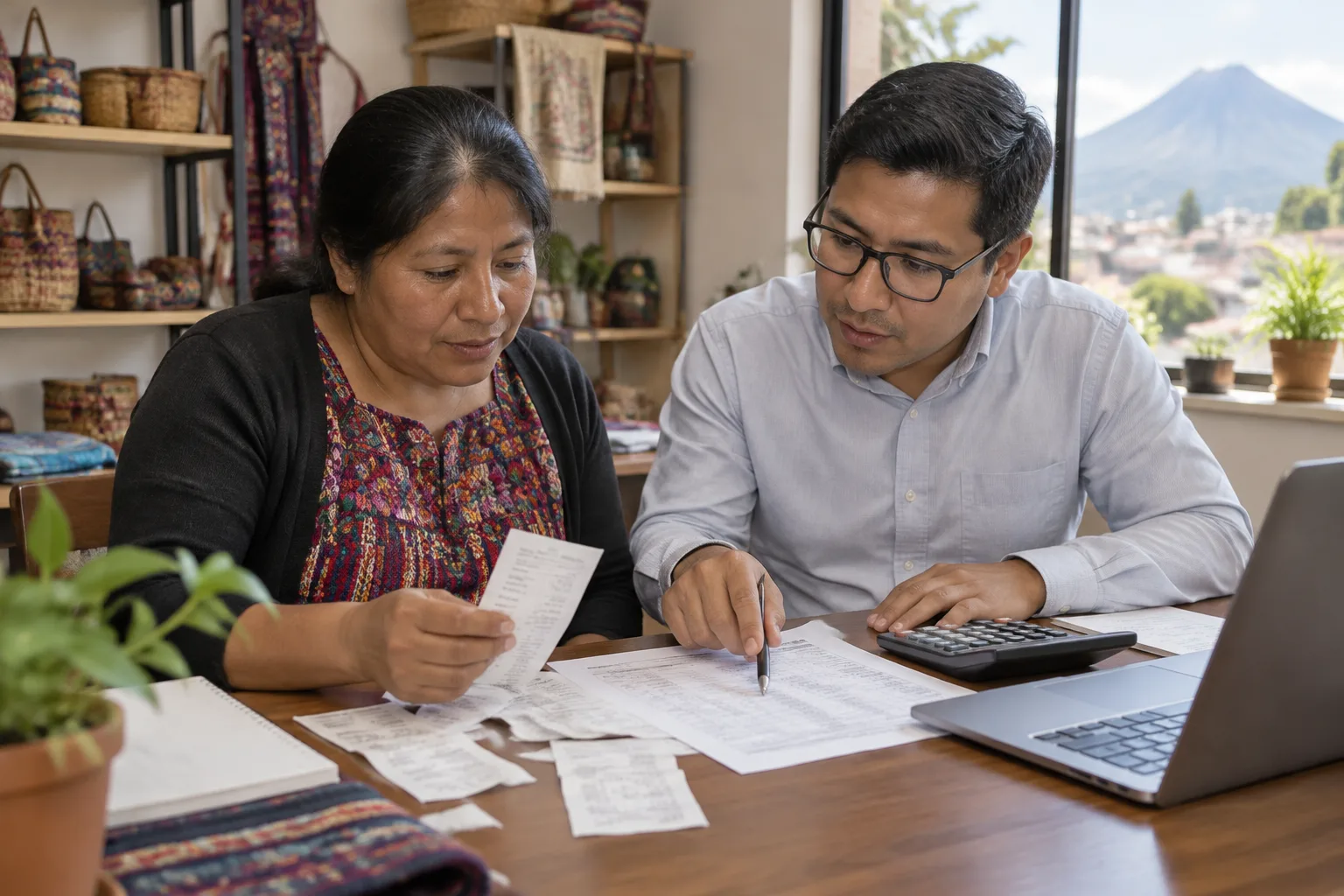
A seemingly straightforward royalty can produce different results depending on what counts as ‘sales’. Before buying a franchise in Guatemala, do not compare only the percentage quoted: examine the basis on which it is applied. In franchising, turning that definition into a verifiable formula helps with budgeting and prevents each party from interpreting the same charges differently.
1. Distinguish the percentage from the calculation base
Royalties pay for the rights or services identified in the contract. They may take the form of a fixed amount, a percentage or a combination of both. Do not assume they include other services or replace advertising contributions: ask for each charge to be set out separately.
If royalties are calculated on sales, you need two elements: the rate and the contractual calculation base. A lower percentage does not necessarily mean a lower cost if it applies to a broader base.
Ask the franchisor to specify in writing:
- Whether the calculation uses invoiced sales, payments received or another basis.
- Whether the base includes or excludes VAT (known locally as IVA) and other amounts collected.
- Which discounts, cancellations and returns may be deducted.
- Which sales channels and transactions are attributed to your outlet.
- Whether a minimum royalty applies, even when sales are insufficient.
Do not accept ‘net sales’ as a complete explanation. That term needs a contractual definition, not simply a reference to a report from the point-of-sale system. An illustrative formula would be: included transactions minus expressly agreed exclusions. The rate is then applied and, where relevant, the result is compared with the agreed minimum.
2. Resolve situations that affect the result
Request written examples using transactions typical of the business. You do not need sales forecasts for this exercise: use clearly labelled hypothetical scenarios and check that both parties arrive at the same result.
Sales through platforms. Distinguish the price paid by the customer from the amount you receive after commissions. If the contract uses the former as its base, commission is not automatically deductible. Also clarify how delivery costs and service charges are treated.
Discounts and promotions. Establish whether the calculation uses the price actually charged or an amount before the discount. Where a third party or the franchisor funds the promotion, specify how that reimbursement is treated. The issue here is not who may set prices, but which amount attracts royalties.
Returns and cancellations. Agree when the adjustment is recognised, what supporting documentation is required and how a royalty already settled will be corrected. There should be a defined process for handling a sale returned in a later period.
Advance payments and gift cards. Clarify whether the transaction is recognised when payment is received or when the product or service is supplied. Avoid counting the same income twice. If another outlet receives the advance payment and you serve the customer, there must be a rule for allocating the transaction.
Credit sales. Ask whether these attract royalties before payment is received and what happens to bad debts. Do not assume that a trading loss allows you to reduce the calculation base.
3. Include the definition in the contract applicable in Guatemala
Guatemala has no specific law comprehensively regulating franchising, nor a special mandatory pre-contractual disclosure regime equivalent to those in some other countries. There is also no general statutory formula determining royalties for every franchise.
The relationship is governed primarily by the Commercial Code, Decree 2-70, with the Civil Code, Decree-Law 106, applying on a supplementary basis. The Industrial Property Law, Decree 57-2000, regulates matters relating to trade marks and licences to use them. Applicable tax obligations should be reviewed separately.
For this reason, instruct a local lawyer to review the clause and an accountant to validate how it works in practice. Distinguish between the commercial calculation of royalties and the tax treatment of their payment: these are separate issues.
Aim to include the formula and examples in an annex to the contract. Negotiate a requirement for written agreement to any change in the rate, base or exclusions, rather than allowing changes through a unilateral update to the IT system.
4. Check that you can reproduce each royalty calculation
Before signing, request a sample royalty statement showing sales by channel, exclusions, adjustments relating to earlier periods, the resulting calculation base and the royalty due. Check that your system can generate these figures and that you can retain the supporting records.
Agree a procedure for querying discrepancies and correcting errors, with clear responsibilities and deadlines. Do not assume that a discrepancy entitles you to suspend payments: that requires a review of the contract.
Practical conclusion: only buy when you can reconstruct the royalty calculation from your own records. A clear rate applied to an ambiguous base still leaves you with an uncertain cost.
Sources
- Permits for Opening a Franchise in Guatemala
- Comprar una franquicia en Guatemala
- ¿Cómo franquiciar su negocio? - Asociación Guatemalteca ...
- Modelo Word y lo que Dice la Ley (Licencia de Marca, RPI, ISR)
- notarioguatemala.com › contratos › mercantilContrato de Franquicia Comercial — Modelo Guatemala (Word ...
- Guatemala - Franchising | Privacy Shield
- Guatemala Franchise Market
- Universidad de San Carlos de Guatemala