Permits for Opening a Franchise in Guatemala
Organise permits, responsibilities and supporting documents before opening a franchise outlet in Guatemala, without confusing brand approval with legal authorisation.
Published
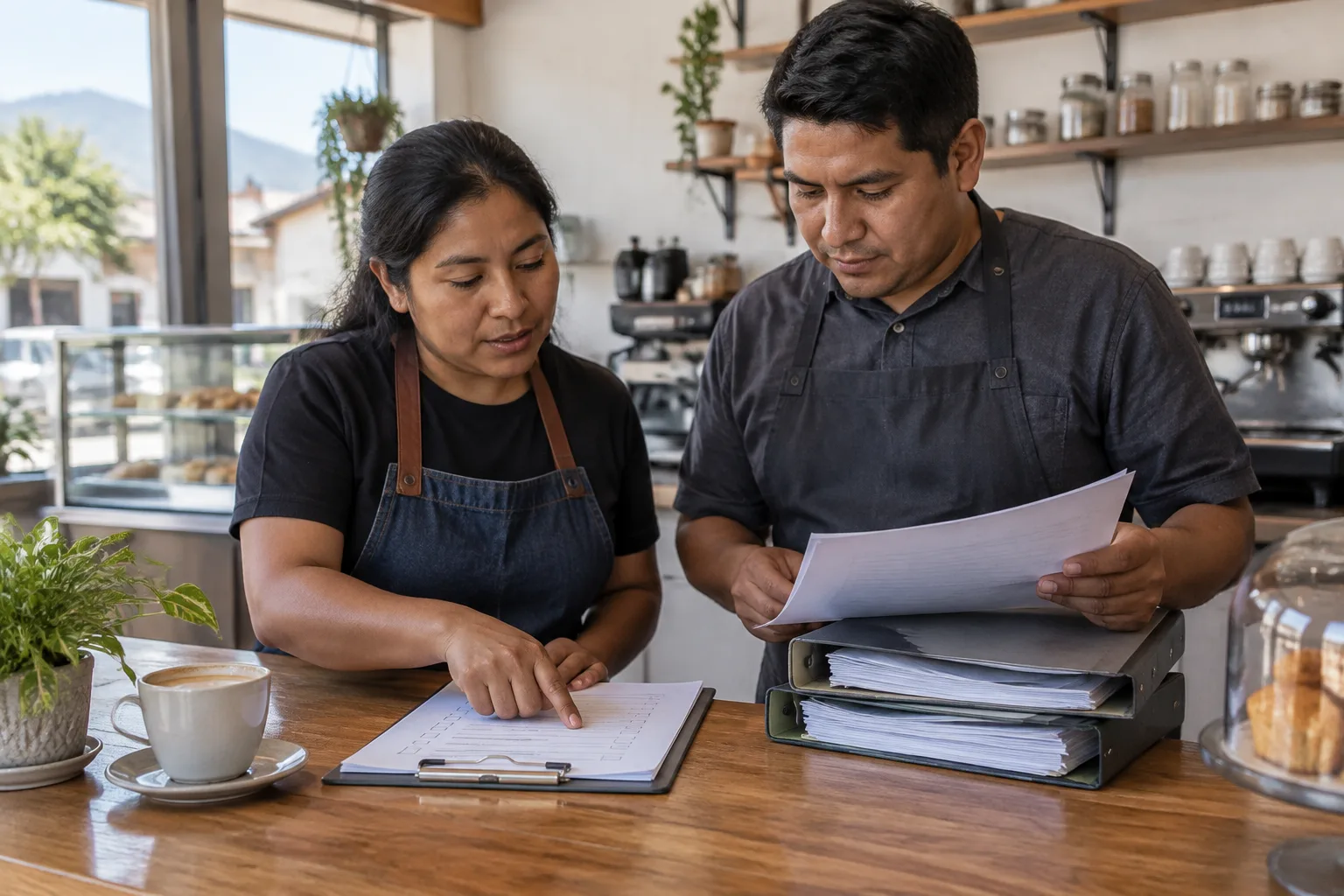
When franchising an existing business in Guatemala, do not assume that your establishment’s permits will cover new outlets. Each operator, activity and location requires its own review. Before announcing an opening, prepare a compliance file to coordinate applications and verify that the outlet can operate legally. This helps protect the franchisee, customers and your franchise network.
1. Distinguish brand authorisation from official permits
Guatemala has no specific law comprehensively governing franchises, nor a special mandatory pre-contractual disclosure regime equivalent to those in some other countries. The relationship is based primarily on the Commercial Code, Decree 2-70, and the Civil Code, Decree-Law 106. The Industrial Property Law, Decree 57-2000, governs matters such as trade marks and licences to use them.
This framework does not replace the general obligations applicable to each business. Depending on the activity, relevant tax, employment, health, municipal and consumer protection rules must also be followed.
The franchisor’s approval is not official authorisation to operate. Approving the outlet’s branding or granting a trade mark licence does not demonstrate that all required formalities have been completed.
There is also no general franchise register that brings all these authorisations together. You must distinguish between registering the trader or business with the Commercial Registry (Registro Mercantil), completing tax formalities with the Tax Administration Superintendency (Superintendencia de Administración Tributaria, or SAT), and obtaining the permits applicable to the premises. The commercial registration certificate (patente de comercio) is not equivalent to a municipal or health permit.
2. Build a requirements matrix for each new outlet
Start with the documents for your existing business, but use them as a reference rather than a universal checklist. A change of municipality, activity or operating model may alter the requirements. For example, selling prepared food does not necessarily involve the same formalities as producing it and distributing it to other establishments.
With local support, identify what needs to be checked in these categories:
- Operator identity: who will run the outlet, their commercial registrations and, where relevant, their representative’s authority to act.
- Tax status: tax identification number (NIT), up-to-date details in the Unified Tax Register (Registro Tributario Unificado) and authorisation to issue invoices, as applicable.
- Municipal requirements: authorisations required for the location and activity, including those relating to building works or signage where applicable.
- Health requirements: licences for the premises and product registrations where required. These documents are not interchangeable.
- Employment and social security obligations: registrations and compliance requirements applicable to the operator as an employer.
For each requirement, record the competent authority, the holder, the person responsible for handling it, prerequisite documents, status, validity period and available supporting evidence. Add a column explaining why it applies or does not apply.
Do not treat “application pending” as synonymous with “authorised”. If there is any doubt about whether operations may begin while an application is being processed, confirm this with the competent authority and your legal adviser. Keep the response in the compliance file.
3. Assign responsibilities before committing to an opening
The franchisee normally handles the formalities for their own operation, but may need information held only by the franchisor: equipment specifications, process descriptions or product documentation. If nobody takes responsibility for supplying these, progress can stall even when both parties believe they have fulfilled their obligations.
Set out in writing who applies, who supplies information, who pays and who checks each requirement. Allocating tasks between the parties does not remove any responsibilities imposed on either of them by law.
Build the timetable around dependencies, not just commercial target dates. Before scheduling an opening, identify which authorisations require inspections, alterations to the premises or prior documentation. Avoid presenting an authority’s estimated processing times as guaranteed dates.
Also agree how delays will be communicated and which decisions will be postponed while essential requirements remain outstanding. The aim is not to promise a quick opening, but to prevent pressure to launch from overriding the legal review.
4. Complete the file and monitor expiry dates
Before opening, review the documentation and reach two separate conclusions: whether the outlet meets the brand’s operational standards and whether it complies with the applicable legal requirements. Neither replaces the other.
Check that the documents relate to the correct operator, address and activity. Verify that they are valid and retain legible copies, together with any conditions or restrictions. Proof that an application has been submitted does not, on its own, establish that a permit has been granted.
After opening, appoint someone to monitor expiry dates and relevant changes. An expansion, relocation or new activity may require information to be updated or further authorisations to be obtained. Keep proof of renewals and record the checks carried out.
Practical conclusion: before selling your first franchise, turn your existing business’s regulatory formalities into an adaptable requirements matrix. For each new outlet, require a named person responsible, supporting evidence and a clear decision on every requirement before authorising it to open under your brand.
Sources
- Contrato de Franquicia en Guatemala 2026: qué es, cláusulas clave ...
- notarioguatemala.com › contratos › mercantilContrato de Franquicia Comercial — Modelo Guatemala (Word ...
- Modelo Word y lo que Dice la Ley (Licencia de Marca, RPI, ISR)
- Guatemala - Franchising | Privacy Shield
- Starting a Business in Guatemala: Expat Guide - Jarnias Cyril
- How to Set Up a Company in Guatemala
- www.jarniascyril.com · company-formation-abroad · companyHow to Start a Company in Guatemala: A Complete Guide for Foreign...
- Guatemala Franchise Market