New takeaway requirements in 2027: HORESTA calls for clear answers
From 12 February 2027, takeaway businesses must allow customers to use their own containers. HORESTA is calling for clear rules on hygiene and liability.
Published
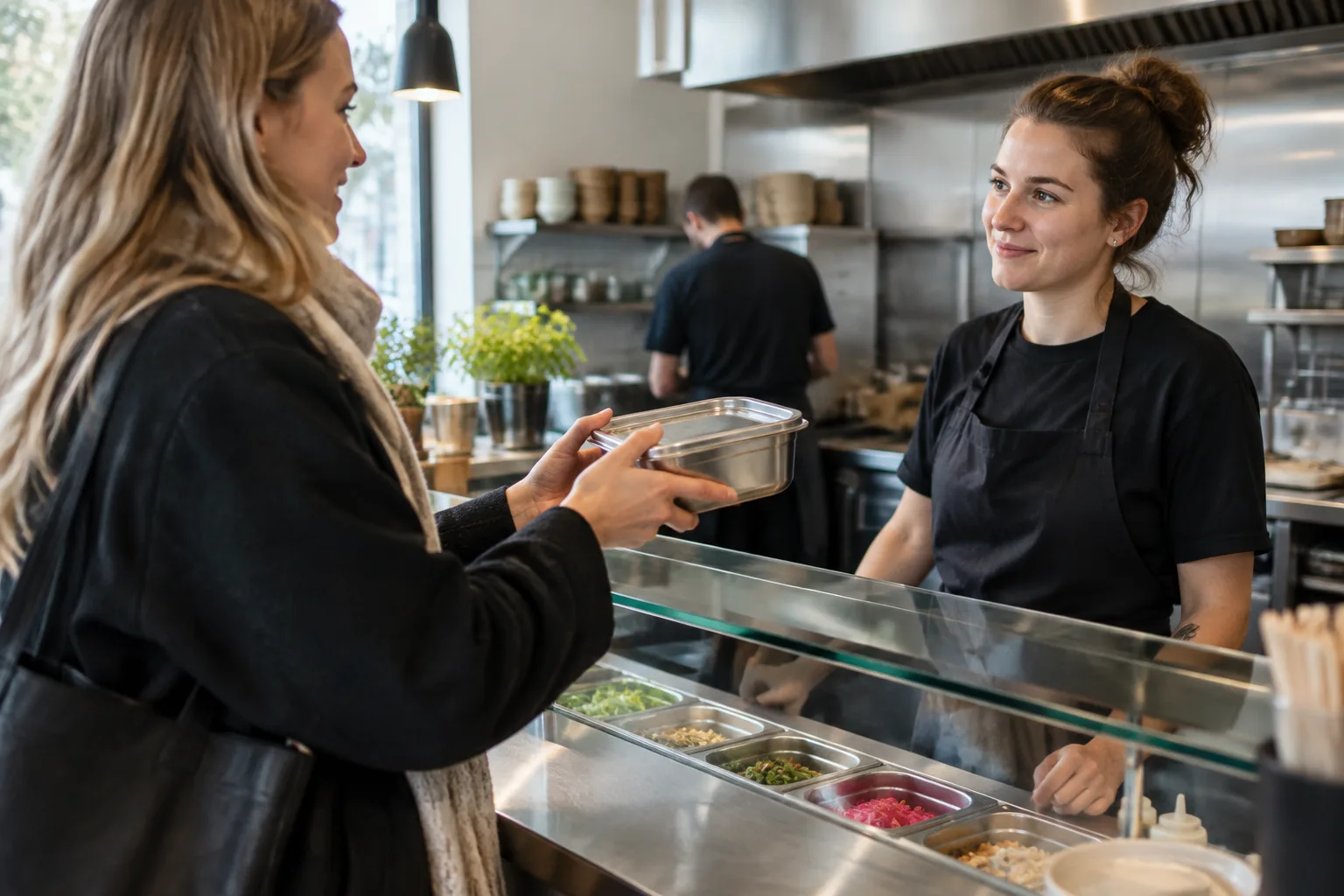
From 12 February 2027, takeaway businesses in Denmark must give customers the option of having food and drinks served in their own containers. That is according to HORESTA, Denmark’s hotel, restaurant and tourism industry organisation, which warns of unresolved questions about food safety, liability and practical handling. For franchise networks in the takeaway sector, this is an opportunity to review procedures and prepare shared instructions, while the organisation calls for workable national guidance.
Customers’ own containers raise new questions at the counter
The requirement is referred to as Bring Your Own, or BYO. According to HORESTA, it means takeaway businesses must allow customers to bring their own packaging for food and drinks. The organisation supports the aim of reducing single-use packaging but believes businesses lack clear answers about how the scheme should work day to day.
In its October 2026 statement, HORESTA highlights that handling these containers will fall under both packaging and food regulations. Preparing therefore involves more than simply accepting a cup or food container. It also means establishing how staff can do so without compromising food safety.
HORESTA highlights three key questions: When can a member of staff refuse a container? How can a business prevent it from coming into contact with equipment and contaminating food preparation areas? And who is liable if the container is not suitable for food use?
The organisation is still seeking clear answers to these questions. Its statement therefore does not establish precisely which containers must be accepted or how any refusal should be handled.
Hygiene and liability are central to operating procedures
HORESTA fears that businesses will not be able to refuse packaging that could put food safety at risk. This is the organisation’s concern, not a statement that businesses are already barred from saying no.
That distinction matters for both franchisors and franchisees preparing for the change. Planning around the stated start date is not the same as treating unanswered questions as settled rules.
According to HORESTA, the answers will affect businesses’ operating procedures, staff training and customer information. The requirement could also have implications for costs, premises layouts and staffing. However, the organisation’s statement does not provide a cost estimate or quantify how much extra work the scheme could entail.
For individual takeaway businesses, it therefore makes more sense to map out the practical handling stages than to assume specific additional costs. Where will the container be received, how will it move through the service process, and which staff members will need to handle it? These are relevant questions when preparing, but they are no substitute for official guidance.
HORESTA seeks a delay or a transition focused on guidance
HORESTA is urging the government to seek a postponement until clear, practical national guidance is available. The organisation wants that guidance to be developed jointly with business representatives and the Danish Veterinary and Food Administration.
Its reasoning is that businesses need both to understand the authorities’ expectations and to have time to put them into practice. Guidance should therefore do more than explain the scheme’s purpose: it should help businesses deal with the specific situations that arise when a customer hands over their own container.
If a postponement cannot be secured at national level, HORESTA believes Denmark should work towards a solution that allows a reasonable transition period and prioritises guidance.
These are the organisation’s requests. The statement is not an announcement that the deadline has changed. The date HORESTA gives for the requirement remains 12 February 2027.
Preparing together without pre-empting the rules
For franchise networks, a joint review of the takeaway service process could be a practical starting point. Franchisors and franchisees can compile questions about receiving containers, contact with equipment, staff training and customer information, then check them against forthcoming guidance.
It may also be useful to distinguish between shared instructions and matters that need to be assessed at each outlet. The aim should be to prepare a workable process, not to invent answers to the legal and food safety questions HORESTA has raised.
Practical takeaway: Plan around 12 February 2027, map out how customers’ containers will be handled, and gather questions from across the network. Align final instructions with official guidance rather than treating a requested postponement as an agreed decision.
Sources
- Fra 44 til 180 butikker: Nu giver topchef stafetten videre efter 20 år
- Spritnye Kvickly'er i støbeskeen: Kan blive første nye varehuse i flere år
- Tidligere topdirektør sagde jobbet op og overtog københavnsk McDonald's: Nu får den kæmpe makeover
- Skousen og Kökscentrum åbner 13 fælles butikker i Sverige
- HORESTA: Nye krav til takeaway rummer flere spørgsmål end svar