Before Franchising in China: Agreeing Promotion Approvals and Cost Sharing
A promotion launched by head office can affect franchise outlets’ gross margins, stock and settlement payments at the same time. Before franchising, test promotion rules in company-owned outlets, then clarify participation, cost sharing and how exceptions will be handled.
Published

Head office can decide centrally to offer discounts in company-owned outlets, but franchise outlets bear their own operating costs under their contracts. If head office announces only the promotion dates, without explaining who funds the discounts, whether vouchers can be combined or how refunds affect settlement, a single campaign can undermine trust across the franchise network. Designing promotion approval and cost-sharing arrangements in advance helps the brand act consistently without leaving outlets to bear unspecified costs.
1. Distinguish approval authority from types of expenditure
China has specific regulations governing commercial franchising. Article 11 of the Regulations on the Administration of Commercial Franchising requires written franchise agreements to cover key matters including product or service promotions and advertising. Promotions should therefore not depend solely on verbal promises from franchise recruitment staff or ad hoc group-chat announcements after an outlet opens.
Businesses can start by dividing campaigns into three categories: head-office-led promotions, promotions proposed by franchise outlets, and promotions initiated by platforms or shopping centres. For each, specify who submits the proposal, who approves it, who supplies promotional materials and whether outlets must participate. This is a suggested approach to contract and operational design, not a classification prescribed by law.
It is particularly important to distinguish between two types of expenditure: first, discounts and vouchers that directly reduce order receipts, together with the cost of free gifts; and second, promotion and advertising fees charged to franchisees. Article 17 of the Regulations requires the latter to be used for the purposes agreed in the contract, with timely disclosure of how they are spent. The fact that a discount campaign also serves a promotional purpose does not mean that all discount costs can automatically be deducted from promotion fees.
Arrangements involving uniform selling prices, minimum prices or restrictions on outlet discounts also require a separate competition-law compliance assessment. A ‘uniform operating model’ should not be treated as grounds for imposing arbitrary restrictions on franchise outlets’ pricing.
2. Use a company-owned pilot to account for a discounted order
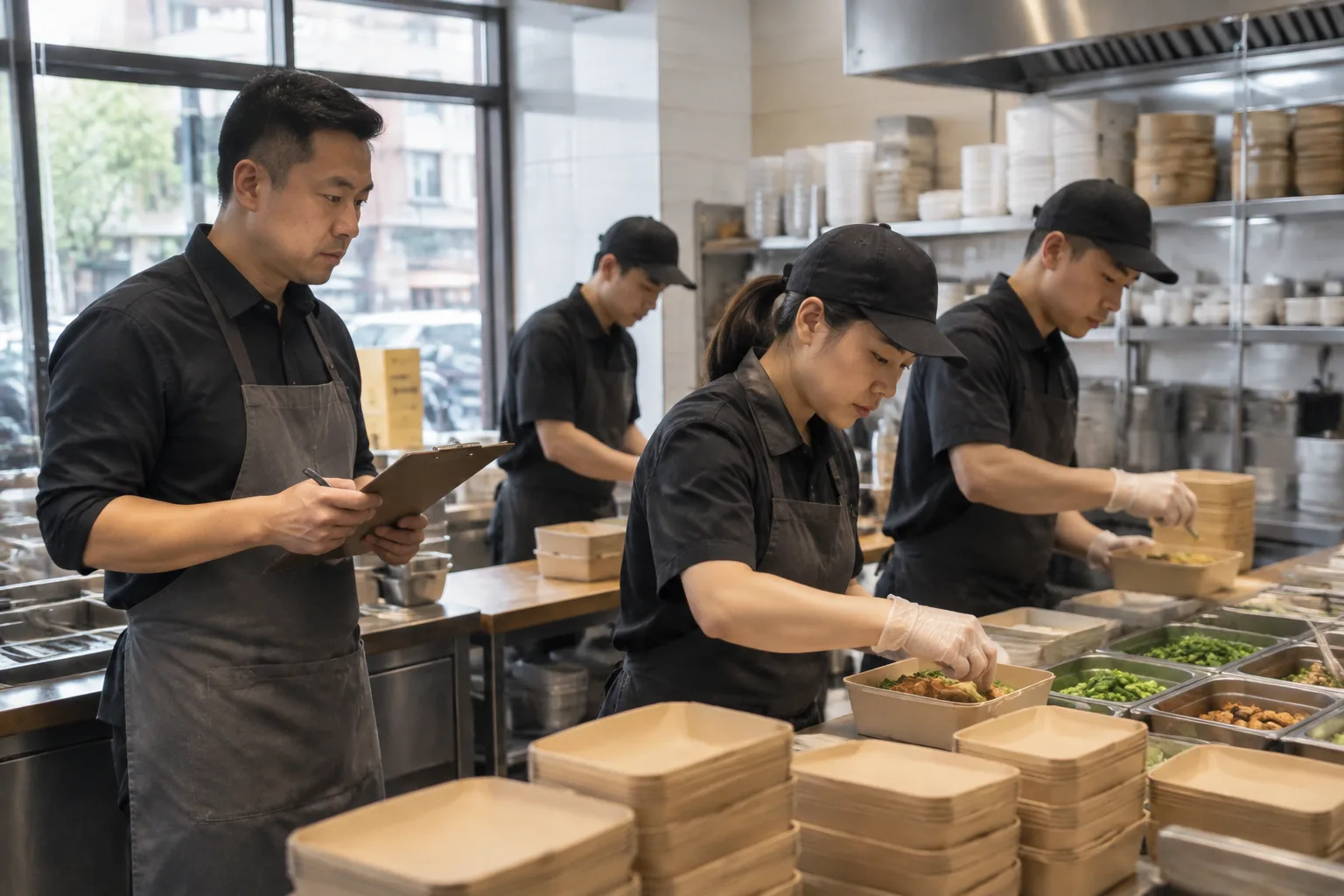
Before formally inviting franchise outlets to participate, run a small-scale test in company-owned outlets using the proposed rules. The main question is not whether turnover rises, but whether every order can be explained clearly: how much the customer pays, how much the outlet receives, how much head office contributes and which costs have not yet been included.
Create a campaign costing sheet recording at least:
- Eligible products, participating outlets, campaign dates and available sales channels;
- Product costs, packaging, free gifts and platform-related fees;
- The order in which vouchers, spend-threshold discounts and membership benefits are applied;
- The discount amounts funded by head office and by the outlet;
- When subsidies will be paid and how much the outlet must fund upfront;
- How returns, partial refunds and cancelled orders will be handled.
For example, where a head-office voucher is used alongside an outlet’s spend-threshold discount, specify whether head office reimburses the voucher’s face value, the amount actually redeemed or an agreed portion of eligible orders. Subsidies funded by a platform must not be treated as outlet-funded discounts without checking who actually bears the cost.
The pilot should cover ordinary sales, combined offers, partial refunds and stock shortages. If the point-of-sale system cannot produce the agreed result, adjust the rules or the system first, rather than requiring outlets to make manual accounting corrections afterwards. Set conditions for suspending the campaign in advance, such as the subsidy budget running out or key products becoming unavailable.
3. Turn approval into a campaign form that can be confirmed
The contract should establish the long-term principles, while a campaign-specific form sets out the arrangements for each promotion. The contract should specify how campaigns are notified, the confirmation procedure, outlet participation requirements, cost-sharing principles and the route for resolving disputes. The campaign form should then detail eligible products, discount rules, budget limits and settlement dates.
Where a category of promotion requires franchisees to confirm participation each time, retain a record of their explicit agreement. A read receipt in a group chat should not, on its own, be treated as acceptance of additional charges. Nor should head office use updates to the operating manual to impose promotional costs unilaterally where these are not provided for in the contract.
Head office can organise internal approval in the following sequence: operations checks whether outlets can deliver the campaign; finance verifies discount and subsidy calculations; the supply team confirms stock availability; and legal reviews promotional wording and the contractual basis. A designated person should then issue the single authoritative version, avoiding different rules appearing on posters, in the point-of-sale system and in campaign instructions.
Outlet-proposed promotions should use the same core fields. Approval should focus on whether offers can be honoured, advertising is accurate and brand materials comply with applicable requirements, rather than amounting to a simple statement that ‘head office agrees’. Any last-minute changes should be reflected in both outlet guidance and the terms visible to consumers.
4. Close the campaign with settlement records, not just sales figures
After the campaign, head office should provide settlement details that outlets can check, listing eligible orders, each party’s share of discounts, reversals arising from refunds and the final subsidy payable. Both parties should agree a reconciliation deadline, a process for raising queries and who is responsible for resolving discrepancies. This helps prevent outlets from waiting indefinitely for subsidies they cannot verify.
The review should answer at least four questions: did higher sales generate additional contribution after relevant costs; were offers combined in unintended ways; did outlets have to advance more funds than expected; and did consumers understand the campaign restrictions? If the campaign increased orders but weakened outlets’ ability to fulfil them, revise the approach rather than judging franchisee co-operation solely by redemption volumes.
Article 14 of the Regulations requires franchisors to provide ongoing operational guidance, technical support and business training as agreed. For promotions, this means giving outlets the point-of-sale settings, staff instructions, exception-handling procedures and settlement guidance developed through the pilot, rather than simply sending a promotional poster.
Practical takeaway: Before franchising, use a campaign form and a set of test orders to check that everyone reaches the same answers to four questions: who approves, who pays, how amounts are calculated and when payment is made. A campaign whose costs and settlement arrangements cannot be clearly explained should not be rolled out directly across the franchise network.