Before Franchising in China: How Peak-Load Testing Can Set Store Order Limits
Smooth day-to-day operations at a company-owned store do not prove that a franchise outlet can cope with a surge in orders. Peak-load testing can turn order limits, authority to restrict orders and conditions for resuming service into practical rules, rather than sacrificing service quality for short-term revenue.
Published
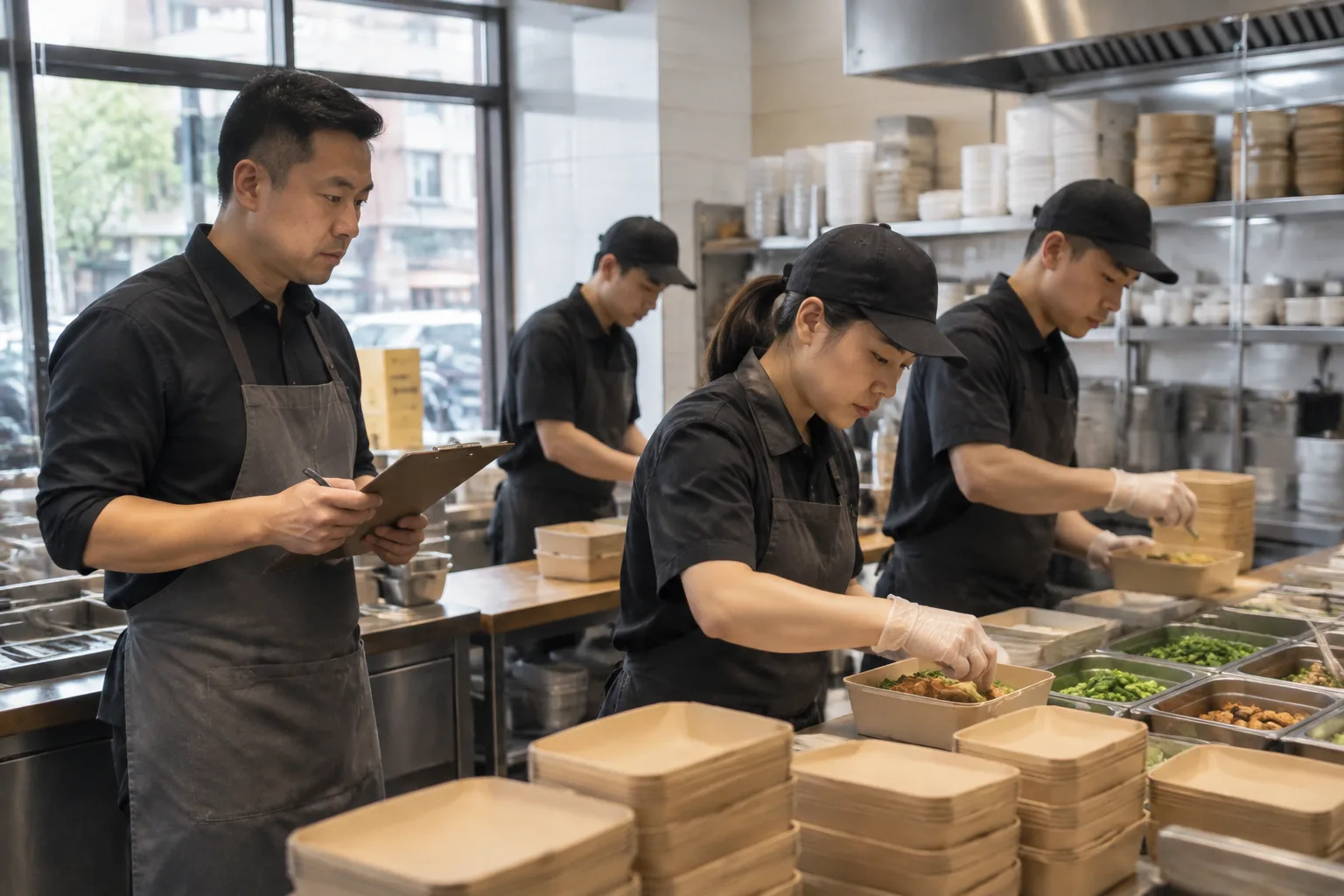
Before turning an existing business into a franchise network, head office needs to answer a specific question: how much business can an outlet handle when walk-in customers, online orders and bookings arrive at once? The answer cannot rest solely on a store manager’s judgement. Peak-load testing aims to establish sustainable capacity under a standard operating setup and define when to reduce, pause and resume order intake.
1. Start by defining the standards the test must protect
Article 7 of China’s Regulations on the Administration of Commercial Franchising requires franchisors to have a mature business model. Article 15 requires the quality and standards of products or services to comply with laws, administrative regulations and relevant national requirements. Peak-load testing is not a separate statutory procedure prescribed by these regulations, but it can help businesses verify whether their standardised operating model remains reliable during busy periods.
Before testing, list the standards that must not be compromised, rather than starting with a revenue target. Food outlets might focus on food safety, order accuracy and waiting times; retailers on stock accuracy, picking errors and orderly queues; and appointment-based services on service duration, staff qualifications and completion of all essential procedures.
Divide the measures into two categories: safety thresholds that require the relevant activity to stop immediately, and service warning thresholds that call for a reduction in order intake. Set these thresholds using the realities of the business, applicable requirements and pilot records. Do not simply copy another business’s order volumes, or try to increase capacity by cutting the time needed for essential procedures.
2. Increase the load gradually using a standard store setup
Test the store format you intend franchisees to replicate. Record the floor area, equipment, staffing by role, staff proficiency, product or service mix, and settings for each order channel. If the test uses additional experienced head-office staff, backup equipment or extra workspace, record these separately. Do not treat the results as representative of an ordinary franchise outlet’s capacity.
First record performance under a normal workload, then add simulated orders in batches to identify where bottlenecks emerge. Do not test only the easiest tasks: include common situations such as complex orders, simultaneous collections and customers changing their requirements. Consider running simulations outside trading hours first, so that real customers do not bear the risks of the trial.
For each round, record at least the following:
- The volume, timing and mix of orders or bookings arriving through each channel;
- Time taken and backlogs at each stage: order acceptance, preparation or service delivery, checking and handover;
- Errors, rework, complaints and departures from procedures caused by rushing;
- The effect of temporary staff reassignments, replenishment and equipment interruptions on subsequent orders.
Stop the test immediately if a safety risk emerges. If a persistent backlog develops, do not keep increasing the load in pursuit of an absolute limit. Repeating the test across different shifts and staff teams provides stronger evidence of whether the model can be replicated than a single record-breaking result.
3. Turn test results into rules for limiting orders
Order limits should reflect repeatedly verified, stable performance, with a margin for normal fluctuations. They are not the same as equipment’s rated capacity or the occasional peak achieved by an experienced manager. Limits should also change when the proportion of complex work rises or fewer staff positions can be covered.
The rules should answer at least four questions: who monitors the situation, what triggers intervention, what action is taken and when order intake may resume. For example, if the queue of outstanding work keeps growing, the duty manager might first adjust available booking slots or temporarily suspend complex items or services. If expected waiting times can no longer meet the commitments communicated to customers, the next step would be to reduce orders through the relevant channels. Specific trigger points and monitoring periods should come from testing, rather than arbitrary, uniform figures.
Online and offline channels must be coordinated. Pausing orders on one platform will not reduce the outlet’s overall workload if other channels continue accepting them. Head office should check whether systems can synchronise stock availability, booking capacity and estimated waiting times, and prepare manual procedures for situations where they cannot.
Order restrictions should primarily apply to new orders that have not yet been accepted. For accepted orders, customers should be clearly informed of delays, and changes, cancellations or refunds handled in line with applicable law, platform rules and the agreement with the customer. Simply switching off the system and ceasing to respond is not an option. Before resuming order intake, check the backlog, staffing and equipment, then increase volumes gradually to avoid immediately losing control again.
4. Set out authority and responsibilities in franchise documents
Article 11 of the Regulations on the Administration of Commercial Franchising requires written contracts to include provisions on quality, standards and measures to ensure compliance, among other matters. Article 14 requires franchisors to provide an operations manual and ongoing operational guidance, technical support and business training as agreed. These requirements provide a basis for setting out overarching responsibilities in the contract and detailed procedures in the manual, with both kept consistent.
The contract should clarify whether an outlet may immediately pause order intake because of safety concerns or a serious backlog, which adjustments must be reported to head office, and what support head office will provide with system settings and operational problems. The manual should include actions for each role, customer communication scripts, the sequence for closing order channels and a checklist for resuming orders. Do not require outlets to maintain quality while using performance assessment rules that penalise every reasonable decision to restrict orders.
Before opening, the franchise team should complete a simulation to confirm that frontline staff can recognise warning signs and the duty manager can actually apply order restrictions. Capacity should also be revalidated after replacing key equipment, adding complex products or services, or introducing a new sales channel, rather than simply retaining the old limit.
Practical takeaway: establish sustainable capacity using a standard setup, then bring warning signs, order restrictions and recovery steps together in a single role-based action sheet. Reducing the workload in an orderly way before the outlet becomes overwhelmed does more to build long-term trust across the franchise network than explaining service failures afterwards.