Rebranding at Chinese Refill Liquor Shops Puts Franchise Profitability and Support Under Scrutiny
A report on Chinese refill liquor shops changing brands highlights the operating pressures behind franchise expansion. For prospective franchisees, individual shop turnover, supply costs and ongoing franchisor support deserve closer scrutiny than store counts.
Published
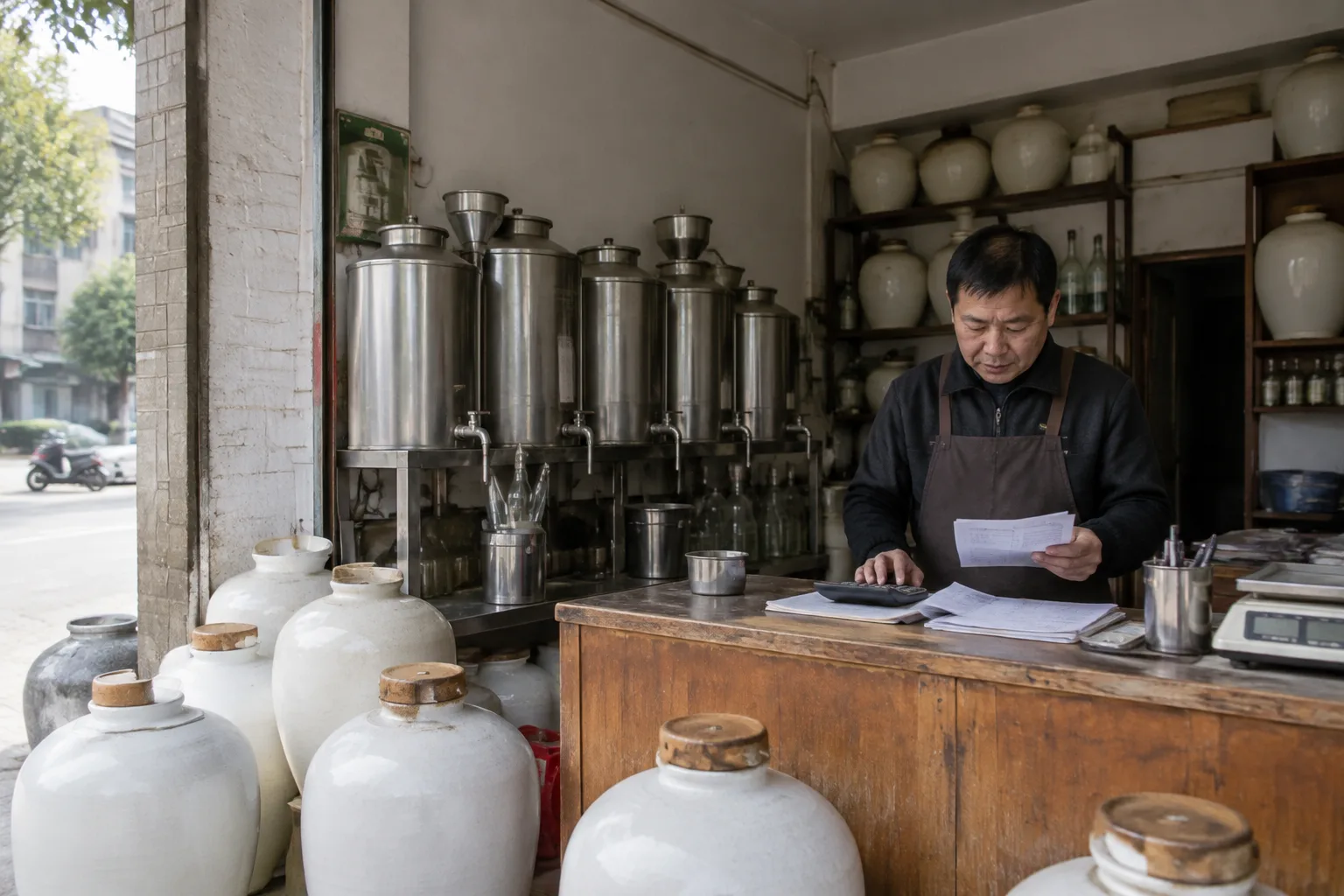
China’s boom in refill liquor shops, which sell alcohol dispensed from bulk containers, is being tested by the economics of running individual outlets. A report published by Sina Finance on 14 November 2026 examined cases of shops changing their branding and franchisees moving into franchise recruitment themselves. Drawing on accounts from drinks traders and franchisees, it highlighted profitability and partnership risks as this retail format expands.
More brands do not necessarily mean more profit
According to the report, refill liquor shop brands including Tang San Liang and Banmaxia have attracted investment over the past two years. Drinks producers such as Yanghe, Gujing Gongjiu, Kouzijiao and Yingjia Gongjiu have entered the market, alongside businesses from other sectors, including Hema and Mixue. Citing publicly available information, the report said Chengdu had more than a dozen refill liquor shop brands and over 100 outlets by June 2026.
These figures show growing participation, but do not establish whether franchised shops are profitable. Brand fundraising, outlet numbers and an operator’s ability to recover their investment are separate measures.
One shop’s finances offer a cautionary example
Wang Xin, a franchisee in a third-tier city in Jiangsu province, told the publication that he had invested RMB 200,000 in his shop. It was run by three people, with fixed costs of around RMB 14,000 a month, and he spent more than 12 hours a day overseeing it. By his account, monthly turnover needed to reach RMB 30,000 to break even. At RMB 40,000, monthly net profit was about RMB 5,000, implying at least three years to recoup the initial investment.
This is a single case described by an interviewee, not a measure of average returns across refill liquor shops or a basis for calculating a standard payback period. It nevertheless reminds prospective franchisees that sales revenue is not the same as money available to take out of the business. Investment forecasts also need to account for wages, rent, stock costs and the owner’s own labour.
Who earns what when shops rebrand and recruit franchisees?
The report quoted one drinks trader as saying that some people spend around six months learning the business as franchisees before launching their own brands and setting up companies to recruit franchisees. This was an interviewee’s account of market activity; the report did not provide an overall number or proportion of such cases.
Another interviewee, Li Hua, noted that franchise fees, mandatory shop fit-outs, initial stock orders and margins on subsequent supplies can all generate income for those recruiting franchisees. For prospective franchise partners, the more important question is whether the franchisor’s income depends on providing continuing service to shops, or is concentrated at the signing and opening stages. These charges alone do not demonstrate a problem with the partnership, but the obligations attached to each fee should be clear.
Look beyond recruitment promises and verify the business
Franchisees quoted in the report also raised concerns about a lack of ongoing support and inconsistent policies. Their feedback is no substitute for investigating a particular brand, but it underlines the need to turn promises of support into verifiable commitments before signing, rather than focusing solely on advertised low barriers to entry and rapid expansion.
Practical advice: visit operating shops first and check their actual income and expenditure. Then confirm supply prices, training support, arrangements for policy changes and exit terms, item by item. Clearly documenting fees and responsibilities is a sounder basis for a decision than enthusiasm about the pace of new openings alone.