Yum China launches AI assistant for restaurant managers as its 20,000-store network retains a mix of company-owned and franchised outlets
Yum China unveiled an AI assistant for restaurant managers in Chengdu as its nationwide network reached 20,000 outlets. The company reaffirmed its target of 30,000 stores by 2030, with expansion continuing through a mix of company-owned and franchised restaurants.
Published
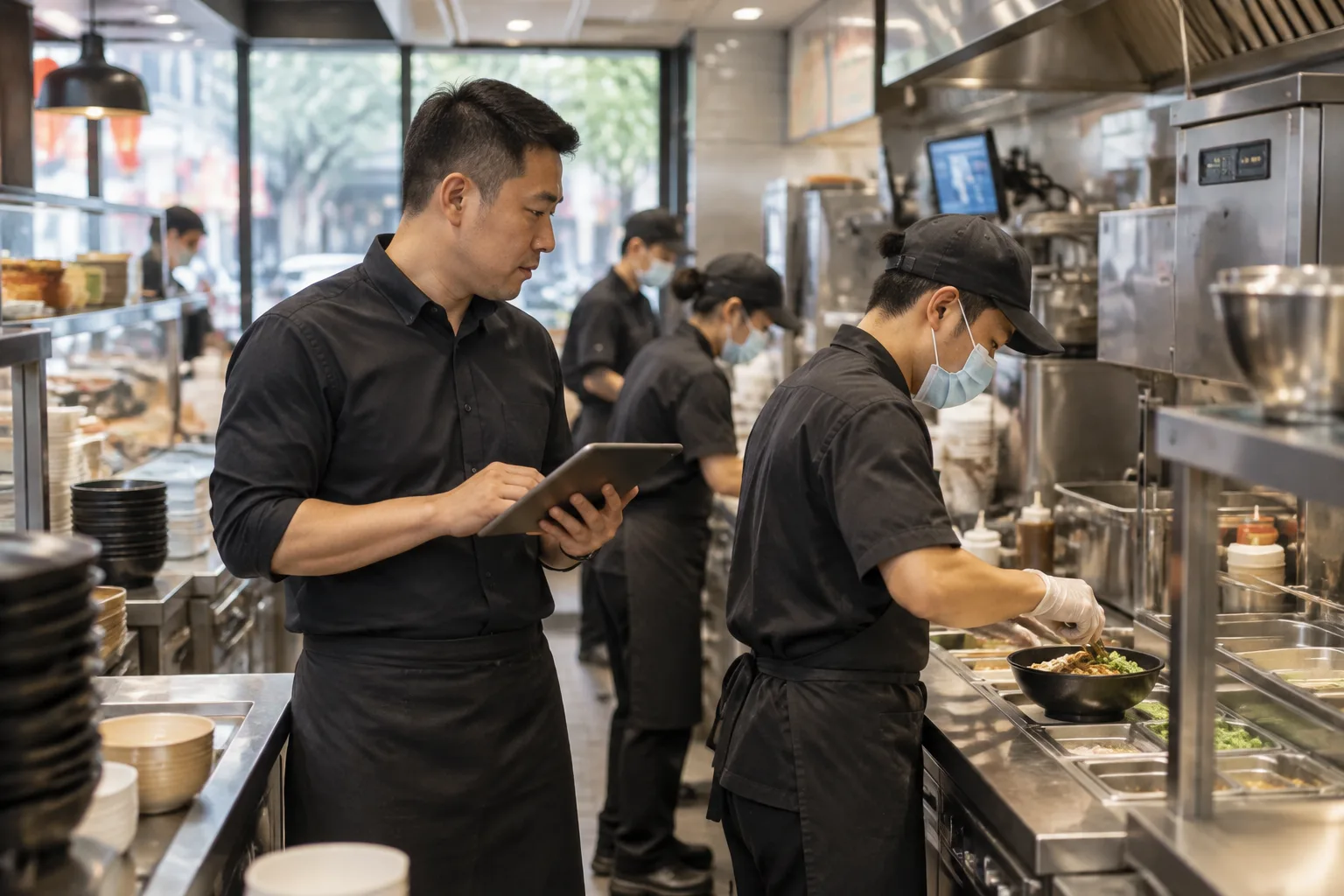
On 12 November, Yum China held a celebration in Chengdu marking the tenth anniversary of its establishment and stock market listing, alongside its 20,000-store milestone. At the event, it unveiled an AI assistant for restaurant managers. For those considering franchising in China, the announcement marks more than a new milestone in network size: it also offers insight into how major chains equip their frontline teams.
AI agent combines visual perception with kitchen IoT
According to Caijing.com.cn, Yum China had already introduced artificial intelligence into areas such as shift management, delivery dispatch and customer service. The newly launched AI assistant adds visual perception and kitchen Internet of Things (IoT) capabilities.
This suggests that the new tool builds on existing restaurant applications. However, coverage of the launch did not disclose the precise scope of deployment, arrangements for use by franchised outlets or measurable operational results. The launch should therefore not be taken to mean that the tool is already in use across all restaurants, nor does it provide a basis for estimating franchisees’ cost savings.
Frontline support platform unveiled alongside the assistant
According to the Hong Kong Commercial Daily website, the event also featured the launch of “Guiyige”, a one-stop service platform for frontline restaurant teams, and employee medical support measures. The combination of digital tools and frontline support distinguished the event from a straightforward store-opening announcement.
Prospective franchisees assessing head-office support may wish to ask whether these platforms will be available to their proposed outlets, and how training, access permissions and day-to-day troubleshooting will be handled. A tool’s name alone is no substitute for a clear explanation of the services provided.
Six brands open new restaurants simultaneously
On the day of the event, KFC, Pizza Hut, Taco Bell, Lavazza, Little Sheep and Huang Ji Huang each opened a new restaurant in a different city. The openings were linked online, bringing Yum China’s nationwide total to 20,000 outlets.
According to the Hong Kong Commercial Daily website, the network spans more than 2,800 cities and towns in mainland China. Its 20,000th outlet is the KFC restaurant at Jiaozi Fangyuan in Chengdu. The 20,000 figure refers to the company’s entire restaurant network, not the number of franchised outlets, and cannot be used on its own to determine the proportion operated by franchisees.
Expansion will continue through a mixed ownership model
Yum China also reaffirmed the target announced at its 2025 Investor Day: 30,000 restaurants by 2030, with plans to add another 10,000 over the next four years. The company said expansion would continue through a mix of company-owned and franchised outlets, supported by flexible restaurant formats suited to different city tiers.
The target sets out the direction for the overall network, but does not mean that all new outlets will be available to franchisees. Nor does it specify how many franchise opportunities will be offered by each brand or in each city. Individual opportunities still need to be assessed against the brand’s recruitment criteria and the arrangements for each project.
Practical tip: prospective franchisees should include the availability of digital tools, training support and associated fees on their list of questions for the franchisor, then assess the investment required for the specific restaurant format. Network size and technology launches should not be treated as promises of returns from an individual outlet.